
TL;DR

Play games on Amazon Luna for your next adventure, included with Prime
- A rotating selection of games, no download needed
- Play on TV, laptop or phone
- Fast, free delivery for your gear, too
Stryker’s FDA-approved app has revealed new details about Apple Vision Pro’s potential use in surgery. The disclosure suggests Apple is exploring medical applications, but official confirmation and regulatory approval are still pending. This development could impact future medical device regulations and Apple’s market strategy.
Stryker’s FDA-approved application has revealed detailed information about the potential use of Apple Vision Pro in surgical procedures, marking a notable development in the device’s medical application prospects. This disclosure indicates that Apple is exploring or testing its mixed reality headset for healthcare settings, though no official approval for medical use has been announced by Apple. You can read more about Apple’s potential in medical applications. The revelation matters because it could signal a new direction for Apple’s device beyond consumer electronics, impacting regulatory and healthcare markets.
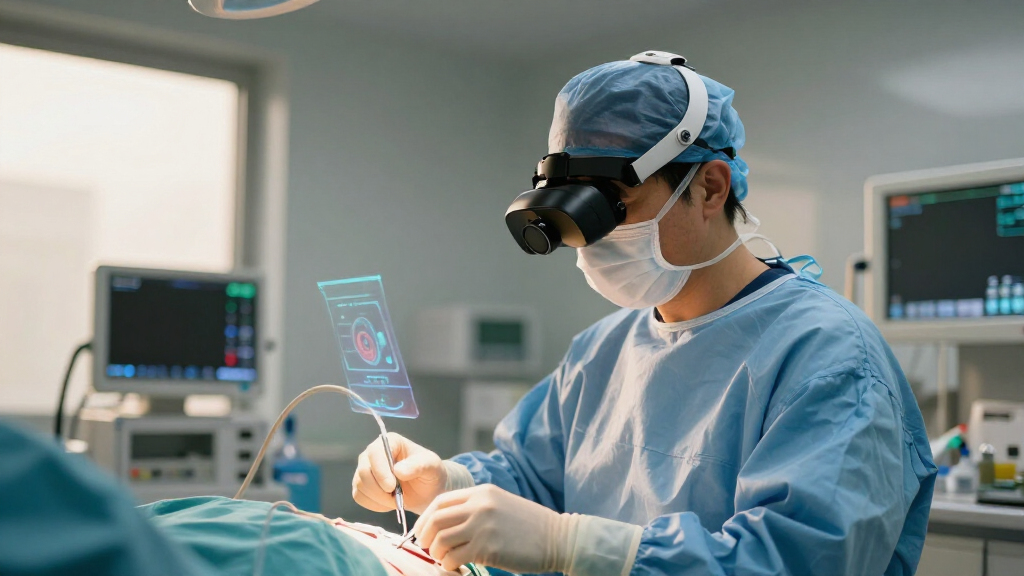
According to documentation accessible via Stryker’s FDA application, Apple Vision Pro is being considered for integration into surgical workflows. The app details include functionalities such as visual overlays, real-time data display, and remote consultation capabilities. While Apple has not officially announced any medical product, the documentation suggests the company is conducting clinical trials or pilot programs involving the headset. The FDA filing does not confirm that Apple has received approval for medical use but indicates active development or testing phases.
Stryker, a major medical device manufacturer, is involved in the process, possibly as a partner or collaborator, which adds credibility to the potential for medical applications. The FDA documentation was accessed through Stryker’s app, which is registered for medical device approval processes, hinting that Apple’s device might be under review or in early stages of regulatory consideration. Learn more about Apple’s medical and immersive applications. The specifics of the surgical procedures or medical conditions targeted remain undisclosed, and Apple has not made public statements about its intentions in healthcare.
Apple Vision Pro Surgery: What Stryker’s FDA App Reveals
Stryker-linked regulatory documentation points toward Vision Pro integration in surgical workflows. It is a meaningful signal of medical experimentation—not proof that Apple’s headset is cleared, certified, or ready for routine clinical use.
What a surgical headset could enable
The documentation points to capabilities that could place relevant information inside a clinician’s field of view while preserving access to the physical operating environment.
Spatial overlays
Anatomical guidance, plans, or procedural references could appear as positioned digital content rather than on a separate monitor.
Real-time data
Selected imaging, instrument, or patient information could be presented during a procedure—subject to validation, integration, and safety controls.
Remote consultation
Specialists could potentially observe, advise, or share visual context from another location without physically entering the operating room.
What the disclosure supports—and what it does not
The safest reading separates documented capabilities from inferred development activity and unresolved regulatory questions.
| Claim | Evidence level | Responsible interpretation |
|---|---|---|
| Vision Pro is being considered in surgical workflows | ✓ Supported signal | The filing-linked material identifies a plausible clinical integration context. |
| Testing or pilot programs may be underway | ~ Inference | Active development is plausible, but the available disclosure does not establish the scope or stage. |
| Apple Vision Pro has FDA clearance for surgery | ✗ Not established | A third-party filing or approved app does not automatically confer medical-device clearance on the headset. |
| Specific procedures and clinical outcomes are known | ✗ Undisclosed | Target procedures, protocols, trial results, and performance data have not been made public. |
| Apple will launch a medical Vision Pro product | ~ Possible | The disclosure signals strategic potential, not a confirmed product roadmap or launch date. |
Strong capability signal, limited regulatory certainty
Vision Pro’s sensors, eye tracking, spatial interface, and immersive display make it technically interesting for medicine. Clinical adoption, however, depends on much more than hardware capability.
From experiment to operating room
A promising spatial-computing demonstration becomes a medical product only after its intended use, safety, performance, and clinical workflow have been defined and validated.
Prototype
Develop overlays, data views, and collaboration tools for a tightly controlled use case.
Clinical validation
Measure reliability, usability, human factors, latency, distraction, and procedural outcomes.
Regulatory review
Establish intended use, risk classification, evidence requirements, cybersecurity, and quality controls.
Deployment
Train clinical teams, integrate hospital systems, monitor performance, and maintain validated configurations.
The questions hospitals must solve
Reliability and latency
Critical information must remain accurate, timely, stable, and available without obscuring the surgical field.
Privacy and security
Patient data, video streams, identity controls, storage, networking, and remote access require clinical-grade safeguards.
Human factors
Eye tracking, fit, fatigue, field of view, visual attention, and cognitive load must be tested in realistic conditions.
Sterile workflow
Cleaning, handling, interaction methods, battery management, and use around protective equipment need formal protocols.
What readers should take away
Has Apple announced Vision Pro as a medical device?
No. Publicly described medical clearance or dedicated medical-device marketing remains unconfirmed.
Which surgical procedures are targeted?
The specific procedures, patient groups, and medical conditions have not been publicly disclosed.
When could approval happen?
No reliable timeline exists. Clinical evidence and regulatory review can require months or years.
Why does Stryker’s involvement matter?
Its medical-device experience makes the exploration more credible and may help connect spatial computing with validated surgical workflows.
Implications of Apple Vision Pro in Medical Settings
This development signals that Apple’s Vision Pro could soon be used beyond entertainment and general productivity, extending into healthcare. If approved, the device could enable surgeons to access augmented reality overlays during operations, improving precision and outcomes. It also raises questions about regulatory pathways for mixed reality devices in medicine, potentially setting precedents for future approvals. For consumers, this could mean a new class of medical-grade AR devices, but it also introduces concerns about privacy, data security, and device safety in clinical environments. The move reflects a broader trend of technology companies entering the medical device space, which could accelerate innovation but also complicate regulatory oversight.
Apple Vision Pro medical augmented reality headset
As an affiliate, we earn on qualifying purchases.
As an affiliate, we earn on qualifying purchases.
Background on Apple Vision Pro and Medical Use
Apple announced the Vision Pro headset in early 2024, positioning it as a high-end mixed reality device primarily aimed at consumers and professionals. Prior to this disclosure, there was speculation about its potential in specialized fields such as healthcare, military, and industrial applications. The device features advanced sensors, eye-tracking, and spatial audio, making it suitable for augmented reality overlays. However, Apple has not officially marketed the Vision Pro for medical use, and regulatory approval for such applications remains unconfirmed.
The involvement of companies like Stryker and the recent FDA filings suggest that industry players are actively exploring its medical potential. Historically, regulatory pathways for medical AR devices are complex, requiring rigorous testing and approval processes. This recent disclosure indicates that Apple may be moving toward clinical trials or pilot programs, but it is too early to determine whether the device will receive formal approval for surgical procedures.
mixed reality surgical display devices
As an affiliate, we earn on qualifying purchases.
As an affiliate, we earn on qualifying purchases.
Unconfirmed Status of Regulatory Approval and Use
It is not yet clear whether Apple has formally applied for or received regulatory approval for medical use of the Vision Pro. The FDA documentation suggests testing or pilot programs, but no official clearance or certification has been announced. Details about the specific medical procedures, safety protocols, or clinical trial results remain undisclosed. The scope of Apple’s plans for healthcare applications is also uncertain, and it is unclear when or if the device will be available for widespread medical use.
As an affiliate, we earn on qualifying purchases.
Next Steps in Apple’s Medical Device Development
Apple is likely to continue clinical testing and seek formal FDA approval if the pilot programs demonstrate safety and efficacy. Industry observers expect further disclosures from Apple or partnering companies about trial results and regulatory milestones within the coming months. Additionally, regulatory agencies may conduct their own assessments, which could influence the timeline for approval. Apple’s future plans may include beta programs or collaborations with healthcare providers to refine the device’s medical functionalities.
augmented reality surgical overlays
As an affiliate, we earn on qualifying purchases.
As an affiliate, we earn on qualifying purchases.
Key Questions
Has Apple officially announced the Vision Pro for medical use?
No, Apple has not officially announced or marketed the Vision Pro as a medical device. The recent disclosures are based on FDA documentation accessed through Stryker’s app, indicating ongoing development or testing.
What specific surgical applications are being considered for the Vision Pro?
The exact procedures or medical conditions targeted are not publicly disclosed. The FDA documentation mentions functionalities like visual overlays and real-time data, but details remain confidential.
When might the Vision Pro be approved for medical use?
It is uncertain. Approval depends on the outcomes of clinical trials and regulatory review, which could take months or years. No official timeline has been provided.
Could this development impact Apple’s consumer products?
Potentially, yes. If the device is approved for medical applications, it could influence future versions of Apple’s AR devices, integrating medical functionalities into consumer products or creating specialized medical hardware.
Are there any safety concerns with using AR devices in surgery?
Safety concerns include data security, device reliability, and potential interference with surgical procedures. Regulatory approval would require rigorous safety testing to address these issues.
Source: rss
Evergreen bestsellers Picks
bestsellers
As an affiliate, we earn on qualifying purchases.