
TL;DR
This article explores proven ways to combine exercise with video gaming, highlighting effective strategies and current research. It explains why this approach benefits health and what remains uncertain.
New strategies for integrating exercise into video gaming are gaining traction as both researchers and industry players seek to promote healthier gaming habits. Confirmed by recent studies and product launches, combining physical activity with gameplay offers potential health benefits and increased engagement for players of all ages.
Multiple approaches are now being validated to effectively merge exercise with gaming. These include the use of motion-controlled consoles, augmented reality (AR) games, and dedicated fitness games that require physical movement. Industry leaders have introduced new titles and hardware that emphasize physical activity, with some claiming to provide full-body workouts while entertaining players.
Recent research, according to an anonymous researcher cited by rss, indicates that players can achieve moderate physical activity levels comparable to traditional workouts when engaging with these games. For example, games like Ring Fit Adventure and Beat Saber have been highlighted as effective tools for increasing movement during gameplay. Experts emphasize that the key to success is designing games that are both engaging and physically demanding enough to promote health benefits.
Additionally, some fitness apps now incorporate gamified elements, such as challenges and leaderboards, to motivate users to stay active during gaming sessions. These innovations are supported by technological advances in motion sensors, wearable devices, and augmented reality, which enhance the accuracy of tracking physical activity and make the experience more immersive.
How to combine exercise with video games
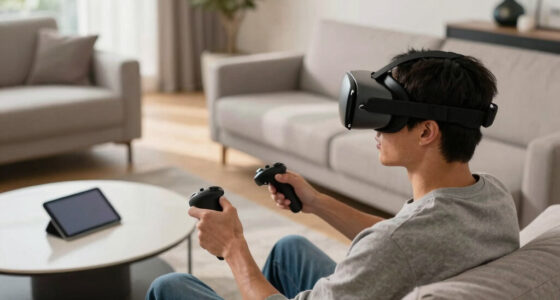
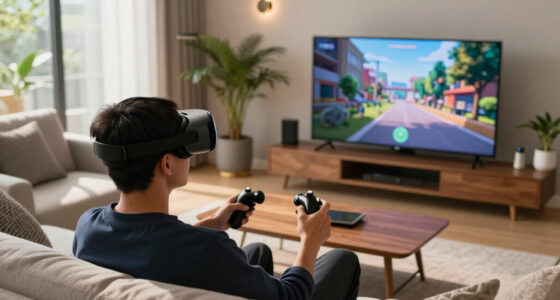
Motion controls, virtual reality, augmented reality, and gamified fitness can turn screen time into movement. The strongest approach pairs enjoyable play with enough intensity, duration, and consistency to support—not replace—a balanced exercise routine.
Core routes: motion-controlled games, immersive VR or AR, and fitness apps built around goals and rewards.
Priority: choose a game you will return to. Engagement is the engine of consistency.
The winning loop is simple: enjoyable play creates movement, visible progress builds motivation, and motivation brings you back.
Three practical ways to make play active
The best format depends on your space, equipment, physical ability, and preferred style of play. Favor games that repeatedly recruit large muscle groups instead of relying on occasional gestures.
Move against resistance
Use controllers, balance devices, or resistance accessories that translate squats, presses, running, and core movements into gameplay.
Example: Ring Fit AdventureTurn reactions into cardio
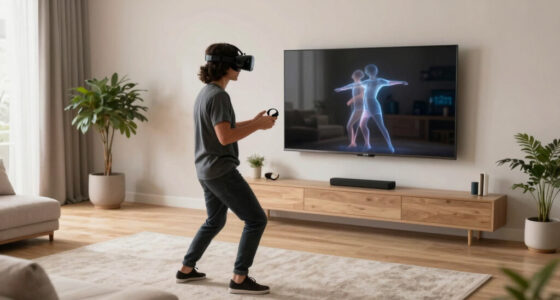
Fast, directional movement can elevate effort through repeated arm swings, lateral steps, ducking, and whole-body reactions.
Example: Beat SaberMake the world the game board
Location-based play, challenges, streaks, leaderboards, and wearable data can encourage walking, exploration, and repeat activity.
Best for daily movementDesign a loop you can repeat
Intensity matters, but consistency matters more. Begin with manageable sessions, monitor how your body responds, and increase effort gradually as movement quality and confidence improve.
Play hard enough to move. Play smart enough to return.
Use active games as a bridge from sedentary leisure to regular movement. Alternate demanding sessions with lower-intensity play and traditional exercise.
- 1Clear the play area and secure equipment.
- 2Warm up before rapid or unfamiliar movement.
- 3Track time, effort, and recovery—not only points.
- 4Stop if pain, dizziness, or unsafe fatigue appears.
A sustainable game must be compelling enough to create repeat sessions.
Frequent leg, trunk, and arm movement generally creates more activity than isolated gestures.
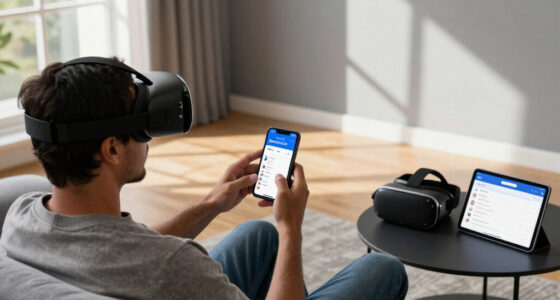
Wearables and motion sensors can reveal effort trends, but estimates are not clinical measurements.
Leaderboards motivate some players; private goals and cooperative play work better for others.
Different games solve different fitness problems
No single platform is best for everyone. Compare movement demand, setup, motivation, and safety before investing in hardware or choosing a routine.
| Format | Movement potential | Space need | Motivation strength | Watch for | Best use |
|---|---|---|---|---|---|
| Resistance-based console game | ✓ High | ~ Medium | ✓ Structured progression | Form, strain, accessory setup | Guided full-body sessions |
| VR rhythm or action game | ✓ Moderate to high | ✗ Larger clear zone | ✓ Immersion and scores | Falls, collisions, motion discomfort | Energetic cardio-style play |
| AR location-based game | ~ Low to moderate | ✓ Outdoors | ✓ Exploration and collection | Traffic, weather, screen distraction | Increasing daily steps |
| Gamified fitness app | ~ Program dependent | ✓ Flexible | ~ Goals and streaks | Poor technique, unrealistic targets | Habit building and tracking |
| Traditional seated game | ✗ Minimal | ✓ Low | ~ Add movement breaks | Extended sedentary time | Pairing play with timed activity breaks |
Motion controls
Systems such as Nintendo Wii made body movement a mainstream input method.
VR environments
Headsets expanded active play into spatial, reactive, and rhythm-based experiences.
Wearable feedback
Heart-rate, movement, and activity data began shaping goals and personalization.
Adaptive fitness
Future systems may tailor difficulty to health goals, capability, fatigue, and progress.
What the evidence does—and does not—settle
Short-term activity gains are encouraging, but claims about lasting health effects require caution. Game quality, intensity, user motivation, physical ability, and adherence all influence outcomes.
Can games provide meaningful exercise?
Yes. Some movement-based titles can generate moderate physical activity, especially when sessions use repeated whole-body movement.
Can they replace traditional workouts?
Usually not. Active gaming is best treated as a complementary option alongside strength, mobility, outdoor activity, and structured exercise.
Do benefits last over time?
Longitudinal research is still needed to show whether players maintain participation and achieve durable health improvements.
What is the ideal intensity?
The right level depends on fitness, health, movement skill, and the game. Progress gradually and prioritize safe technique.
Where is active gaming heading?
Expect more precise motion tracking, personalized difficulty, accessible movement options, and deeper collaboration between health professionals and game developers. Safety and efficacy guidance may grow as the market matures.
Before you press start
Impact of Exercise-Integrated Gaming on Health and Engagement
This development matters because it offers a practical way to combat sedentary lifestyles, especially among younger populations. Combining exercise with gaming can make physical activity more appealing, potentially reducing health risks associated with inactivity, such as obesity and cardiovascular issues. For gamers, it provides an opportunity to stay active without sacrificing entertainment, which could lead to sustained engagement and better health outcomes.
Furthermore, with increasing awareness of the importance of physical activity, industry and health sectors see these innovations as a way to promote healthier habits in a format that appeals to diverse demographics. The integration of exercise into gaming could also influence future product design, encouraging more health-conscious development in the gaming industry.
Ring Fit Adventure Nintendo Switch
As an affiliate, we earn on qualifying purchases.
As an affiliate, we earn on qualifying purchases.
Evolution of Fitness Gaming Technologies and Trends
Over the past decade, the gaming industry has progressively incorporated physical activity, moving from simple motion controls to sophisticated AR and VR systems. Early efforts like the Nintendo Wii introduced motion-controlled gaming, which was followed by more immersive platforms such as Oculus Rift and PlayStation VR. These advancements have enabled more realistic and engaging exercise experiences.
Recent years have seen a surge in dedicated fitness games, partly driven by the COVID-19 pandemic, which increased interest in home-based workouts. Companies have launched products claiming to deliver effective workouts through gamification, often supported by wearable technology that tracks heart rate, calories burned, and movement accuracy.
While some studies support the benefits of these approaches, experts caution that not all fitness games are equally effective, and user motivation remains a critical factor. Industry trends indicate a growing market for health-focused gaming, with ongoing research into how to optimize game design for physical health benefits.
As an affiliate, we earn on qualifying purchases.
Unanswered Questions About Long-Term Effectiveness
It is not yet clear how sustained engagement with exercise-based games impacts long-term health outcomes. While short-term studies show promise, more research is needed to determine whether these gaming approaches can produce lasting health benefits and whether they can replace traditional exercise routines entirely.
Additionally, questions remain about the optimal intensity and duration of gameplay to maximize health benefits without risking injury or burnout. The variability in game quality and user motivation also complicates assessments of overall effectiveness.
As an affiliate, we earn on qualifying purchases.
Future Developments in Exercise Gaming and Research
Researchers plan to conduct longitudinal studies to evaluate the long-term health impacts of exercise-integrated gaming. Meanwhile, industry players are expected to release new titles and hardware that further enhance motion tracking and immersive experiences. Expect more personalized fitness gaming experiences tailored to individual health goals and physical capabilities.
Additionally, collaborations between health professionals and game developers are likely to increase, aiming to create evidence-based products that effectively promote physical activity. Regulatory agencies may also develop guidelines to ensure safety and efficacy in this growing market.
As an affiliate, we earn on qualifying purchases.
Key Questions
Can playing video games be a sufficient form of exercise?
While some games can provide moderate physical activity, they are generally supplementary rather than replacements for traditional exercise routines. Effectiveness depends on game design, duration, and intensity.
What types of games are best for combining exercise and gaming?
Motion-controlled games like Ring Fit Adventure and Beat Saber, as well as augmented reality games that require physical movement, are among the most effective options.
Are there any health risks associated with exercise-based gaming?
Potential risks include overexertion, strain injuries, or falls, especially if gameplay is too intense or if players do not follow safety guidelines. It is important to start gradually and use appropriate equipment.
Will exercise gaming replace traditional workouts?
Currently, exercise gaming is viewed as a complementary activity. It can enhance motivation and activity levels but is unlikely to fully replace structured exercise routines for most people.
What is the future of exercise and gaming integration?
Advances in technology and ongoing research are expected to lead to more personalized, immersive, and effective fitness gaming experiences, potentially influencing health and wellness practices globally.
Source: rss