
TL;DR
Lenovo has reportedly closed its US XR business unit, affecting most employees, as the company shifts toward AI wearables and consumer devices. The move marks a strategic change away from enterprise XR efforts.
Lenovo has reportedly closed its US-based XR business unit, according to sources cited by Skarred Ghost. The move involves most of the affected employees being laid off, with some offered internal transfers. The company has confirmed, at least partially, that it is shifting its focus from enterprise XR to AI-enabled consumer wearables, signaling a strategic reorientation amid evolving market trends.
Sources familiar with the matter indicate that Lenovo has shut down its XR business unit in the United States, impacting a significant portion of its XR-focused workforce. While the exact number of affected employees remains undisclosed, reports suggest most have been laid off, with a minority offered other roles within the company. Lenovo has acknowledged the change, stating that the company is moving away from a primarily business-first XR strategy under its ThinkReality brand.
Instead, Lenovo is pivoting toward AI-powered consumer wearables, aiming to create a more centralized organization focused on delivering a unified Personal AI experience across devices such as PCs, tablets, smartphones, and wearables. The company emphasized that this new direction aligns with broader market momentum and consumer adoption of AI-enabled devices.
Historically, Lenovo has been involved in XR hardware development, launching products like the Windows Mixed Reality headset in 2016, the Mirage Solo standalone VR headset in 2018, and enterprise-focused devices such as the ThinkReality A3 AR glasses in 2021. Its most recent XR product, the ThinkReality VRX, was released in 2023, featuring pancake-style optics for enterprise use. The company’s shift signals a strategic re-evaluation of its XR investments in favor of AI consumer technology.
Implications for Lenovo’s XR and Consumer Strategy
This move indicates a significant shift in Lenovo’s strategic focus, reflecting broader industry trends favoring AI-enabled consumer wearables over enterprise XR solutions. It may impact the company’s market positioning and future product development, especially in the rapidly evolving AI wearables segment. For industry watchers, it signals a possible trend among OEMs to prioritize AI integration in consumer devices, potentially at the expense of dedicated XR hardware.

Plaud NotePin S AI Voice Recorder, Wearable AI Notetaker, AI Transcribe & Summarize, Support 112 Languages, 64GB Audio Recorder for Meetings Interviews, Professionals, Teams, with 4 Accessories
Plaud Intelligence: Capture conversations in 112 languages and generate accurate transcripts with the Plaud App and Web. Plaud…
As an affiliate, we earn on qualifying purchases.
As an affiliate, we earn on qualifying purchases.
Lenovo’s XR Development and Market Evolution
Lenovo entered the XR hardware space in 2016 with its Windows Mixed Reality headset, competing alongside brands like HP, Samsung, and Dell. Over the years, it released several VR and AR devices, including the Mirage Solo in 2018 and the enterprise-oriented ThinkReality A3 glasses in 2021. Its latest XR device, the ThinkReality VRX, was launched in 2023, targeting enterprise clients with pancake optics technology.
Recent industry shifts have seen major OEMs increasingly focus on AI-driven consumer devices, such as smart assistants and wearable health tech. Lenovo’s pivot toward AI wearables reflects this broader trend, aligning with market data showing growing consumer interest in AI-enabled personal devices. The company’s strategic reorientation suggests it no longer considers XR hardware a core growth area, instead emphasizing AI and consumer electronics.
“As the XR market evolves, we see stronger momentum and broader consumer adoption around AI-enabled wearables. We are transitioning from a business-first XR strategy to a more consumer-focused approach within Motorola.”
— Lenovo spokesperson
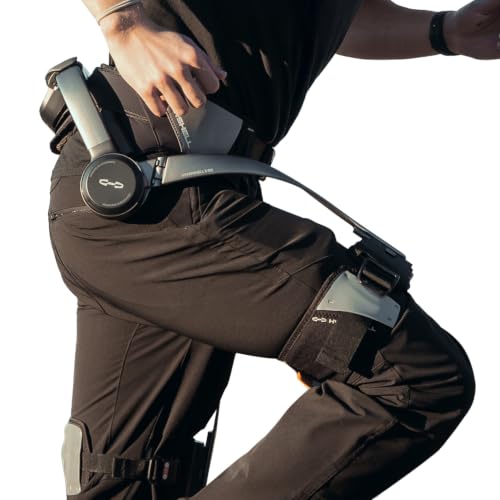
Hypershell X Pro Exoskeleton, Leg Strength with 800W Output, 17.5km Battery Range, 10 Intelligent Modes, AI-Powered Wearable Exoskeleton for Daily Activities, Walking, Hiking, 2 Batteries, No Charger
Notice:Your safety is our priority. Please Know this product can not be used for medical purposes. Hypershell disclaims…
As an affiliate, we earn on qualifying purchases.
As an affiliate, we earn on qualifying purchases.
Extent of Workforce Impact and Future Plans
It is not yet clear how many employees have been affected by the shutdown or how the company’s XR hardware development will proceed in the future. Details about the specific timeline for the transition and the scope of the new AI-focused organization remain undisclosed. Additionally, the full extent of Lenovo’s product pipeline in AI wearables has not been publicly detailed.

uaue AI Smart Watch with ChatGPT, 1.91" Bluetooth Calling Smartwatch for Men Women, 110+ Fitness Modes Activity Tracker, Sleep/Heart Rate/Calorie Monitor, IP68 Waterproof Step Counter for Android iOS
【Built-in ChatGPT AI Assistant – Smart Support Anytime, Anywhere】This smart watch comes equipped with ChatGPT AI, allowing you…
As an affiliate, we earn on qualifying purchases.
As an affiliate, we earn on qualifying purchases.
Upcoming Developments in Lenovo’s AI Wearables Strategy
Lenovo is expected to announce further details about its new consumer AI device lineup and organizational structure in the coming months. The company may also reveal new products under the Motorola brand or other divisions aligned with its AI-focused vision. Industry analysts will be watching for how Lenovo’s pivot influences its market share and innovation trajectory in consumer electronics.

Asteraty Smart Ring for Women Men, AI Health Fitness Tracker with Sleep, Heart Rate, HRV, Stress, Gesture Photo, IP68 Waterproof, No Subscription, iOS Android (Matte Sliver,7)
All-in-One Smart Ring for Wellness Tracking: Asteraty AI smart ring helps track heart rate, HRV, stress trends, steps,…
As an affiliate, we earn on qualifying purchases.
As an affiliate, we earn on qualifying purchases.
Key Questions
Why did Lenovo shut down its US XR business unit?
Lenovo is shifting its strategic focus toward AI-enabled consumer wearables, citing broader consumer adoption and market momentum as reasons for the transition away from enterprise XR hardware.
Will Lenovo continue to develop XR hardware?
Based on official statements, Lenovo is moving away from a dedicated XR strategy and focusing on AI wearables, though it has not explicitly ruled out future XR projects entirely.
How many employees were affected by the shutdown?
The exact number of affected employees has not been disclosed, but reports suggest most of the XR division staff in the US were laid off, with some offered other roles within Lenovo.
What products might Lenovo develop in the AI wearables space?
While specific products have not been announced, Lenovo’s focus is on creating a unified Personal AI experience across devices, potentially including smartwatches, health monitors, and integrated AI assistants.
What does this mean for Lenovo’s enterprise XR business?
The company appears to be deprioritizing enterprise XR hardware, focusing instead on consumer AI devices. The future of its enterprise XR efforts remains uncertain pending further official disclosures.
Source: Road to VR