
Among the best portable gaming consoles, the Valve Steam Deck OLED 1TB is my best overall pick because its console-like interface, OLED screen, and generous storage create the strongest balance of power and simplicity. The ASUS ROG Ally Z1 Extreme is the better choice for buyers who want Windows flexibility and a fast 120Hz display, while the Retroid Pocket 5 offers a smaller, more affordable route into retro and Android gaming. The central choice is between native PC performance, easy cloud access, and compact retro portability. Screen size, battery demands, software setup, and game compatibility separate these handhelds more than raw specifications alone. Continue reading for the full breakdown and buyer-specific recommendations.
Key Takeaways
- The Steam Deck OLED 1TB leads overall because it combines a polished handheld interface, an OLED display, ample storage, and broad PC-game access without making Windows management part of the daily routine.
- The ROG Ally Z1 Extreme and original Legion Go deliver greater Windows freedom, but their higher-resolution, high-refresh screens can increase power use and invite more graphics-setting adjustments.
- Retroid models serve a different buyer from the larger PC handhelds: the Pocket Classic favors maximum portability, the Pocket 5 balances size and power, and the Flip 2 adds a protective clamshell design.
- Cloud-focused handhelds trade local power for ease and battery life; the Logitech G Cloud is the stronger beginner-friendly choice, while the OnePro is a more basic budget alternative.
- The Legion Go family is divided by priorities: the original Go is the premium large-screen pick, while the Go S models offer a simpler fixed-control layout with different storage and processor configurations.
| ASUS ROG Ally |  | Best Windows Handheld | Display: 7-inch Full HD touchscreen | Refresh Rate: 120Hz | Processor: AMD Ryzen Z1 Extreme, Zen 4 | VIEW LATEST PRICE | See Our Full Breakdown |
| Retroid Pocket Classic |  | Best Compact Retro Pick | Display: 3.92-inch OLED touchscreen | Resolution: 1240 x 1080 | Refresh Rate: 60fps support | VIEW LATEST PRICE | See Our Full Breakdown |
| Valve Steam Deck OLED 1TB |  | Best Overall | Display: 7.4-inch HDR OLED | Resolution: 1280 x 800 | Refresh Rate: Up to 90Hz | VIEW LATEST PRICE | See Our Full Breakdown |
| OnePro Cloud Handheld |  | Best for Cloud Gaming | Display: 7-inch 1080p touchscreen | Processor: MediaTek Genio 510 | Storage: 64GB | VIEW LATEST PRICE | See Our Full Breakdown |
| Lenovo Legion Go |  | Best Large-Screen Pick | Display: 8.8-inch WQXGA IPS touchscreen | Resolution and Refresh Rate: 2560 x 1600 at 144Hz | Brightness and Color: 500 nits, 97% DCI-P3 | VIEW LATEST PRICE | See Our Full Breakdown |
| ASUS ROG Ally Gaming Handheld Console |  | Best Windows Handheld Value | Processor: AMD Z1 APU | Graphics: AMD RDNA 3 | Storage: 512GB | VIEW LATEST PRICE | See Our Full Breakdown |
| Retroid Pocket 5 Retro Handheld Game Console |  | Best Retro All-Rounder | Processor: Qualcomm Snapdragon 865 | GPU: Adreno 650 | Memory: 8GB | VIEW LATEST PRICE | See Our Full Breakdown |
| Lenovo Legion Go S Handheld Gaming Console |  | Best Big-Screen Storage Pick | Processor: AMD Ryzen Z2 Go | Graphics: Integrated AMD RDNA graphics | Memory: 16GB RAM | VIEW LATEST PRICE | See Our Full Breakdown |
| Retroid Pocket Flip 2 Retro Game Console |  | Best Clamshell Retro Handheld | Processor: Qualcomm Snapdragon 865 | Memory: 8GB LPDDR4x | Storage: 128GB UFS 3.1 | VIEW LATEST PRICE | See Our Full Breakdown |
| Logitech G Cloud Gaming Handheld |  | Best for Cloud Gaming | Display: 7-inch Full HD 1080p touchscreen | Battery Life: 12+ hours | Weight: 463g | VIEW LATEST PRICE | See Our Full Breakdown |
| Lenovo Legion Go S 2025 Mobile Gaming Console |  | Best Comfort-Focused PC Handheld | Display: 8-inch 120Hz PureSight IPS | Touch Support: Yes | Processor: AMD Ryzen Z2 Go | VIEW LATEST PRICE | See Our Full Breakdown |
| portable gaming console | Display | Storage | Processor |
|---|---|---|---|
| ASUS ROG Ally | 7-inch Full HD touchscreen | 512GB | AMD Ryzen Z1 Extreme, Zen 4 |
| Retroid Pocket Classic | 3.92-inch OLED touchscreen | — | — |
| Valve Steam Deck OLED 1TB | 7.4-inch HDR OLED | 1TB NVMe SSD | — |
| OnePro Cloud Handheld | 7-inch 1080p touchscreen | 64GB | MediaTek Genio 510 |
| Lenovo Legion Go | 8.8-inch WQXGA IPS touchscreen | 512GB PCIe NVMe SSD with M.2 and microSD expansion | AMD Ryzen Z1 Extreme, 8 cores and 16 threads |
| ASUS ROG Ally Gaming Handheld | 7-inch Full HD touchscreen | 512GB | AMD Z1 APU |
| Retroid Pocket 5 Retro Handhel | 5.5-inch HD touchscreen | 128GB | Qualcomm Snapdragon 865 |
| Lenovo Legion Go S Handheld Ga | 8-inch IPS LCD touchscreen | 1TB SSD | AMD Ryzen Z2 Go |
| Retroid Pocket Flip 2 Retro Ga | 5.5-inch 1080p AMOLED | 128GB UFS 3.1 | Qualcomm Snapdragon 865 |
| Logitech G Cloud Gaming Handhe | 7-inch Full HD 1080p touchscreen | — | — |
| Lenovo Legion Go S 2025 Mobile | 8-inch 120Hz PureSight IPS | 512GB | AMD Ryzen Z2 Go |
More Details on Our Top Picks
ASUS ROG Ally
I rank the ASUS ROG Ally as the strongest Windows-focused pick because its Ryzen Z1 Extreme chip, 16GB of RAM, and 120Hz Full HD screen balance PC-game performance with a manageable seven-inch body. Windows 11 supports more stores and launchers than the Steam Deck OLED’s streamlined environment, making the Ally better for buyers with libraries spread across several services. The tradeoff is added setup work: Windows can feel fiddly on handheld controls, while Valve’s interface is easier from the couch. Its 512GB drive also fills faster than the Steam Deck OLED’s 1TB SSD. I place the Ally below that model overall because battery details are unclear and its LCD lacks OLED contrast, but broad game compatibility gives it a distinct advantage for PC players who value freedom over simplicity.
Pros:- Ryzen Z1 Extreme processor supports demanding PC games
- 120Hz Full HD touchscreen produces smooth motion
- Windows 11 provides access to a broad range of game stores
- 16GB RAM supports gaming and background applications
Cons:- Windows 11 is less controller-friendly than Steam Deck software
- 512GB storage is modest for large PC game libraries
- Battery life and charging time are not specified
Best for: PC gamers with libraries across Steam and other Windows launchers who want strong performance in a seven-inch handheld
Not ideal for: Buyers seeking a console-like interface or confirmed all-day battery performance, since Windows requires more management and battery figures are unspecified
- Display:7-inch Full HD touchscreen
- Refresh Rate:120Hz
- Processor:AMD Ryzen Z1 Extreme, Zen 4
- RAM:16GB
- Storage:512GB
- Operating System:Windows 11 Home
- Charging:USB-C
- Color:White
Our verdict“I recommend the ASUS ROG Ally to multi-store PC gamers who accept more setup work in exchange for wider Windows compatibility.”
Retroid Pocket Classic
The Retroid Pocket Classic earns its place through portability rather than raw power. Its 3.92-inch OLED panel makes older games look rich and sharp, while the narrow footprint is easier to carry than the Retroid Pocket 5 or seven-inch OnePro Cloud Handheld. I see it as the better choice for players focused on retro and lightweight Android gaming, especially when a larger PC handheld would spend most of its time at home. Android 14, Google Play access, and a microSD slot add flexibility, but buyers must source and install their own games. The small display is also poorly suited to text-heavy streaming titles, and Android compatibility cannot match the ASUS ROG Ally’s Windows library. With 128GB built in and a 5000mAh battery, this is a focused travel companion rather than a substitute for a modern gaming PC.
Pros:- Compact 3.92-inch OLED display offers deep contrast
- Android 14 includes access to Google Play applications
- MicroSD support allows affordable storage expansion
- 5000mAh battery suits extended retro sessions
Cons:- No games are preloaded
- Small screen can make modern interfaces and text difficult to read
- Game selection is limited to compatible Android and retro software
Best for: Retro enthusiasts who want a pocket-friendly OLED handheld and are comfortable installing Android games or managing their own library
Not ideal for: Players wanting demanding current PC releases or a ready-to-play game collection, because no games are included and software support centers on Android
- Display:3.92-inch OLED touchscreen
- Resolution:1240 x 1080
- Refresh Rate:60fps support
- Operating System:Android 14
- Memory and Storage:6GB RAM and 128GB internal storage
- Expansion:microSD card slot
- Battery:5000mAh
- Connectivity:WiFi 5, Bluetooth 5.1, USB-C
Our verdict“I would choose the Retroid Pocket Classic for portable retro play, but not as a primary system for current high-end games.”
Valve Steam Deck OLED 1TB
I put the Steam Deck OLED 1TB first because it combines a polished handheld interface, generous storage, and a display tailored to portable play. The 7.4-inch HDR OLED panel offers richer blacks than the ASUS ROG Ally’s LCD, while anti-glare glass helps in bright rooms. Its 1TB NVMe SSD also holds far more large games than the 64GB OnePro Cloud Handheld without immediate storage juggling. The Ally and Lenovo Legion Go can deliver higher screen refresh rates and broader Windows compatibility, so the Deck is not the automatic winner for every launcher or competitive title. It can also feel heavy during long sessions, and the stated three-to-twelve-hour battery range varies widely by game. Even with those limits, I rank it highest for buyers who want the least friction between opening a case and starting a PC game.
Pros:- HDR OLED display delivers strong contrast and color
- 1TB NVMe SSD accommodates a substantial game library
- Anti-glare glass improves viewing under direct light
- Wi-Fi 6E supports fast downloads and network play
Cons:- Battery life can fall to three hours with demanding content
- Heavier body may become tiring during extended handheld play
- Some Windows games and third-party launchers require extra work or may be incompatible
Best for: Steam-focused PC players who want a console-like portable experience, an excellent OLED screen, and enough built-in storage for a large library
Not ideal for: Players dependent on unsupported Windows launchers or those wanting the lightest handheld for long sessions
- Display:7.4-inch HDR OLED
- Resolution:1280 x 800
- Refresh Rate:Up to 90Hz
- Display Glass:Anti-glare
- Storage:1TB NVMe SSD
- Battery:50Whr
- Estimated Play Time:3–12 hours, depending on content
- Wireless Connectivity:Wi-Fi 6E
- Included Accessory:Carrying case with removable liner
Our verdict“I rank the Steam Deck OLED 1TB first for Steam players who prioritize display quality, storage, and an easy handheld interface.”
OnePro Cloud Handheld
The OnePro Cloud Handheld makes the most sense when games run elsewhere. Its 430g body and claimed eight-plus-hour runtime suit streaming better than the heavier Lenovo Legion Go, while the seven-inch 1080p touchscreen provides more room than the Retroid Pocket Classic’s compact OLED. I also like its range: cloud services, remote play, Android games, and retro emulation can share one device, and 4K output expands its role at a television. That flexibility depends on a reliable network, however. Remote play needs broadband Wi-Fi, streaming subscriptions may add recurring costs, and poor connections can introduce lag that local hardware avoids. The MediaTek Genio 510 and 64GB storage also make this less capable as a self-contained system than the ASUS ROG Ally. I rank it as a specialist streaming pick, not an all-purpose performance handheld.
Pros:- Supports cloud gaming, remote play, Android titles, and retro emulation
- 430g weight is relatively comfortable for longer sessions
- Claimed battery life exceeds eight hours
- 4K video output supports big-screen entertainment
Cons:- Cloud and remote play quality depends heavily on broadband Wi-Fi
- Some supported gaming services require paid subscriptions
- 64GB storage restricts locally installed games
Best for: Subscribers to cloud gaming services or PC owners who primarily want a light remote-play screen with physical controls
Not ideal for: Travelers with unreliable Wi-Fi or buyers wanting a large locally installed game library, since streaming depends on connectivity and storage is limited
- Display:7-inch 1080p touchscreen
- Processor:MediaTek Genio 510
- Storage:64GB
- Battery Life:8+ hours
- Weight:430g
- Wi-Fi:2T2R MU-MIMO
- Video Output:Up to 4K
- Controls:Capacitive digital joystick, haptics, and gyroscope
Our verdict“I recommend the OnePro Cloud Handheld to network-connected players who stream most games and value low weight over local processing power.”
Lenovo Legion Go
I give the Lenovo Legion Go the large-screen crown because its 8.8-inch, 2560×1600 panel provides more workspace and finer detail than the ASUS ROG Ally’s seven-inch 1080p display. The 144Hz refresh rate also suits fast games, while the Ryzen Z1 Extreme and 16GB LPDDR5x memory provide serious PC capability. Two USB4 ports, microSD expansion, and fast wireless connections make it the most adaptable hardware package in this group. Size is both its selling point and its main compromise: the larger body is less bag-friendly and may tire the hands sooner than the Ally or Retroid Pocket Classic. Battery duration is unspecified, and driving the screen at its full resolution can place more demand on performance than 1080p play. I rank it behind the Steam Deck OLED because it favors display scale and connectivity over effortless portability.
Pros:- Large 8.8-inch 2560×1600 touchscreen improves readability and detail
- 144Hz panel supports fluid motion in games that reach high frame rates
- Ryzen Z1 Extreme and 16GB LPDDR5x memory provide strong PC performance
- Dual USB4 ports and two storage expansion paths add flexibility
Cons:- Large chassis is less portable and may be tiring to hold
- Battery life is not specified
- Native 2560×1600 gaming can demand more performance than the processor can provide in demanding titles
Best for: PC gamers who find seven-inch displays cramped and want a high-resolution handheld with strong expansion and desktop-style connectivity
Not ideal for: Commuters seeking a compact, lightweight device or buyers who need clearly documented battery endurance
- Display:8.8-inch WQXGA IPS touchscreen
- Resolution and Refresh Rate:2560 x 1600 at 144Hz
- Brightness and Color:500 nits, 97% DCI-P3
- Processor:AMD Ryzen Z1 Extreme, 8 cores and 16 threads
- Graphics:AMD Radeon Graphics
- RAM:16GB LPDDR5x-7500
- Storage:512GB PCIe NVMe SSD with M.2 and microSD expansion
- Connectivity:Wi-Fi 6E and Bluetooth 5.3
- Ports:Two USB4 40Gbps ports
Our verdict“I would pick the Lenovo Legion Go when screen size and connection options matter more than having the smallest handheld.”
ASUS ROG Ally Gaming Handheld Console
I rank the ASUS ROG Ally as the Windows value pick because it opens Steam, Xbox Game Pass, and other PC storefronts without the price premium attached to stronger handhelds. Its 1080p 120Hz touchscreen produces sharper, smoother visuals than many compact retro systems, while TV output adds couch-play flexibility. Compared with the ROG Ally Z1 Extreme, however, this standard Z1 version gives up performance in demanding games, so lowering resolution or graphics settings may be necessary. It is also less self-contained than the Logitech G Cloud: Windows offers far more local software, but requires more updates and menu management. The included Game Pass trial adds immediate variety, though 512GB fills quickly once large PC releases enter the library. I favor it for broad compatibility, not maximum frame rates.
Pros:- Runs games from a broad range of Windows storefronts
- Sharp 7-inch 1080p touchscreen with a fluid 120Hz refresh rate
- Supports handheld play and external-display setups
- Includes a 90-day Xbox Game Pass Ultimate subscription
Cons:- Standard Z1 performance can require reduced settings in demanding games
- 512GB storage can fill rapidly with modern PC titles
- Windows demands more setup and maintenance than a console-style interface
Best for: Budget-conscious PC players who want Steam, Xbox Game Pass, and other Windows libraries on one handheld
Not ideal for: Players seeking the strongest native performance, since the standard Z1 trails the Z1 Extreme in demanding games
- Processor:AMD Z1 APU
- Graphics:AMD RDNA 3
- Storage:512GB
- Display:7-inch Full HD touchscreen
- Refresh Rate:120Hz
- Adaptive Sync:AMD FreeSync Premium
- Included Subscription:90-day Xbox Game Pass Ultimate
Our verdict“I recommend this model to PC-library shoppers who value compatibility and display quality more than peak handheld performance.”
Retroid Pocket 5 Retro Handheld Game Console
The Retroid Pocket 5 earns my retro all-rounder role by balancing pocketable dimensions, capable Android hardware, and expandable storage. Its Snapdragon 865 and Adreno 650 are better suited to demanding emulation and Android games than the smaller Retroid Pocket Classic, while the 5.5-inch touchscreen provides more room for menus and widescreen titles. Compared with the Retroid Pocket Flip 2, it lacks clamshell screen protection but offers a conventional body with fewer hinge or port-access concerns. The 5000mAh battery supports longer outings, and microSD expansion keeps large libraries affordable. Buyers still need to source games legally, install emulators, and tune some systems; nothing is preloaded. I place it above novelty-focused retro devices because it covers more platforms, though it cannot match a Windows handheld for modern PC releases.
Pros:- Snapdragon 865 and Adreno 650 support a wide range of emulators
- 5.5-inch touchscreen balances visibility with portability
- 5000mAh battery is suited to extended mobile sessions
- microSD slot makes library expansion inexpensive
Cons:- Ships without preloaded games
- Emulation setup and compatibility tuning require user effort
- Charging may take longer after extended inactivity
Best for: Retro enthusiasts who are comfortable configuring Android emulators and want a capable, expandable handheld
Not ideal for: Buyers expecting a ready-to-play library, since games and emulator settings must be added manually
- Processor:Qualcomm Snapdragon 865
- GPU:Adreno 650
- Memory:8GB
- Storage:128GB
- Display:5.5-inch HD touchscreen
- Operating System:Android 13
- Battery:5000mAh
- Expandable Storage:microSD card slot
Our verdict“I recommend the Retroid Pocket 5 for emulator-savvy buyers who want broad retro coverage without moving to a bulky PC handheld.”
Lenovo Legion Go S Handheld Gaming Console
I give the Lenovo Legion Go S this role because its 8-inch 120Hz panel and 1TB SSD favor buyers who want a roomy display without constant storage cleanup. It doubles the capacity of the 512GB ASUS ROG Ally listed here, leaving more space for large PC games, while dual USB-C 4.0 ports make monitor, charging, and accessory setups easier to manage. The Ryzen Z2 Go is not the obvious choice for buyers chasing the performance of Lenovo’s Ryzen Z1 Extreme Legion Go, and the larger body is less travel-friendly than either Retroid model. Battery runtime is also unclear and will vary with power mode. Most concerning, the listed unit’s original seal was opened for the upgrade; I would check the seller’s warranty and return terms before buying. Its rank rests on screen size and capacity, not raw speed.
Pros:- Large 8-inch 120Hz touchscreen improves readability and motion clarity
- 1TB SSD holds more large PC games than common 512GB models
- Dual USB-C 4.0 ports support flexible charging and display setups
- Customizable controls and profiles suit different game genres
Cons:- Larger chassis is less convenient for compact travel
- Ryzen Z2 Go is not the strongest option for demanding PC games
- Opened original seal may complicate buyer confidence or warranty expectations
Best for: PC gamers who prioritize a large handheld screen, 1TB of built-in storage, and flexible peripheral connections
Not ideal for: Frequent travelers or warranty-sensitive buyers who want a compact, factory-sealed unit
- Processor:AMD Ryzen Z2 Go
- Graphics:Integrated AMD RDNA graphics
- Memory:16GB RAM
- Storage:1TB SSD
- Display:8-inch IPS LCD touchscreen
- Refresh Rate:120Hz
- Ports:Dual USB-C 4.0
- Display Output:DisplayPort 1.4
Our verdict“I recommend this Legion Go S configuration to big-screen PC gamers who value storage and connectivity and are comfortable verifying the upgraded unit’s warranty.”
Retroid Pocket Flip 2 Retro Game Console
The Retroid Pocket Flip 2 is my clamshell choice for commuters who want the screen and controls covered inside a bag. Its 5.5-inch 1080p AMOLED panel delivers deeper blacks and higher contrast than the Retroid Pocket 5’s HD display, while Hall-effect sticks reduce the mechanical wear associated with conventional analog sensors. Both Retroid models use a Snapdragon 865, 8GB of memory, Android 13, and a 5000mAh battery, so the deciding factor is form rather than a major speed difference. The Flip 2’s reinforced hinge improves confidence, but any hinged design adds another wear point, and its folded layout can make some ports less convenient to reach. Like the Pocket 5, it arrives without games and requires emulator setup. I rank it for screen protection and display quality, not simplicity.
Pros:- Clamshell design protects the screen and controls during transport
- 5.5-inch 1080p AMOLED panel offers rich contrast and crisp detail
- Hall-effect analog sticks resist drift-causing sensor wear
- Snapdragon 865 and 8GB RAM provide capable Android and emulation performance
Cons:- No games are preloaded, so setup is required
- Hinge adds a potential long-term wear point
- Emulation performance varies by platform, game, and configuration
Best for: Commuters and retro players who want a protective clamshell, an AMOLED screen, and drift-resistant analog sticks
Not ideal for: Buyers who dislike emulator configuration or prefer a hinge-free handheld with unobstructed port access
- Processor:Qualcomm Snapdragon 865
- Memory:8GB LPDDR4x
- Storage:128GB UFS 3.1
- Display:5.5-inch 1080p AMOLED
- Operating System:Android 13
- Battery:5000mAh
- Wireless:Wi-Fi 6 and Bluetooth 5.1
- Controls:Hall-effect analog sticks
- Ports:USB-C and 3.5mm audio jack
Our verdict“I recommend the Flip 2 to retro-focused commuters who will trade hinge-free simplicity for a protected AMOLED display and Hall-effect controls.”
Logitech G Cloud Gaming Handheld
I choose the Logitech G Cloud for players whose libraries already live on Xbox Cloud Gaming or GeForce NOW. At 463g, it is lighter than many Windows handhelds, and its 12-plus-hour battery avoids the short untethered sessions common when PC hardware renders games locally. The 7-inch 1080p touchscreen also gives streamed games more breathing room than either 5.5-inch Retroid. This convenience depends on fast, stable Wi-Fi: latency, service outages, subscriptions, and travel networks can all affect play. Compared with the ASUS ROG Ally, it cannot serve as the same kind of local Windows gaming machine, though Google Play adds some Android options. I rank it highly only for a specific use case—comfortable streaming around the home—because internet dependence limits true portability. Buyers wanting offline AAA access should choose the Ally or Legion Go S.
Pros:- 12-plus-hour battery supports long streaming sessions
- 463g body is lighter than many Windows gaming handhelds
- 7-inch 1080p touchscreen offers a spacious streaming display
- Supports Xbox Cloud Gaming, NVIDIA GeForce NOW, and Google Play
Cons:- Cloud play depends on a fast, stable internet connection
- Subscriptions may add recurring costs
- Cannot replace a Windows handheld for locally installed PC games
Best for: Home streamers with strong 5GHz Wi-Fi and existing Xbox Cloud Gaming or GeForce NOW subscriptions
Not ideal for: Offline travelers and competitive players who cannot tolerate network latency or service dependence
- Display:7-inch Full HD 1080p touchscreen
- Battery Life:12+ hours
- Weight:463g
- Wi-Fi:5GHz, up to 800Mbps
- Controls:Remappable controls
- Motion and Feedback:Gyroscope and haptics
- Cloud Services:Xbox Cloud Gaming and NVIDIA GeForce NOW
- App Platform:Google Play Store
Our verdict“I recommend the G Cloud for comfortable home streaming, but offline and latency-sensitive players should choose a locally powered handheld.”
Lenovo Legion Go S 2025 Mobile Gaming Console
I place the Lenovo Legion Go S 2025 here for players who value comfort and screen size as much as raw portability. Its 8-inch 120Hz IPS touchscreen gives games more visual room than the 7-inch ASUS ROG Ally, while ergonomic controls and Legion ColdFront cooling suit longer sessions. Compared with the 8.8-inch Lenovo Legion Go, this model is a more restrained choice for travel, though it sacrifices some display area. The Ryzen Z2 Go and Radeon graphics support modern PC gaming, while PC Game Pass compatibility provides an accessible route to a broad library. The main compromise is 512GB of storage, which can fill quickly with large releases; the Steam Deck OLED 1TB offers twice the built-in capacity. I would also favor smaller Retroid models for retro gaming and true pocketability.
Pros:- Large 8-inch 120Hz IPS touchscreen provides smooth motion and more viewing space than 7-inch handhelds
- AMD Ryzen Z2 Go processor and Radeon graphics support modern PC games
- Ergonomic controls are designed for comfortable extended play
- Legion ColdFront cooling helps manage heat during demanding sessions
Cons:- 512GB storage can fill quickly with current PC game installations
- Larger 8-inch design is less portable than compact Retroid handhelds
- Offers less built-in storage than the 1TB Steam Deck OLED
Best for: PC gamers who want an 8-inch high-refresh touchscreen, comfortable controls, and access to subscription game libraries during long handheld sessions
Not ideal for: Players with large installed game collections or buyers seeking a compact retro handheld, since the 512GB drive is restrictive and the 8-inch body is less pocketable
- Display:8-inch 120Hz PureSight IPS
- Touch Support:Yes
- Processor:AMD Ryzen Z2 Go
- Graphics:AMD Radeon
- Memory:16GB
- Storage:512GB
- Battery:55.5Wh
- Cooling:Legion ColdFront
- Color:Glacier White
Our verdict“I recommend the Lenovo Legion Go S 2025 to PC players who prioritize an roomy 120Hz screen and comfortable controls over pocketability and generous built-in storage.”
How We Picked
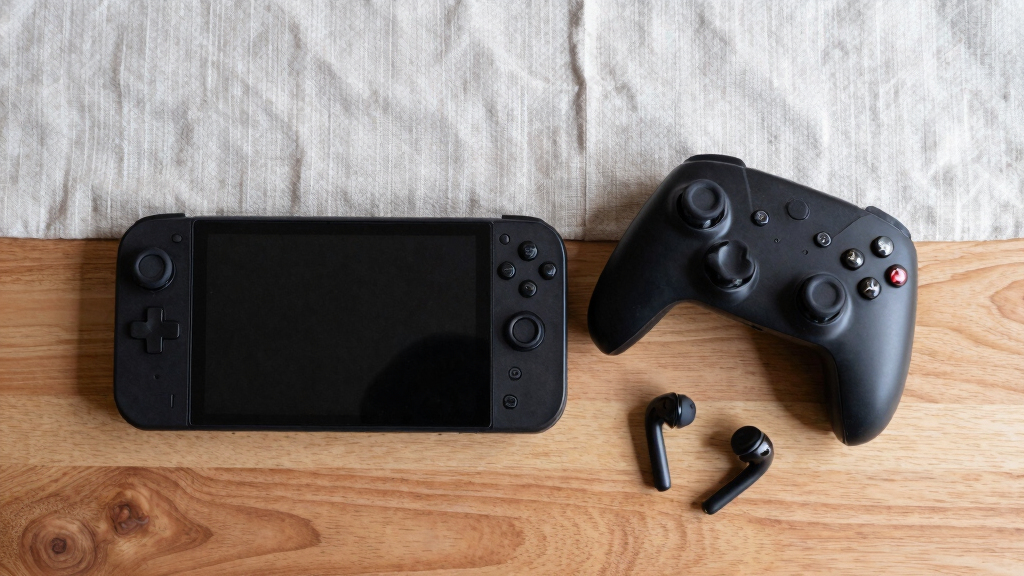
I ranked these consoles by weighing game access, usable performance, display quality, portability, and software friction. A fast processor earned more credit when the controls, operating system, and screen made that speed practical during handheld play. I also compared storage capacity, battery demands, control layouts, and the amount of setup a buyer is likely to face. The highest positions went to products that serve a broad audience without hiding major compromises behind impressive specifications. More specialized devices ranked according to how well they meet their intended role rather than how closely they imitate a portable PC.
Value was judged by capability and ownership burden, not by price alone, since exact retail pricing can change. I gave the Steam Deck OLED the overall lead for its balance of accessibility and PC-game reach, while the ROG Ally Z1 Extreme placed higher for buyers who accept Windows complexity in exchange for flexibility. The original Legion Go earned the premium role through its expansive display and versatile hardware, though its size keeps it from being the universal winner. Retroid devices were separated by portability, screen design, and Android capability, while cloud-first products were judged on comfort, simplicity, and dependence on a strong connection. This ranking makes buyer fit and everyday usability more influential than any single benchmark-style specification.
| portable gaming console | Processor |
|---|---|
| ASUS ROG Ally | AMD Ryzen Z1 Extreme, Zen 4 |
| Retroid Pocket Classic | — |
| Valve Steam Deck OLED 1TB | — |
| OnePro Cloud Handheld | MediaTek Genio 510 |
| Lenovo Legion Go | AMD Ryzen Z1 Extreme, 8 cores and 16 threads |
| ASUS ROG Ally Gaming Handheld | AMD Z1 APU |
| Retroid Pocket 5 Retro Handhel | Qualcomm Snapdragon 865 |
| Lenovo Legion Go S Handheld Ga | AMD Ryzen Z2 Go |
| Retroid Pocket Flip 2 Retro Ga | Qualcomm Snapdragon 865 |
| Logitech G Cloud Gaming Handhe | — |
| Lenovo Legion Go S 2025 Mobile | AMD Ryzen Z2 Go |
Factors to Consider When Choosing Best Portable Gaming Consoles
Choosing among portable gaming consoles starts with deciding where the games will run and how much setup I am willing to accept. PC handhelds, Android retro devices, and cloud-streaming consoles may share a shape, but they solve different problems. The following factors help separate a flexible travel system from an expensive device that duplicates hardware already at home.
Choose the Game Library Before the Hardware
I would begin with the games I actually want to play, because library compatibility matters more than headline power. A Windows handheld can access many storefronts and subscription services, but it may require launchers, updates, and desktop-style troubleshooting. Steam Deck offers a more focused interface, yet some games with certain anti-cheat systems or unsupported software may still require research. Android handhelds make more sense for retro software, mobile games, and streaming than for current demanding PC releases. Cloud devices depend on supported services and do not automatically grant ownership of the games shown in their promotional material. The common mistake is buying the fastest-looking console before checking five or ten must-play titles against its operating system and service requirements.
Balance Screen Ambition Against Battery Demand
A large, sharp, high-refresh display can make text clearer and motion smoother, but more pixels and higher frame rates consume extra power. Many demanding games will not run at a screen’s maximum resolution and refresh rate without reduced graphics settings. I see 120Hz as most useful for lightweight games, streaming, and responsive interface movement rather than as a promise that every major release will reach 120 frames per second. OLED screens add stronger contrast and convincing dark scenes, while LCD panels can still be sensible when price or refresh rate carries more weight. Buyers who mainly play away from an outlet may gain more from a moderate resolution and sensible power profile than from the largest specification numbers. Screen quality should be judged alongside realistic rendering resolution, brightness needs, and expected session length.
Match Size and Controls to the Way You Travel
The word portable covers everything from pocketable retro systems to tablet-sized PC handhelds. Larger models provide more screen space and can feel less cramped, yet they add weight, occupy more bag space, and may become tiring when held without support. A clamshell design protects its display during travel, while exposed sticks usually need a fitted case. Detachable controls add versatility at a desk or hotel, but fixed controls create fewer pieces to charge, store, or misplace. I would compare device dimensions with the bag I use and decide whether gaming will happen on a sofa, train, flight tray, or standing in a queue. Buyers often focus on display size and overlook grip comfort, stick placement, fan noise, and carrying protection.
Plan Storage Around Game Size and Expansion
Storage capacity changes the ownership experience more than it may appear on a specification sheet. A 64GB cloud-oriented handheld needs little local space, but that capacity would be restrictive for a library of modern PC games. A 512GB PC system can fill quickly once large releases, shader data, launchers, and operating-system files are included. One terabyte reduces deletion and redownload cycles, which is especially useful for travel with limited internet access. MicroSD expansion is convenient for smaller games and media, though internal SSD storage is usually preferable for large titles and frequent transfers. I would budget for the device, a suitable case, and any storage upgrade together so that a seemingly inexpensive model does not become poor value after necessary accessories.
Decide How Much Setup and Upkeep You Will Accept
Portable consoles differ sharply in how much attention they demand after purchase. Windows handhelds offer broad flexibility, but small-screen operating-system prompts, driver updates, launchers, and graphics settings can interrupt the console-like feel. Steam Deck reduces much of that friction through its focused interface, though compatibility checks and occasional adjustments remain part of PC gaming. Android retro devices may require sourcing games legally, organizing files, mapping controls, and configuring software before the library feels cohesive. Cloud handhelds are easier to start, but router quality, service subscriptions, and network congestion move the maintenance burden outside the device. I would pay more for a polished interface when the handheld is meant for short, frequent sessions, while hobbyists may prefer greater control and customization.
Frequently Asked Questions
Should I Buy a Steam Deck OLED or a Windows Handheld?
I would choose the Steam Deck OLED when a streamlined interface, OLED image quality, and quick access to a Steam-focused library matter most. A Windows model such as the ROG Ally Z1 Extreme or Legion Go makes more sense for multiple PC storefronts, Windows-only applications, and services that are awkward or unsupported on SteamOS. Windows flexibility comes with more updates, small interface elements, and occasional control or launcher adjustments. Steam Deck can also have compatibility gaps, so buyers should check their must-play games before ordering. The decision is less about which machine is universally faster and more about software freedom versus console-like simplicity.
Is the Z1 Extreme Worth Paying More for Than the Standard ROG Ally Z1?
The Z1 Extreme model is the stronger purchase for demanding PC games because it provides more performance headroom for higher frame rates and better visual settings. The standard Z1 version can be sensible when it is heavily discounted and the library leans toward indie games, older releases, emulation, or streaming. Both models retain the benefits and inconveniences of Windows, so the lower-priced device does not remove software setup. I would compare the actual sale-price gap rather than rely on their original pricing positions. A small gap favors the Z1 Extreme, while a large discount can make the standard Z1 the better value for lighter workloads.
Can a Cloud Gaming Handheld Replace a Steam Deck or ROG Ally?
A cloud handheld can replace a local gaming PC handheld only when streaming covers most of the intended library. The Logitech G Cloud suits home streaming and supported cloud services, offering a lighter workload and potentially longer sessions than a device rendering demanding games locally. It becomes less dependable during flights, commutes with unstable mobile coverage, or travel where hotel networks are congested. Subscriptions, queue policies, game availability, and home-PC access can also shape the long-term cost. I would treat cloud hardware as a strong convenience device rather than a universal substitute for offline local gaming.
Which Retroid Model Makes the Most Sense for Retro Gaming?
The Retroid Pocket 5 is the most balanced Retroid choice here for buyers who want a larger 5.5-inch screen, stronger Android hardware, and room for more demanding retro systems. The Pocket Classic favors maximum portability and an OLED screen, making it better for older games that suit its smaller format. The Pocket Flip 2 serves travelers who want a clamshell that protects the display and controls inside a bag. None offers the same native modern PC-game capability as the Steam Deck or Windows handhelds. I would choose among them by screen size, pocketability, and preferred console generations, not by treating all retro libraries as equally demanding.
Do I Need a 1TB Handheld, or Is 512GB Enough?
512GB is workable for buyers who keep a curated rotation of games and are comfortable deleting or moving large titles. One terabyte makes more sense for frequent travelers, slower internet connections, or libraries containing several modern releases that can each consume substantial space. Retro and cloud-focused systems need far less local capacity, so paying for a large SSD provides little benefit there. Expansion cards can add flexibility, though speed, reliability, and game-loading behavior may differ from internal storage. I would select capacity based on the size of the actual library and include system files, updates, and shader data in the estimate.
Conclusion
For most buyers, I recommend the Valve Steam Deck OLED 1TB as the best overall because it offers the cleanest balance of PC-game access, display quality, storage, and handheld-friendly software. The standard ASUS ROG Ally Z1 is my value pick when its retail price sits well below the Z1 Extreme, especially for lighter games and streaming. Buyers seeking premium hardware and a large display should choose the Lenovo Legion Go, provided its size and battery demands fit their routine. For beginners centered on streaming, the Logitech G Cloud offers a simpler entry point than a Windows handheld, while the OnePro fills a more basic cloud-focused role. Retro players should choose the Retroid Pocket 5 for balance, the Pocket Classic for compact travel, or the Flip 2 for clamshell protection. Players wanting Windows flexibility in a more conventional fixed-control body should compare the Legion Go S versions by storage and processor, while buyers chasing the strongest ROG Ally configuration should step up to the Z1 Extreme.