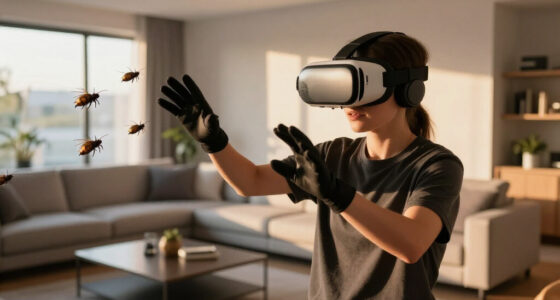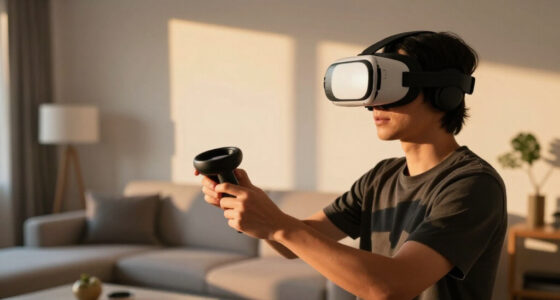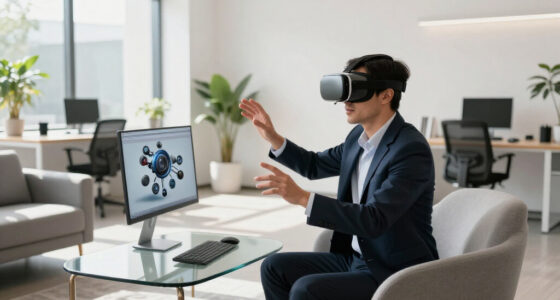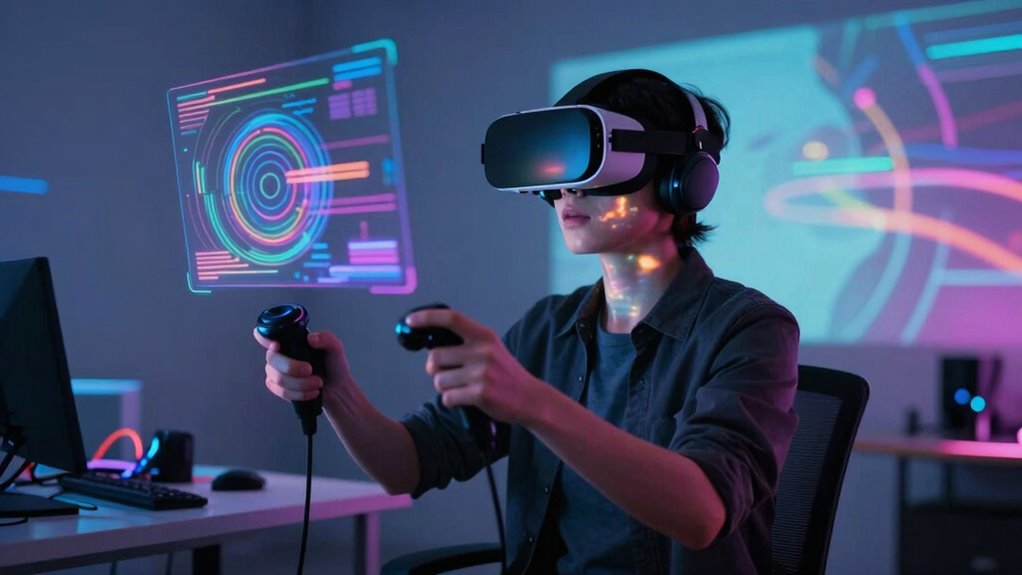

While you might expect VR to deliver instant, seamless immersion, the reality is more complex. Achieving true immersion involves managing sensory stimuli to avoid overload, which can cause discomfort or disorientation. Physical fatigue from extended use and equipment weight can also limit your experience. Recognizing these challenges helps you understand why immersion isn’t always instant and perfect. Want to discover ways to improve your VR experiences and get closer to that ideal? Keep exploring for more insights.

Play games on Amazon Luna for your next adventure, included with Prime
- A rotating selection of games, no download needed
- Play on TV, laptop or phone
- Fast, free delivery for your gear, too
Key Takeaways
- True immersion in VR requires careful sensory management; instant experience often leads to overload or disorientation.
- Sensory overload from vivid visuals and sounds can cause discomfort and reduce overall immersion quality.
- User fatigue from prolonged use and headset weight diminishes focus and enjoyment, hindering instant immersion.
- Proper calibration, breaks, and understanding physical limits are essential for sustainable and immersive VR experiences.
- Achieving seamless immersion involves balancing sensory input and user comfort, not just quick access to virtual environments.
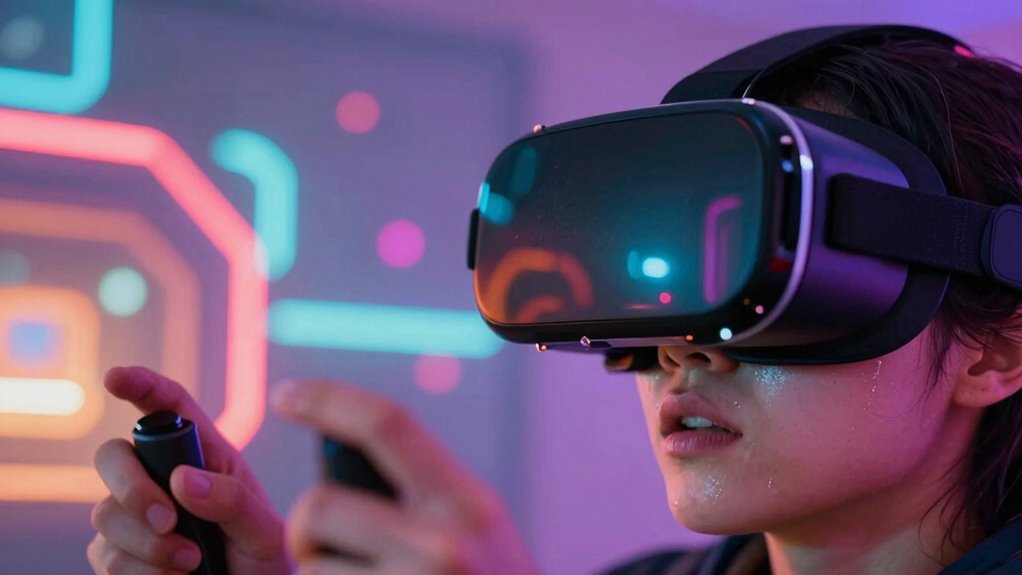
Virtual reality promises instant immersion, but the reality is more complex. When you slip on a VR headset, your expectations might be high—visions of seamless, captivating experiences that transport you instantly. However, many users quickly discover that achieving true immersion isn’t straightforward. Instead, you may encounter sensory overload, where the flood of visual and auditory stimuli becomes overwhelming. The vivid graphics and spatial sounds are designed to pull you into another world, but if your brain isn’t prepared, this barrage can cause discomfort or disorientation. The more immersive the environment, the more your senses are activated, and without proper calibration or breaks, you might feel mentally exhausted or overstimulated. This sensory overload can disrupt your experience, making it less about enjoyment and more about managing the discomfort. Recognizing the importance of sensory processing can help users better prepare for VR sessions and improve their overall experience.
Along with sensory overload, user fatigue is a common hurdle that prevents instant immersion from feeling effortless. As you wear the headset, your eyes work hard to focus through screens just inches from your face, and your neck bears the weight of the device. Extended sessions can lead to physical fatigue, which diminishes your ability to stay engaged. Even in the most sophisticated setups, prolonged use causes eye strain, headaches, or neck pain, pulling you out of the virtual environment and reminding you that VR is still a physically demanding activity. This fatigue can also impact mental engagement, making it harder to maintain focus and enjoy the experience fully. It’s tempting to push through, but doing so often results in diminished immersion and increased discomfort. Additionally, understanding user needs and designing experiences accordingly can help mitigate some of these challenges, leading to more effective and enjoyable VR sessions. Recognizing physical limitations and adapting your approach can significantly improve your overall VR experience.
VR headset with adjustable calibration
As an affiliate, we earn on qualifying purchases.
As an affiliate, we earn on qualifying purchases.
Frequently Asked Questions
How Long Does True Instant Immersion Typically Take to Achieve?
True instant immersion in VR typically takes just a few seconds to a minute, depending on your sensory adaptation and user familiarity with the technology. As you put on the headset, your senses start adjusting quickly, and familiar environments help you feel immersed faster. The more you use VR, the quicker your brain adapts and accepts the virtual environment, making instant immersion increasingly seamless over time.
Does Instant Immersion Vary Across Different VR Hardware?
You might think instant immersion happens the same with all VR hardware, but it actually varies greatly. Hardware compatibility and sensory synchronization play vital roles. If your device’s sensors and displays are perfectly synchronized, you’ll feel immersed almost immediately. However, less advanced hardware can cause delays, breaking that sense of presence. So, the quality of the hardware directly impacts how quickly and seamlessly you experience true immersion.
Are There Psychological Effects Associated With Instant VR Immersion?
Instant VR immersion can cause psychological effects like sensory overload and cognitive fatigue. You might feel overwhelmed as your senses are bombarded with vivid stimuli, making it hard to process everything. This can lead to mental exhaustion after extended use. To avoid these effects, take regular breaks, adjust immersion settings, and listen to your body’s signals. Managing your VR sessions helps keep the experience enjoyable and safe.
Can Instant Immersion Cause Motion Sickness?
Instant immersion in VR can be like diving into choppy waters, causing motion sickness for you. You might experience sensory overload, where your eyes and inner ear send conflicting signals, leading to discomfort. This sensory mismatch triggers cognitive dissonance, making you feel dizzy or nauseous. To avoid this, take breaks, adjust settings, or ease into VR experiences gradually, giving your brain time to adapt and stay balanced.
What Are the Limitations Preventing True Instant Immersion?
You can’t achieve true instant immersion in VR because sensory overload can overwhelm your senses, making it difficult to fully engage instantly. Additionally, hardware compatibility issues, like mismatched headsets and controllers, delay the experience. These limitations mean you often need some setup time to guarantee smooth, comfortable immersion. Until hardware becomes more seamless and sensory overload is better managed, true instant immersion remains a challenge.
As an affiliate, we earn on qualifying purchases.
Conclusion
So, after all this, remember that VR’s “instant immersion” isn’t like flipping a switch; it’s more like planting a seed that needs nurturing. While the technology has advanced rapidly, your brain still needs time to adapt and fully believe in the virtual world. Think of it like a bridge that’s still under construction—you can get across, but it’s not quite finished yet. Patience and practice will turn your VR experience from a flickering image into a vivid reality.
VR headset with ergonomic design
As an affiliate, we earn on qualifying purchases.
As an affiliate, we earn on qualifying purchases.
As an affiliate, we earn on qualifying purchases.
Fall Picks
fall essentials
As an affiliate, we earn on qualifying purchases.