
TL;DR
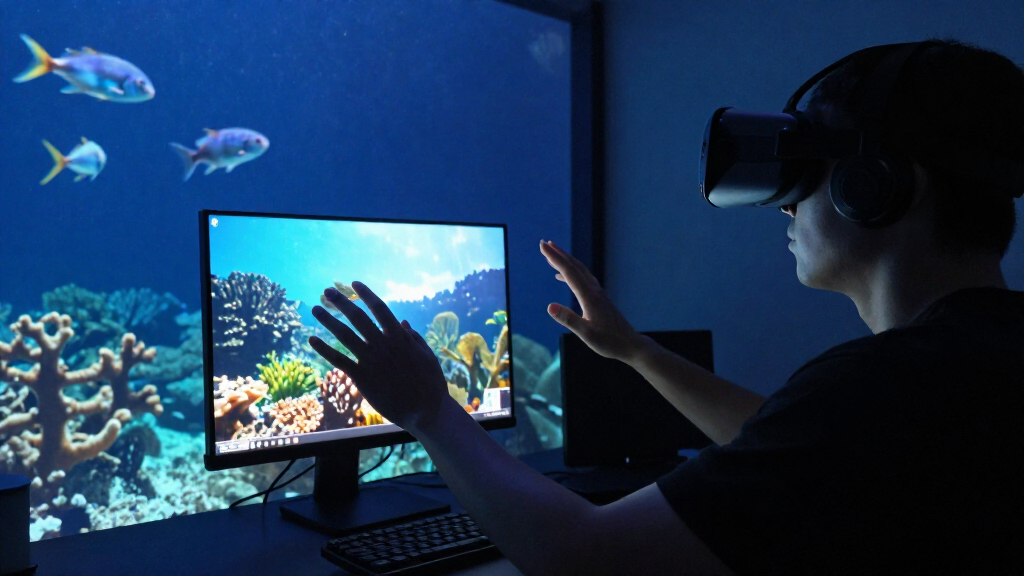
A project called Abyssal Garden presents a swimmable underwater world in a single 97 KB HTML file. Its creator says it contains no image, model, sound or library files; the scenery and creatures are generated by code when it loads.
A Reddit user has showcased Abyssal Garden, a browser-based underwater simulation created with Claude and packaged as a single 97 KB HTML file. The project depicts a world that users can swim through, with kelp, fish and other scenery rendered from code rather than included as separate image, model, sound or library files.

Play games on Amazon Luna for your next adventure, included with Prime
- A rotating selection of games, no download needed
- Play on TV, laptop or phone
- Fast, free delivery for your gear, too
The simulation includes a kelp forest, a sunken ship and a stone whale tail, along with manta rays, schools of fish and rays of light from the water’s surface. These elements are generated in the browser when the file loads, according to the project description reported by XDA Developers. The small file size refers to the HTML file itself; the description does not provide information about memory use, loading speed or performance across devices.
The creator said the project began with a single prompt to Claude. Later prompts added a menu, collision handling and quality controls. The provided project description also says Claude checks its own work to reduce visual glitches. XDA pointed readers to the project’s webpage and GitHub repository, where the initial prompt can be read.
The presentation is a browser experience rather than a conventional game release with a stated platform launch or store listing. The available description does not identify the specific Claude model or provide independent technical testing. The small HTML file and the visible simulation are presented as the project’s notable features, but the report does not publish code measurements or a detailed account of how the rendering is implemented.
Abyssal Garden in 97 KB
A swimmable underwater world fits in one HTML file, with scenery generated by code when it loads. The file size alone does not show how well it runs across devices.
A world built in the browser
The visuals are described as code-generated at load time, with no separate image, model, sound, or library files.
Underwater scenery
Swim through kelp, a sunken ship, and a stone whale tail.
Moving through the scene
Manta rays, schools of fish, and rays of surface light fill the simulation.
From prompt to experience
The creator described an iterative process that added features after the initial request.
The project reportedly began with a single prompt to Claude.
Later prompts added a menu and collision handling.
Quality controls were added; the description also says Claude checks its work for visual glitches.
What the report confirms
Readers can explore the project and its prompt, but published technical details are limited.
- A dedicated webpage with the simulation
- A GitHub repository reportedly containing the initial prompt
- Specific Claude model or version
- Performance, memory, loading speed, or device compatibility
How Code Keeps the File Small
Abyssal Garden illustrates one way generative AI can help produce a self-contained interactive demonstration: instead of bundling a folder of art assets, the project describes a scene whose visuals are created through code at runtime. That approach can make a compact file possible, though the 97 KB figure alone does not establish how smoothly it runs or how much work went into refining it.
For people experimenting with AI-assisted development, the project also points to an iterative workflow. The first prompt established the concept, while later instructions added specific features such as collisions and quality controls. This is more informative than treating the result as a one-prompt finished product: the account describes follow-up work to shape the experience.
Products Worth Considering

Logitech MX Master 4 Ergonomic Wireless Mouse with Haptics – Graphite

Bose QuietComfort Wireless Noise Cancelling Headphones – Petal Pink Limited Edition

Samsung Odyssey OLED G8 34-Inch Curved Ultra WQHD Gaming Monitor
As an affiliate, we earn on qualifying purchases.
From Prompt to Browser World
XDA Developers reported the project on November 15, 2026, after user Any-Reputation8118 shared it on the ClaudeAI subreddit. The post included a video of the underwater environment. XDA described the result as a world users can swim through and said the project is available on a dedicated webpage.
The project’s GitHub repository reportedly contains the original prompt. Its later additions—a menu, collision behavior and visual-quality controls—show that the result developed beyond the initial request. The available details do not establish how many revisions were needed, whether anyone besides the creator contributed, or what devices and browsers have been tested.
Limits of the Published Details
The project description does not specify which Claude model or version generated the code, and the headline wording supplied with the request does not name a model. It also does not include independent verification of the file size, the code-generation process or the claim that the project has no external assets or libraries.
There are no published benchmarks for frame rate, browser compatibility, loading time or performance on mobile and lower-powered computers. The extent of Claude’s self-checking is also not explained, so it is unclear what tests were run or how visual problems were identified. These details would be needed to assess the simulation beyond its demonstration and stated file size.
Try the Available Web Demo
Readers can visit the Abyssal Garden webpage to try the simulation and consult its GitHub repository for the initial prompt, as described by XDA Developers. No release schedule, planned update or further development milestone has been announced in the available reporting. Any claims about future features or broader device support remain unconfirmed.
Source: XDA Developers
Key Questions
What is Abyssal Garden?
Abyssal Garden is a browser-based underwater simulation that users can swim through. Its described scenery includes kelp, a sunken ship, manta rays, fish and surface light rays.
How large is the project?
The project is described as a single 97 KB HTML file. That figure is for the file; published details do not include runtime memory or performance measurements.
Does the file include image or 3D model assets?
According to the project description reported by XDA Developers, it contains no images, 3D models, sound files or libraries. The visuals are generated by code when the project loads.
How was Claude used to make it?
The project reportedly began with one prompt, followed by prompts that added a menu, collision behavior and quality controls. The specific Claude model or version was not identified.
Where can I try it?
XDA Developers directs readers to the Abyssal Garden webpage and its GitHub repository, which reportedly includes the initial prompt. Device and browser compatibility details were not provided.
Source: XDA Developers