
TL;DR
The November 20, 2026 SteamVR roundup lists 12 titles, from Orb Rush VR and Tabletop Basketball VR to SOL Protocol and MOLY. The provided listing details do not confirm prices, headset support, gameplay features, or release status, so check each Steam store page before buying or setting aside room-scale space.
A new VR game can look like a perfect fit until you discover it needs more floor space than your living room offers. The November 20, 2026 SteamVR release roundup names 12 fresh titles, including Orb Rush VR, Tabletop Basketball VR, Playground VR, SOL Protocol, and MOLY. That gives you a useful starting list, but a title alone cannot tell you whether a game works with your headset or suits your play style.

Play games on Amazon Luna for your next adventure, included with Prime
- A rotating selection of games, no download needed
- Play on TV, laptop or phone
- Fast, free delivery for your gear, too
This guide walks through the list by the kinds of experiences the names suggest, while keeping a clear line between what the roundup confirms and what you still need to verify on Steam. Treat names such as Magic Color Merge Puzzle VR as clues, not proof of mechanics. Before you buy, check the live store page for release status, controls, headset compatibility, and minimum PC requirements. A quick check can save you from a game that looks inviting but does not fit your setup.
The November 20 roundup names 12 Steam VR titles, from Orb Rush VR to MOLY.
The supplied details do not confirm prices, developers, features, release status, or headset support.
Check each Steam page for supported headsets, controller requirements, seated or room-scale play, and PC specifications.
Use demos, recent reviews, and current listing details to judge a new game before buying.
Treat genre impressions from a title’s name as clues, not verified descriptions of its gameplay.
New on SteamVR
- Orb Rush VR
- Tabletop Basketball VR
- Magic Color Merge Puzzle VR
- Hunter Bro VR
- Playground VR
- Squirrel Defender VR
- Undrift
- Asian Story
- Sol Protocol
- Hyperlane Highway
- Crystal Commanders
- MOLY
Via Steam store search (VR category), newest first, as of 2026-11-20.
Which 12 titles appear in the November 20 SteamVR roundup?
The November 20 SteamVR roundup lists 12 titles: Orb Rush VR, Tabletop Basketball VR, Magic Color Merge Puzzle VR, Hunter Bro VR, Playground VR, Squirrel Defender VR, Undrift, Asian Story, SOL Protocol, Hyperlane Highway, Crystal Commanders, and MOLY. Those names and their Steam store links are the confirmed details available here; they do not confirm release status, price, features, or hardware support.
That distinction matters because a store listing is an invitation to investigate, not a guarantee of what you can play today. A full release, demo, and Early Access launch differ in how much content you can expect and how much uncertainty you accept. A demo can limit your time but let you test comfort and performance; Early Access may offer more to play while leaving features or polish in flux. Check the page’s status and description before using the roundup date to infer that a title is finished or broadly available.
For example, if Orb Rush VR grabs your attention, open its Steam page and look for the release date, current price, developer description, screenshots, and headset requirements. Each detail answers a different question: the date and status tell you what is available, the price sets the commitment, and the technical information helps establish whether your setup can run it. Repeat that check for a title with a very different name, such as MOLY. The roundup identifies the listings to investigate; the store pages are where you confirm the practical details.
- Arcade-sounding names: Orb Rush VR, Tabletop Basketball VR, and Hyperlane Highway.
- Puzzle or strategy-sounding names: Magic Color Merge Puzzle VR and Crystal Commanders.
- Other titles to investigate: Hunter Bro VR, Playground VR, Squirrel Defender VR, Undrift, Asian Story, SOL Protocol, and MOLY.
These groupings are only a way to organize your browsing. A name can suggest a genre, but it cannot establish exactly how a game plays. That caution is useful because genre assumptions can lead you to overlook the practical questions—such as required movement or input—that determine whether the game fits your space and comfort.
Products Worth Considering
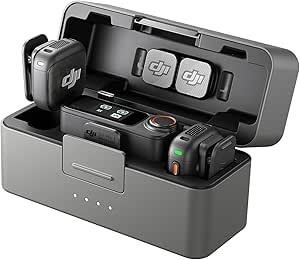
DJI Mic 3 Wireless Microphone (2 Transmitters, 1 Receiver, Charging Case)

Amazon Kindle Scribe (16GB) with Premium Pen, Tungsten

Logitech MX Keys S Combo Wireless Keyboard and Mouse, Graphite
As an affiliate, we earn on qualifying purchases.
How can you tell which new VR games fit your headset?
To find out whether a new Steam VR listing fits your setup, check the store page’s VR headset and input details, then compare them with your headset and controllers. The roundup names titles but does not specify compatibility for Quest Link or Air Link, Valve Index, or any other PC VR hardware, so check each listing instead of assuming support from the word “VR.” Compatibility can involve more than whether the headset connects: a game may expect particular controllers or inputs that change how playable it feels.
Here’s a practical example: you use a Quest headset over Air Link and have Touch controllers. Before buying Tabletop Basketball VR, look for an explicit supported-headset statement and the required input devices. If the page does not answer those questions, the title alone cannot fill the gap. The same check applies if you use an Index or another SteamVR-compatible setup. A vague listing leaves you with a tradeoff: wait for clearer information, or accept the risk of spending time troubleshooting a setup the developer has not clearly confirmed.
Steam access is part of the route for these listings, but it does not automatically tell you whether a particular PC and headset combination will run a game well. The headset connection, graphics card, processor, and game requirements all matter. A title that starts in VR on one computer may run poorly on another, especially if the system sits near the minimum specifications. Minimum requirements are a threshold to compare against, not a promise of smooth performance at your preferred resolution or refresh rate; a system with more headroom gives you a better chance of avoiding stutter that can make VR uncomfortable.
- Open the exact Steam store page linked for the game you want. Similar names or general roundup descriptions are not enough to confirm a specific listing’s requirements.
- Read the VR support and controls details. Look for headset names, controller requirements, and any mention of seated or room-scale play. These details determine both whether you can launch the game and whether you have the space and equipment to use it comfortably.
- Compare the listed PC requirements with your own computer, including its graphics card and available ports or wireless setup. If your hardware is near the minimum, look for reports from comparable setups before treating compatibility as a reliable performance forecast.
- Check recent player reports for your headset and version, since updates can change how well a game behaves. Reports are most useful when they name the headset, PC, and connection, because performance experiences from a different setup may not transfer to yours.
This takes a few minutes, but it is better than finding out after purchase that your favorite controllers are unsupported. If a store page is vague, wait for clearer information or a demo before committing. Waiting can cost you the chance to play immediately, while buying on an assumption can cost money and time; the right choice depends on how much uncertainty you are willing to accept.
Which titles look like the easiest place to start?
The easiest starting point is a game whose store page confirms that its controls, play space, and session style match what you want. The titles Tabletop Basketball VR, Magic Color Merge Puzzle VR, and Playground VR may sound approachable, but their names do not verify whether they support seated play, quick sessions, or simple controls. Treat them as candidates to inspect, not guaranteed beginner picks. For a new player, a familiar subject can reduce the learning curve, but it does not necessarily reduce physical movement or motion discomfort.
Suppose you have 20 minutes after work and only a clear patch of carpet. A puzzle title might suit a short session if the page confirms seated play and motion-controller support; a game that requires room-scale movement may not. The difference is like choosing between a board game at the kitchen table and a sport that needs an empty gym. Both can be fun, but only one fits the room you have. This is also a time tradeoff: a game with a quick restart or clear stopping point can fit a short break better than one that expects a longer uninterrupted session, even if both are comfortable to play.
For a first VR game, read the description and look at actual gameplay footage. Screenshots can show a bright interface or a familiar court, while a video may reveal whether you need to swing, reach, aim, or move around. If you are sensitive to motion, check for comfort options such as teleport movement or snap turning. Those features are not confirmed for any of the listed games in the supplied details. Comfort settings can help, but they do not guarantee that a game will feel comfortable for every player; the safest signal is a chance to try the actual movement, ideally in a demo.
- Short-session candidate: See whether Magic Color Merge Puzzle VR offers clear stopping points and seated controls.
- Familiar activity candidate: Check whether Tabletop Basketball VR uses motion controls or another input method.
- Open-space candidate: Confirm how Playground VR handles movement before clearing a larger area.
These are examples of what to investigate, not claims about how the games work. A title earns a place on your shortlist when its verified features suit your comfort level and available space. If those details are missing, keeping it as a hold rather than a beginner recommendation prevents a promising name from being mistaken for evidence.
What should you check before paying for a new release?
Before paying for a new VR release, check its price, launch discount, release status, refund eligibility, and whether a demo is available. None of those buying details appears in the supplied roundup, which provides title names and Steam links. A fresh listing is not automatically a finished game, and a low price is not automatically a good fit if the controls or performance fall short. Price tells you the upfront cost; release status and reviews help you judge how much uncertainty comes with that cost.
Imagine you are choosing between SOL Protocol and Hyperlane Highway. The names alone cannot tell you which one has more content, whether either is single-player, or whether either has multiplayer. Compare the store descriptions, launch dates, system requirements, user reviews, and any developer notes. If one is marked Early Access, read what is playable now and what the developers say they plan to add. That status can be a reasonable choice if the current content already suits you, but planned features are not a substitute for what is available at purchase.
Steam’s refund policy can give you a limited way to test a purchase, but you should review the current terms on Steam before relying on them. A demo is often the simplest first check when one exists. It lets you test whether your headset runs the game smoothly and whether its movement feels comfortable, much like trying on shoes before a long walk. A demo may not represent every part of the full game, though, so use it to answer specific questions about controls and comfort rather than as a guarantee of the full experience.
| Store detail | What to look for | Why it helps |
|---|---|---|
| Release status | Full release, Early Access, or demo | Shows how finished the listing claims to be |
| Price | Current price and any discount | Helps you compare value without guessing |
| Player mode | Single-player, online multiplayer, or both | Confirms whether friends can join you |
| Technical details | Headsets, controls, and PC requirements | Checks whether your setup can run it |
Take the same careful approach with a lesser-known title such as Undrift or Asian Story. The listing may contain the detail that makes it worth trying, but you need to read it rather than infer it from the name. If the page does not answer a buying question, the uncertainty itself is useful information: it may be a reason to wait for a demo or more player reports.
How do you handle missing or changing release information?
When details are missing, separate confirmed listing information from assumptions and revisit the store page before you buy. The roundup confirms that the 12 named titles have Steam links, but it does not establish each game’s developer, exact release status, price, feature set, or compatibility. Those details can also change after a listing goes live, so a saved roundup is a starting point rather than a permanent product sheet. This matters most when you are comparing games: if one listing is detailed and another is sparse, the difference in information is not proof that the better-documented game is better, but it does give you more evidence for a decision.
One concrete example: if a Steam page for Squirrel Defender VR initially lacks a clear supported-headset list, do not decide that it works with your setup just because another Steam VR title does. Check again for an updated description, developer note, or recent review from someone using your headset. This kind of patience is especially useful for a new release, when early fixes and clarifications can arrive quickly. You can note the unresolved question and revisit it later instead of repeatedly searching or treating silence as confirmation.
Performance claims need a platform and version attached. “Runs well” is incomplete unless you know the headset, PC specifications, game build, and whether the player used a wired connection or wireless streaming. The same applies to Steam Deck claims: a verification label or performance report can change with updates, and it is not a substitute for confirming PC VR compatibility. The supplied roundup gives no performance measurements for these games. Matching the report to your own setup matters because a different graphics card or wireless connection can change both frame rate and comfort.
Use the roundup to find titles; use each current Steam page to confirm what you can play today.
If you cannot access a live listing, say so plainly. “I can’t verify current price or headset support” gives a reader something honest and useful. An invented figure, feature, or compatibility claim may send them toward a purchase that does not work for their room or hardware. Clear uncertainty helps readers decide whether to wait, look for a demo, or accept the risk of trying a listing with incomplete information.
How can you build a short, useful VR shortlist?
You can build a useful VR shortlist by sorting the 12 titles against three personal limits: play time, available space, and hardware. Start with the activity names that catch your eye, then let verified store details do the deciding. That method keeps a roundup from becoming a shopping list of guesses. It also makes comparisons fairer: a game with a familiar name should not outrank one with clearer evidence if your real constraint is headset support or room size.
For example, say you want a game for a small apartment, play seated, and use a Quest over Link. You might begin by checking Magic Color Merge Puzzle VR, Tabletop Basketball VR, and MOLY, then remove any listing that does not confirm your headset and seated controls. Someone with a large play area and an Index may instead investigate Playground VR or Hunter Bro VR. These are browsing paths, not claims that those titles have specific modes. The point is to filter in stages: first eliminate practical mismatches, then compare the remaining games on price, content, and how much uncertainty you can tolerate.
Give each candidate a simple pass or hold decision. A pass means the listing answers your key questions and the game fits your budget. A hold means you need a demo, clearer performance reports, or more information about Early Access plans. If several titles remain, choose one with a demo or a clear refund path first; you will learn more from ten minutes in the headset than from a polished capsule image. A hold is not a rejection: it protects your budget while leaving room to reconsider when better information appears.
- Space: Can you play seated, standing, or only with room-scale movement?
- Controls: Does the game support your controllers?
- Comfort: Are turning and movement options suitable for you?
- Confidence: Is there a demo, recent review, or clear listing description?
Keep the list short enough to act on. Three verified candidates are more useful than twelve titles you have not checked, because you can compare their evidence and make a purchase decision without letting the roundup’s full list obscure your actual constraints.
Frequently Asked Questions
Which games are in the November 20, 2026 SteamVR roundup?
The roundup lists Orb Rush VR, Tabletop Basketball VR, Magic Color Merge Puzzle VR, Hunter Bro VR, Playground VR, Squirrel Defender VR, Undrift, Asian Story, SOL Protocol, Hyperlane Highway, Crystal Commanders, and MOLY. Check each linked Steam page for current release details.
Do these games work with Quest Link or Air Link?
The roundup does not confirm headset compatibility for any title. Check the individual Steam listing for supported headsets and controls, then compare those details with your Quest and PC setup.
Are the listed games full releases or Early Access?
The supplied details do not identify release status. On each Steam page, look for the release date and labels or descriptions that indicate a full release, Early Access, or demo.
Do the roundup listings include prices or launch discounts?
No prices or discounts are provided in the roundup details. Steam prices can change, so check the live store page before deciding what fits your budget.
Can you play these titles seated?
Seated play is not confirmed by the roundup. Check each listing for play-area requirements and comfort settings, and look for recent reviews from players using your headset if the description is unclear.
Where should you check PC VR performance and compatibility?
Start with the Steam page’s minimum and recommended requirements, then compare them with your computer and headset connection. Recent player reports can add practical context, but performance depends on the PC, headset, connection, and game version.
Conclusion
The November 20 list gives you 12 titles to investigate, but your headset, room, and budget should decide what comes next. Pick the few names that interest you, open their current Steam pages, and confirm the controls, release status, and PC requirements before you commit.
A good VR purchase should feel right when you put the headset on, not just when you read its title. Check the details first, then make room for the game that truly fits.