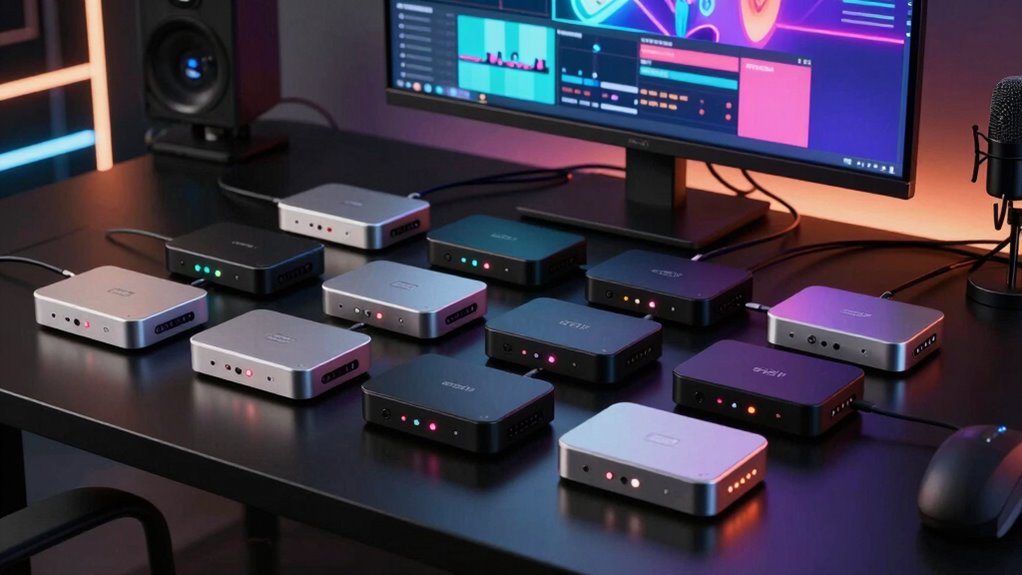

Searching for the best streaming encoder device in 2026? The right choice depends on your production needs, budget, and technical setup. The Magewell Ultra Encode AIO stands out as the overall top pick thanks to its versatile multi-protocol streaming and robust features. For those prioritizing 4K quality, the Blackmagic Design Streaming Encoder 4K offers excellent performance, while the DDMALL H.265 HDMI Video Encoder provides a compact, budget-friendly option for simpler setups. The main tradeoffs involve balancing feature complexity with ease of use and cost. Keep reading for a detailed breakdown to help you choose the best fit for your streaming goals.

Get VR and gaming gear delivered free — and shop member deals
- Fast, free delivery on millions of items
- Access to Prime Big Deal Days deals on October 6–7
- Prime Video, Amazon Music and more included
Key Takeaways
- Top encoders combine multi-protocol support with high-quality 4K or HD streaming, but may increase complexity and cost.
- Versatility in inputs and outputs is essential for professional productions, yet can overwhelm beginners.
- Price varies widely, with premium models offering advanced features like multi-source mixing and recording.
- Ease of setup and user interface are critical for non-technical users, often sacrificed in feature-heavy models.
- Compatibility with platforms and network protocols should be checked to match your existing streaming infrastructure.
| Magewell Ultra Encode AIO – HDMI/SDI 4K Encoder with Multi-Protocol Streaming, Recording, NDI|HX3 & Dual-Input Mixing for Live Production |  | Best Overall for Versatile Live Production | Inputs: HDMI, SDI | Max Resolution: 4096×2160p60 (HDMI), 4096×2160p30 (SDI) | Streaming Protocols: RTMP, RTMPS, SRT, NDI|HX2/HX3, HLS, TS over UDP/RTP | VIEW ON AMAZON | See Our Full Breakdown |
| 4K HDMI Video Encoder Decoder, H.264/H.265, Supports RTMP, RTSP, SRT, HLS, UDP Multicast, HDMI Loopout, Multi-Platform Live Streaming, IPTV & GB28181 ONVIF Compatible |  | Best for Multi-Platform Streaming and Compatibility | Resolution: 4K@30fps | Video Codecs: H.264, H.265 | Bitrate Range: 2–61,440 kbps | VIEW ON AMAZON | See Our Full Breakdown |
| HD HEVC H.265 MPEG4 H.264 4K HDMI to Video Streaming IPTV Encoder for HDMI to RTSP RTMP HTTP UDP HLS SRT Facebook YouTube Live Streaming Server |  | Best for 4K Streaming with Customization Options | Compatible Devices: HDMI-compatible devices | Specific Uses: Encode HDMI video into network streams | Connector Type: HDMI | VIEW ON AMAZON | See Our Full Breakdown |
| ZowieBox 4K HDMI NDI Video Encoder/Decoder |  | Best for NDI Workflows and Compact Professional Use | Resolution Support: 4K@30fps, 1080p@60fps | Input/Output: HDMI NDI, HDMI passthrough | Streaming Protocols: SRT, RTMP, RTSP | VIEW ON AMAZON | See Our Full Breakdown |
| 1080P60 HDMI Video Encoder, H.265/H.264 Live Streaming Encoder for YouTube and Facebook |  | Best for 1080P Streaming and Ease of Use | Compatible Devices: Desktop, Gaming Console, Laptop | Input Voltage: 12V DC | Power Plug Type: No plug included | VIEW ON AMAZON | See Our Full Breakdown |
| ToVi 4K Network Video Streamer, H.264/H.265, HDMI Loop Out, IPTV, RTMP |  | Best Overall for Professional AV Integration | Connectivity Technology: Ethernet, HDMI | Resolution: 4K | Video Codec: H.264, H.265 | VIEW ON AMAZON | See Our Full Breakdown |
| H.265 H.264 4K HDMI to IP Network Video Encoder with Multi-Protocol Support |  | Best for Versatile Live Streaming with Protocol Compatibility | Resolution: 4K UHD (3840×2160) | Video Codec: H.265, H.264 | Frame Rate: Up to 30fps at 4K | VIEW ON AMAZON | See Our Full Breakdown |
| HEVC H.265 H.264 AVC 4K HDMI to Ethernet IP Video Encoder for Live Streaming |  | Best for Customization and Protocol Compatibility | Video Resolution: 3840×2160 (4K UHD) | Frame Rate: Up to 30fps at 4K | Protocols Supported: RTSP, RTMP, HLS, SRT, etc. | VIEW ON AMAZON | See Our Full Breakdown |
| J-Tech Digital HDMI IPTV Encoder, 4K 60Hz Input, 1080p 60Hz Output, H.264/H.265 Video Encoder with Audio Support |  | Best for Live Events and Broadcasts with On-Screen Customization | Input Resolution: 4K 60Hz | Output Resolution: 1080p 60Hz | Compression Formats: H.264, H.265 | VIEW ON AMAZON | See Our Full Breakdown |
| Blackmagic Design Streaming Encoder 4K |  | Best for Broadcast-Quality 4K Live Streaming | Resolution Support: Up to 2160p60 | Inputs: 12G-SDI | Outputs: SDI and HDMI | VIEW ON AMAZON | See Our Full Breakdown |
| Blackmagic Design Streaming Encoder 4K |  | Best for High-Resolution Professional Streaming | Product Dimensions: 6 x 2 x 8 inches | Item Weight: 1.66 pounds | Video Resolution Support: DCI 4K60 | VIEW ON AMAZON | See Our Full Breakdown |
| DDMALL H.265 HDMI Video Encoder, Mini 2K Hardware Live Encoder (AVC-2K) |  | Best for Compact, Low-Latency Streaming on the Go | Hardware Interface: HDMI | Video Capture Resolution: 1080p | Operating System: Windows, MacOS, Linux | VIEW ON AMAZON | See Our Full Breakdown |
More Details on Our Top Picks
Magewell Ultra Encode AIO – HDMI/SDI 4K Encoder with Multi-Protocol Streaming, Recording, NDI|HX3 & Dual-Input Mixing for Live Production
The Magewell Ultra Encode AIO stands out for its high-resolution 4K support combined with extensive input options, including HDMI and SDI, making it ideal for complex live production environments. Unlike the Blackmagic Design Streaming Encoder, which focuses on simplicity, this model excels in multi-protocol streaming and multi-destination outputs, offering greater flexibility. Its onboard overlay and advanced processing add professional polish, but its weight (3.6 pounds) and complex setup may challenge those seeking portability or quick deployment. This device is best suited for professional broadcasters or large-scale live events where quality and versatility outweigh portability and ease of use.
Pros:- Supports 4K high-resolution encoding at 60fps for detailed live streams
- Multi-protocol support including RTMP, SRT, and NDI|HX3 for broad compatibility
- Includes onboard overlays and advanced video processing features
- Simultaneous streaming and recording capabilities
Cons:- Relatively heavy for portable use, limiting mobility
- Setup complexity requires technical expertise
- Higher price point may be a barrier for small-scale users
Best for: Producers and broadcasters needing high-quality, multi-input 4K streaming with recording capabilities
Not ideal for: Event organizers or solo creators seeking a lightweight, plug-and-play device
- Inputs:HDMI, SDI
- Max Resolution:4096×2160p60 (HDMI), 4096×2160p30 (SDI)
- Streaming Protocols:RTMP, RTMPS, SRT, NDI|HX2/HX3, HLS, TS over UDP/RTP
- Recording:SD card, USB storage, network drives
- Video Codecs:H.264, HEVC
- Dimensions:10″L x 7″W x 4″H
- Weight:3.6 pounds
- Connectivity:Ethernet, HDMI, Wi-Fi
Our verdict“This encoder makes the most sense for professional setups demanding high quality, multiple inputs, and advanced features, despite its weight and cost.”
4K HDMI Video Encoder Decoder, H.264/H.265, Supports RTMP, RTSP, SRT, HLS, UDP Multicast, HDMI Loopout, Multi-Platform Live Streaming, IPTV & GB28181 ONVIF Compatible
The 4K HDMI Video Encoder Decoder offers robust support for 4K@30fps with dual H.265/H.264 codecs, making it suitable for multi-platform streaming. Compared with the ZowieBox, which emphasizes NDI workflows, this device emphasizes broad protocol compatibility including RTMP, RTSP, and HLS, providing versatility across streaming environments. Its size (125×105×30mm) and lightweight (~400g) make it ideal for portable setups, but it requires some technical setup for configuration and lacks built-in storage. It is best for live broadcasters or digital signage operators who need reliable, flexible streaming without the bulk.
Pros:- Supports 4K@30fps with dual codecs for high-quality streaming
- Compatible with multiple protocols and streaming services for broad flexibility
- Lightweight and portable, easy to deploy in various environments
- Supports local HDMI loopout for monitoring
Cons:- Requires technical knowledge for optimal setup
- Limited to HDMI input, no multi-input support
- No embedded storage or recording features
Best for: Small production teams or digital signage operators needing portable, reliable multi-platform streaming
Not ideal for: Streamers or broadcasters who want integrated overlay features or multi-input support beyond HDMI
- Resolution:4K@30fps
- Video Codecs:H.264, H.265
- Bitrate Range:2–61,440 kbps
- Input:HDMI
- Output:HDMI, network streams
- Protocols:RTMP, RTSP, SRT, HLS, UDP Multicast
- Dimensions:125×105×30mm
- Weight:~400g
Our verdict“This device is ideal for users needing a portable, multi-protocol encoder with reliable 4K output, especially in digital signage or small broadcast setups.”
HD HEVC H.265 MPEG4 H.264 4K HDMI to Video Streaming IPTV Encoder for HDMI to RTSP RTMP HTTP UDP HLS SRT Facebook YouTube Live Streaming Server
The HD HEVC H.265 MPEG4 H.264 Encoder supports 4K UHD input and output, making it suitable for high-quality live streams to platforms like YouTube and Facebook. Unlike more advanced multi-input devices, this encoder is streamlined for HDMI sources and emphasizes efficient compression with H.265, reducing bandwidth needs. Its customizable settings and broad protocol support are advantageous for professional streaming, but the setup can be technical for newcomers and it doesn’t feature built-in storage or recording. This makes it a strong choice for streamers or venues prioritizing high resolution with bandwidth efficiency, especially when network stability is good.
Pros:- Supports 4K UHD input/output with high frame rates
- Efficient H.265/H.264 compression reduces bandwidth usage
- Compatible with multiple streaming platforms and protocols
- Customizable settings for branding and overlays
Cons:- Requires technical setup and network knowledge
- Limited to HDMI input, no multi-source support
- No internal storage or recording capability
Best for: Content creators and broadcasters aiming for high-quality 4K streams with bandwidth efficiency
Not ideal for: Users with multiple input sources or those seeking integrated overlays and recording features
- Compatible Devices:HDMI-compatible devices
- Specific Uses:Encode HDMI video into network streams
- Connector Type:HDMI
- Number of Ports:1
- Video Codecs:H.264, H.265
- Resolution:4K
Our verdict“Best suited for streamers needing high-resolution, bandwidth-efficient encoding without extra input flexibility or recording features.”
ZowieBox 4K HDMI NDI Video Encoder/Decoder
The ZowieBox 4K HDMI NDI offers a compact yet powerful solution for live streaming and decoding, supporting 4K HDMI input/output and NDI conversion. Its web UI control and multiple streaming protocols like SRT and RTMP make it suitable for professional gaming, broadcasting, and NDI-centric workflows. Compared to the Magewell Ultra Encode AIO, which supports multiple input types and recording, the ZowieBox is more portable but cannot run encoder and decoder modes simultaneously, limiting its versatility in complex setups. It’s ideal for users who prioritize NDI workflows and a small footprint but don’t need multi-input or recording features.
Pros:- Supports 4K HDMI input/output with high-quality decoding
- Compact and portable, easy to deploy in tight spaces
- Supports multiple streaming protocols including SRT and RTMP
- Web UI control simplifies management
Cons:- Encoder and decoder functions cannot operate simultaneously
- USB capture card functionality is unsupported
- Full NDI signal support is limited
Best for: Small professional teams or streamers leveraging NDI workflows who need a portable device
Not ideal for: Large studios or users requiring multi-input or simultaneous encoding and decoding
- Resolution Support:4K@30fps, 1080p@60fps
- Input/Output:HDMI NDI, HDMI passthrough
- Streaming Protocols:SRT, RTMP, RTSP
- Power:USB Type-C, PoE, DC
- Connectivity:Ethernet, USB, tripod mount
Our verdict“This device is perfect for NDI-focused workflows where portability and decoding are priorities, but less suited for high-volume multi-input scenarios.”
1080P60 HDMI Video Encoder, H.265/H.264 Live Streaming Encoder for YouTube and Facebook
The 1080P60 HDMI Encoder offers a straightforward solution for live streaming at Full HD resolution with efficient H.265/H.264 compression. Its compact design and browser-based setup make it accessible for users who want quick deployment without sacrificing quality. Compared with the 4K HDMI Video Encoder Decoder, this model is simpler and more affordable but limits output resolution to 1080p. It’s ideal for live events, remote monitoring, or digital signage where 4K isn’t essential, and ease of use is valued over advanced multi-input capabilities. However, it requires some basic networking knowledge and doesn’t include a power plug, which could complicate setup.
Pros:- Supports 1080P@60fps streaming with H.265/H.264 compression
- Browser-based setup allows quick deployment
- Supports multiple streaming protocols for broad compatibility
- Compact and easy to install
Cons:- Limited to 1080p resolution, not suitable for 4K needs
- Requires basic networking knowledge for setup
- No included power plug, additional accessories needed
Best for: Small-scale event organizers or content creators who need reliable 1080P streaming with minimal fuss
Not ideal for: Producers requiring 4K resolution or multiple input sources
- Compatible Devices:Desktop, Gaming Console, Laptop
- Input Voltage:12V DC
- Power Plug Type:No plug included
- Input:HDMI
- Resolution:1080P60
- Video Codecs:H.264, H.265
Our verdict“This encoder suits users seeking a simple, reliable 1080P stream with minimal setup effort, but it isn’t suitable for 4K or multi-input scenarios.”
ToVi 4K Network Video Streamer, H.264/H.265, HDMI Loop Out, IPTV, RTMP
The ToVi X2 Series 4K Network Video Streamer stands out for its high-end 4K@60Hz streaming capability, triple output options, and advanced control features, making it ideal for live broadcasts and control rooms. Compared with the Blackmagic Design Streaming Encoder 4K, it offers more flexible AV-over-IP options and better integration for enterprise environments. However, its complex setup and lack of consumer features mean it’s best suited for professionals comfortable with technical configuration. The device’s support for reliable 24/7 operation and secure networking make it a strong choice for mission-critical applications, though it involves a steeper learning curve and higher cost.
Pros:- Supports high-quality 4K@60Hz streaming with multiple output options
- Flexible integration with advanced control features
- Reliable for continuous 24/7 operation
Cons:- Complex setup requiring technical expertise
- No consumer-oriented features or straightforward user interface
Best for: Media production houses and enterprise AV teams needing robust, high-quality 4K streaming with advanced controls
Not ideal for: Small-scale content creators or casual streamers who prefer plug-and-play devices without complex setup
- Connectivity Technology:Ethernet, HDMI
- Resolution:4K
- Video Codec:H.264, H.265
- Video Output Resolution:3840 pixels
- Additional Features:4K Encoding, Triple Stream Output, Analog Audio Embedding, Advanced Networking
- Dimensions:8.5″L x 3″W x 7.25″H
Our verdict“This encoder is perfect for professional environments where high-quality, reliable 4K streaming and advanced control are necessary, despite its setup complexity.”
H.265 H.264 4K HDMI to IP Network Video Encoder with Multi-Protocol Support
This H.265/H.264 4K HDMI to IP Encoder offers a streamlined setup for high-resolution streaming across multiple platforms like YouTube and Facebook, making it ideal for both professional and personal use. Compared with the Blackmagic Design Encoder, it provides broader protocol support, including RTSP, RTMP, and SRT, ensuring smooth transmission in varied network environments. Its user-friendly interface simplifies initial setup, but advanced customization may require some technical knowledge. While it supports 4K UHD, it does not include built-in storage or recording capabilities, limiting its use to live streaming only.
Pros:- Supports high-resolution 4K UHD video with smooth frame rates
- Compatible with multiple streaming protocols and platforms
- Easy to set up with customizable options
Cons:- Requires some technical knowledge for advanced customization
- Limited to HDMI input/output, needs additional equipment for other connections
Best for: Content creators and small production teams seeking flexible, multi-platform 4K streaming without extensive hardware requirements
Not ideal for: Large broadcast facilities needing integrated recording or complex broadcast features, as it focuses solely on live encoding
- Resolution:4K UHD (3840×2160)
- Video Codec:H.265, H.264
- Frame Rate:Up to 30fps at 4K
- Connectivity:HDMI, Ethernet
- Weight:1.1 pounds
- Color:Black, Silver
Our verdict“This encoder offers a solid balance of quality and simplicity for users needing versatile, multi-platform 4K streaming with adaptable protocols.”
HEVC H.265 H.264 AVC 4K HDMI to Ethernet IP Video Encoder for Live Streaming
The HEVC H.265/H.264 HDMI to Ethernet Encoder excels in delivering high-quality 4K live streams with extensive protocol support like RTSP, RTMP, and SRT, making it suitable for professional broadcasters and tech-savvy streamers. It surpasses simpler encoders like the 4K HDMI Video Encoder Decoder by offering advanced branding, cropping, and captioning features while supporting multiple protocols for broad platform compatibility. Its complex setup and customization options may be daunting for beginners, and it lacks detailed hardware specs or built-in storage, so it’s not ideal for users seeking plug-and-play solutions.
Pros:- Supports 4K UHD input/output with high-quality encoding
- Highly customizable with branding, captions, and cropping
- Supports a wide array of streaming protocols
Cons:- Complex setup requiring technical skill
- Limited hardware details and no built-in storage
Best for: Professional broadcasters and advanced users needing customizable branding and multi-protocol support
Not ideal for: Casual streamers or those without technical expertise who prefer straightforward devices
- Video Resolution:3840×2160 (4K UHD)
- Frame Rate:Up to 30fps at 4K
- Protocols Supported:RTSP, RTMP, HLS, SRT, etc.
- Input/Output:HDMI, Ethernet
- Audio Support:HDMI embedded, line-in
- Warranty:Lifetime free warranty
Our verdict“This encoder suits professionals needing extensive customization and multi-protocol compatibility despite its setup complexity.”
J-Tech Digital HDMI IPTV Encoder, 4K 60Hz Input, 1080p 60Hz Output, H.264/H.265 Video Encoder with Audio Support
The J-Tech Digital HDMI IPTV Encoder supports 4K input and outputs 1080p at 60Hz, making it suitable for live event coverage where bandwidth efficiency is key. It offers multiple compression formats, including H.265 and H.264, for flexible quality management. Compared to higher-end models like the Blackmagic Design Encoder, it focuses more on on-screen display customization and multi-platform streaming, making it accessible for event producers and smaller broadcasters. Its setup requires some technical familiarity, and hardware connectivity options are somewhat limited, but its lifetime support and broad protocol support add value for professional use.
Pros:- Supports multiple compression formats for bandwidth control
- Customizable on-screen display options
- Compatible with a wide range of streaming platforms
Cons:- Requires technical setup for optimal performance
- Limited to 1080p output despite 4K input
Best for: Event organizers and professional broadcasters needing flexible compression and on-screen branding
Not ideal for: Casual streamers or those seeking 4K output at the highest resolution, as it primarily outputs 1080p
- Input Resolution:4K 60Hz
- Output Resolution:1080p 60Hz
- Compression Formats:H.264, H.265
- Protocols Supported:UDP, RTSP, RTMP, HLS, SRT
- Audio Support:Analog via 3.5mm
- Streaming Platforms:YouTube, Facebook Live, Twitch
Our verdict“This encoder offers a practical solution for live event streaming with customizable branding, though it doesn’t support 4K output.”
Blackmagic Design Streaming Encoder 4K
The Blackmagic Design Streaming Encoder 4K caters to professional broadcasters with support for up to 2160p60 resolution, multiple SDI and HDMI outputs, and advanced features like closed captioning and remote camera control. Compared with the ToVi 4K Network Video Streamer, it offers more broadcast-oriented features and flexible output configurations, though it comes at a higher price point. Its sophisticated setup and reliance on software for full control make it less suitable for casual users but indispensable for high-end live productions requiring reliable, high-quality 4K streams with integrated broadcast features.
Pros:- Supports 4K and HD resolutions with high-quality encoding
- Multiple SDI and HDMI outputs for flexible configurations
- Includes advanced broadcast features like closed captioning
Cons:- Requires technical expertise for setup and operation
- High cost may be prohibitive for casual users
Best for: Broadcast professionals and production studios needing robust 4K streaming with extensive broadcast features
Not ideal for: Casual streamers or small-scale content creators without broadcast infrastructure or technical support
- Resolution Support:Up to 2160p60
- Inputs:12G-SDI
- Outputs:SDI and HDMI
- Connectivity:Ethernet, USB-C
- Standards Conversion:Automatic via Teranex
- Closed Captioning:CEA-608, CEA-708
Our verdict“This encoder is designed for professional broadcasters seeking broadcast-grade 4K streaming with comprehensive features, despite its complexity and price.”
Blackmagic Design Streaming Encoder 4K
The Blackmagic Design Streaming Encoder 4K stands out for its ability to handle up to DCI 4K60 resolution, making it ideal for high-end live production environments where image quality is paramount. Unlike the DDMALL H.265 HDMI Encoder, which maxes out at 1080P60, this model supports ultra-high-definition streaming with multiple outputs, including SDI, HDMI, and USB-C, offering greater flexibility for professional setups. Its built-in LCD provides direct monitoring, but the setup complexity and high price tag can be barriers for less technical users or smaller productions. While it offers robust compatibility with streaming platforms, its limited user reviews suggest that some may encounter a steep learning curve or wish for more straightforward configuration. Overall, this encoder is best suited for broadcasters or studios needing top-tier 4K quality and multiple output options, accepting the tradeoff of higher cost and complexity.
Pros:- Supports up to DCI 4K60 resolution for high-quality streams
- Multiple output options including SDI, HDMI, and USB-C for versatile connectivity
- Built-in LCD for real-time monitoring and control
- Compatible with a range of streaming platforms and protocols
Cons:- Setup can be complex, requiring technical knowledge
- Relatively high price may be prohibitive for smaller operations
Best for: Professional broadcasters and production studios needing 4K60 resolution and multiple outputs.
Not ideal for: Small content creators or hobbyists seeking a simple, budget-friendly streaming setup due to its complexity and price.
- Product Dimensions:6 x 2 x 8 inches
- Item Weight:1.66 pounds
- Video Resolution Support:DCI 4K60
- Connectivity:12G-SDI, HDMI, USB-C, Ethernet
- Power:100-240 VAC, 12 VDC XLR
Our verdict“This encoder makes the most sense for professional users who prioritize 4K quality and multi-output flexibility despite its higher cost and setup complexity.”
DDMALL H.265 HDMI Video Encoder, Mini 2K Hardware Live Encoder (AVC-2K)
The DDMALL H.265 HDMI Video Encoder excels in portability, with its diminutive size and weight making it perfect for remote or on-the-move streaming. Compared to the Blackmagic Design 4K encoder, which targets high-end production, this model is designed for 1080P60 and 2K streams, offering a reliable solution for security, remote monitoring, or quick broadcast needs. Its support for low-latency SRT and multiple protocols allows secure transmission over variable networks, but its limited user interface and absence of detailed configuration options mean it might be less suitable for complex setups. The device’s compatibility with cloud management makes remote operation easier, though users need to ensure their HDMI source and network are properly configured. Overall, this encoder is ideal for users seeking a lightweight, reliable device for quick deployment, accepting some limitations in customization and advanced features.
Pros:- Extremely compact and lightweight for easy portability
- Supports 1080P and 2K streams with low latency for live applications
- Compatible with multiple protocols including SRT for secure transmission
- Remote control via internet simplifies operation in the field
Cons:- Limited detailed user interface features may hinder advanced customization
- Requires compatible HDMI sources and proper network setup for optimal performance
- No mention of bundled accessories or additional support options
Best for: Field technicians, security professionals, or small broadcasters needing portable, low-latency streaming with minimal setup.
Not ideal for: Large production facilities or users requiring extensive configuration options, as the device offers limited interface features and lacks bundled accessories.
- Hardware Interface:HDMI
- Video Capture Resolution:1080p
- Operating System:Windows, MacOS, Linux
- Item Weight:32 g
- Item Dimensions:3 x 1.2 x 0.8 inches
- Special Features:Secure, reliable, low-latency transmission; remote control via Internet; dual-stream output; real-time OSD overlays
Our verdict“This pick is well-suited for professionals who need a portable, reliable encoder for low-latency streaming in remote or security applications, despite its limited interface and configuration options.”

How We Picked
These products were evaluated based on performance, ease of use, build quality, and feature set. Priority was given to versatility in streaming protocols, input/output options, and video quality. Cost was also a factor, balancing affordability with necessary professional features. Products were ranked to reflect the needs of different user profiles—from beginners seeking simplicity to professionals requiring advanced capabilities—ensuring a well-rounded selection for various streaming scenarios.Factors to Consider When Choosing Streaming Encoder Device
Choosing the right streaming encoder device involves understanding your specific needs and the technical environment you’ll operate in. Important factors include video quality, protocol support, ease of setup, and future-proofing. Misjudging these can lead to costly upgrades or workflow interruptions. A good encoder should balance performance with simplicity, especially if you’re new to live streaming. Consider how scalable your setup needs to be and whether you require features like multi-source input or recording capabilities. Making the right choice ensures a smooth, reliable streaming experience.Video Quality and Resolution
High-resolution support, like 4K, is essential for professional broadcasts or high-end content. However, higher resolutions demand more bandwidth and processing power. If you’re streaming for social media or casual audiences, 1080p may suffice and save costs. Think about your target platform’s capabilities and your current internet speed to avoid buffering issues. A device supporting H.265/HEVC encoding can deliver high quality at lower bitrates, which is crucial for maintaining stream stability over limited networks.
Protocol and Platform Compatibility
Not all encoders support every streaming protocol or platform. It’s important to verify that the device supports protocols like RTMP, RTSP, SRT, and HLS, which are common in live streaming workflows. Some models offer multi-platform support, making it easier to broadcast simultaneously to YouTube, Facebook, or custom CDNs. Ensuring compatibility can prevent headaches later, especially if you plan to expand your streaming setup or integrate with existing infrastructure.
Ease of Use and Setup
Ease of setup varies significantly, with some encoders offering plug-and-play operation while others require extensive configuration. Beginners should prioritize models with intuitive interfaces and clear documentation. Advanced users might prefer more customizable options, but be prepared for a steeper learning curve. Remember, complex setups can lead to troubleshooting headaches, so weigh your technical skill against the feature set carefully before choosing a model.
Input/Output Options and Scalability
Look for devices with multiple input options—such as HDMI, SDI, or IP-based inputs—to match your camera and equipment setup. Output options should include streaming protocols and possibly recording or local monitoring. If future expansion is anticipated, select a model that supports additional inputs or multi-channel outputs. This flexibility can save money long-term, but often comes with increased complexity and cost upfront.
Cost and Value
Prices for streaming encoders can range from budget-friendly to premium enterprise solutions. Consider what features you truly need—extra inputs, multi-protocol support, built-in switching—and whether they justify the cost. Cheaper options may lack reliability or advanced features, while premium models offer robustness and scalability. Assess your budget against the expected quality and functionality to find the best value for your specific use case.
Frequently Asked Questions
Can I use a streaming encoder device with my existing camera setup?
Most streaming encoders support standard HDMI or SDI inputs, making them compatible with a wide range of cameras. Confirm the input types your camera offers and ensure the encoder supports those connections. Additionally, check if the encoder can handle the resolution and frame rate your camera outputs. This compatibility allows for a seamless integration into your current setup without requiring costly upgrades.
What’s the difference between hardware and software streaming encoders?
Hardware encoders are dedicated devices built specifically for streaming, typically offering more stability and lower latency. Software encoders run on computers and can be more flexible, but they depend heavily on the host machine’s processing power. Hardware units are often more reliable for live events, whereas software can be a cost-effective choice for smaller setups or testing. Your decision should consider the environment’s stability needs and your technical comfort level.
Do I need a multi-input encoder for my live production?
Multi-input encoders are ideal if you need to switch between multiple cameras or sources during a live event. They simplify workflows by allowing seamless switching and overlay of different feeds. However, they tend to be more expensive and complex, which may be unnecessary for single-camera streams. For simple broadcasts, a single-input encoder might suffice, but for professional productions, multi-input support becomes a valuable feature.
How important is network stability for streaming encoders?
Network stability is critical because unstable internet connections can cause buffering, dropped streams, or degraded quality. Many encoders support adaptive bitrate streaming, which adjusts quality based on network conditions, but a stable connection remains essential. Using wired Ethernet instead of Wi-Fi minimizes latency and interruptions, especially for high-quality or long-duration streams. Investing in reliable internet service and testing your network beforehand can significantly improve streaming reliability.
Is it worth paying more for a professional-grade streaming encoder?
Higher-end models often include features like multi-source switching, recording, multi-protocol support, and enhanced build quality, which are valuable for professional broadcasters or large-scale events. If your streaming needs are simple or occasional, a more affordable device may meet your requirements while saving money. However, for continuous, high-stakes streaming, investing in a professional-grade encoder can provide greater reliability, flexibility, and future-proofing, justifying the higher cost.
Conclusion
For casual streamers or those just starting out, a compact, easy-to-use encoder like the DDMALL H.265 HDMI Video Encoder offers great value without overwhelming features. Professionals or broadcasters requiring multi-source inputs and advanced protocols should consider the Magewell Ultra Encode AIO or Blackmagic Design Streaming Encoder 4K for their robustness and scalability. Budget-conscious users will find the J-Tech Digital HDMI IPTV Encoder fits well, while those seeking premium quality and future-proofing will prefer high-end models. Select based on your experience level, streaming complexity, and long-term goals to ensure a smooth broadcast every time.
Halloween Picks
halloween
As an affiliate, we earn on qualifying purchases.