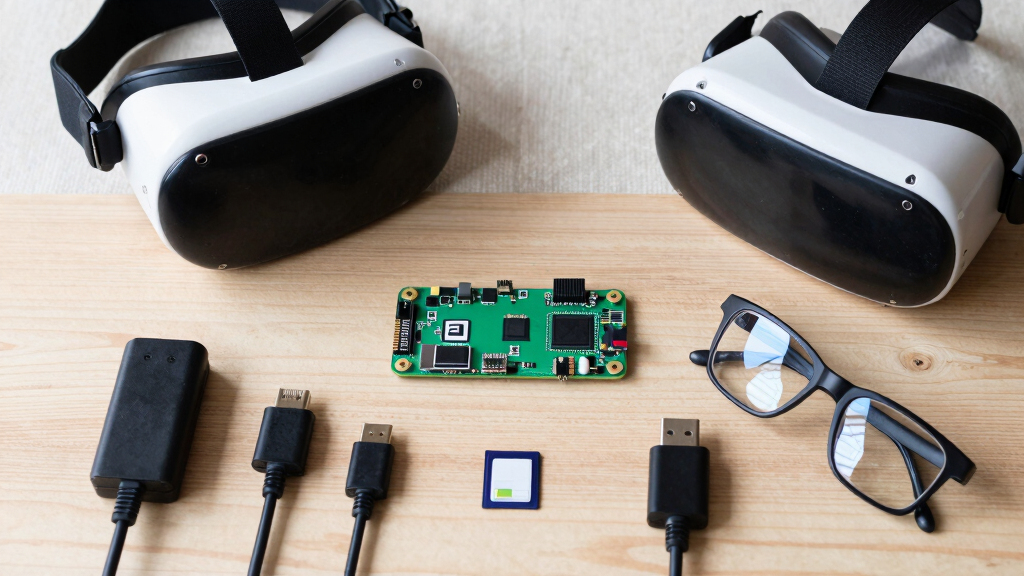

The best Raspberry Pi accessories depend on whether I want a learning kit, a finished enclosure, a camera, or a dedicated screen. My top overall pick is the Freenove Complete Starter Kit because it covers the widest project range with sensors, camera, speaker, and a large tutorial set. The Miuzei Raspberry Pi 4 Case Kit is the most practical upgrade for a working Pi 4 setup, while the SunFounder Raphael Ultimate Starter Kit is better for beginners who want structured lessons without buying a huge parts box. The main tradeoff is scope versus simplicity: big kits offer more room to grow, but smaller accessories solve a cleaner, more specific problem. Keep reading for the full breakdown of which accessory fits each kind of Raspberry Pi build.

Get VR and gaming gear delivered free — and shop member deals
- Fast, free delivery on millions of items
- Access to Prime Big Deal Days deals on October 6–7
- Prime Video, Amazon Music and more included
Key Takeaways
- The Freenove Complete Starter Kit ranks highest because it combines breadth, learning depth, and useful add-ons like a camera and speaker instead of stopping at basic sensors.
- SunFounder kits are easier to approach than the largest Freenove kits, making them better for guided learning even when they offer fewer total parts.
- The Miuzei Case Kit is the most practical non-learning accessory here because cooling, power, and cabling affect daily reliability more than novelty parts.
- The two Hosyond displays serve different users: the 5-inch capacitive DSI screen is cleaner for dashboards, while the 3.5-inch resistive screen is cheaper and more compact.
- Single-purpose add-ons like the Arducam 5MP Camera make sense only when the project already has a clear use case; starter kits are better for open-ended experimentation.
| SunFounder Da Vinci Starter Kit for Raspberry Pi |  | Best Overall Learning Kit | Compatible Models: Raspberry Pi 5, 4B, 3B+, 3B, Zero 2 W, 400 | Components: 300+ | Projects: 150+ | VIEW LATEST PRICE | See Our Full Breakdown |
| SunFounder Raphael Ultimate Starter Kit for Raspberry Pi |  | Best Hardware-Rich Starter Kit | Compatible Models: Raspberry Pi 5, 4B, 3B+, 3B, Zero 2 W, 400 | Components: 337+ | Projects: 161 | VIEW LATEST PRICE | See Our Full Breakdown |
| Miuzei Case for Raspberry Pi 4 with Fan and Cooling System |  | Best Raspberry Pi 4 Setup Bundle | Compatibility: Raspberry Pi 4 Model B, including 4GB and 8GB versions | Case Material: Acrylic | Cooling System: 5V DC fan plus 4 aluminum heatsinks | VIEW LATEST PRICE | See Our Full Breakdown |
| Piper Computer Kit |  | Best Kids’ STEAM Kit | Included Computer: Raspberry Pi included | Display: 7-inch HDMI screen | Audio: DIY integrated speaker | VIEW LATEST PRICE | See Our Full Breakdown |
| Freenove Ultimate Starter Kit for Raspberry Pi |  | Best Documentation Pick | Compatible Models: Raspberry Pi 5, 400, 4B, 3B+, 3B, 3A+, 2B, 1B+, 1A+, Zero 2 W, Zero W, Zero | Items: 223 | Projects: 128 | VIEW LATEST PRICE | See Our Full Breakdown |
| Arducam 5MP Camera for Raspberry Pi |  | Best Camera Module | Sensor: 5MP Omnivision OV5647 CMOS | Still Resolution: 2592 x 1944 | Video Resolution: Up to 1080p | VIEW LATEST PRICE | See Our Full Breakdown |
| Freenove Complete Starter Kit for Raspberry Pi |  | Best Large Learning Kit | Item Count: 386 items | Project Count: 164 projects | Tutorial: 1170-page downloadable or online tutorial | VIEW LATEST PRICE | See Our Full Breakdown |
| Hosyond 3.5″ 320×480 Resistive Touch Screen Display for Raspberry Pi |  | Best Compact Touchscreen | Screen Size: 3.5 inches | Resolution: 320 x 480 | Touch Type: Resistive | VIEW LATEST PRICE | See Our Full Breakdown |
| Hosyond 5 Inch Touchscreen IPS MIPI DSI Display |  | Best Driver-Free Display | Screen Size: 5 inches | Resolution: 800 x 480 | Panel Type: IPS | VIEW LATEST PRICE | See Our Full Breakdown |
More Details on Our Top Picks
SunFounder Da Vinci Starter Kit for Raspberry Pi
SunFounder Da Vinci Starter Kit earns my overall spot because it balances 300+ components, 150+ projects, and guided lessons without leaning too far into any single skill path. Compared with the SunFounder Raphael Ultimate Starter Kit, it has fewer stated parts and projects, but it feels like the cleaner choice for buyers who want a broad electronics course rather than the largest box possible. The Paul McWhorter video lessons also give it an easier on-ramp than the text-heavy Freenove Ultimate Starter Kit. The tradeoff is scope: this is still a dense kit, and younger learners may need help sorting components, wiring circuits, and choosing where to start. I would pick it for structured learning, not for someone who only needs a case, display, or single-purpose add-on.
Pros:- Strong balance of component count, project depth, and guided lessons
- Paul McWhorter video tutorials make abstract electronics topics easier to follow
- Supports several programming languages for learners who want to branch out
- Works across Raspberry Pi 5, 4B, 3B series, 400, and Zero 2 W
Cons:- Raspberry Pi board must be bought separately
- The size of the kit may overwhelm younger beginners without adult help
- Less hardware-rich than the SunFounder Raphael kit
Best for: Teen and adult Raspberry Pi learners who want a structured electronics-and-coding path with videos, many components, and room to grow.
Not ideal for: Very young kids or buyers who want a plug-and-play Raspberry Pi setup, since the Pi board is not included and the project count can feel like a lot at first.
- Compatible Models:Raspberry Pi 5, 4B, 3B+, 3B, Zero 2 W, 400
- Components:300+
- Projects:150+
- Video Tutorials:70+ by Paul McWhorter
- Supported Languages:Python, C, Java, Node.js, Scratch
- Raspberry Pi Included:No
- Primary Use:Electronics, coding, and Raspberry Pi project learning
Bottom line: This is my pick for most Raspberry Pi learners who want one accessory kit that can carry them from basics into more ambitious builds.
SunFounder Raphael Ultimate Starter Kit for Raspberry Pi
The SunFounder Raphael Ultimate Starter Kit is the better pick when the accessory kit itself needs to feel expansive. Its 337+ components and 161 projects outnumber the SunFounder Da Vinci kit, and the inclusion of parts such as a camera, speaker, sensors, actuators, LEDs, and LCDs makes it better suited to mixed media, IoT, and interactive builds. I rank Da Vinci higher for most buyers because it feels more balanced, while Raphael makes more sense for learners who already know they want a wider hardware playground. Compared with the Freenove Ultimate Starter Kit, Raphael leans more on guided video and extra hardware rather than a large written manual. The downside is organization: with so many parts, beginners may spend as much time managing the kit as building with it.
Pros:- More listed components and projects than the SunFounder Da Vinci kit
- Includes broader hardware such as camera, speaker, sensors, actuators, LEDs, and LCDs
- Video lessons by Paul McWhorter support self-paced learning
- Community forum and technical support add help beyond the box
Cons:- Raspberry Pi board is not included
- Large component count can create clutter for beginners
- May be more kit than a buyer needs for basic coding practice
Best for: Raspberry Pi learners aged 10+ who want lots of sensors, output modules, and project variety in one learning box.
Not ideal for: Minimalist buyers or classrooms that need quick setup, since the large parts selection can slow down sorting and storage.
- Compatible Models:Raspberry Pi 5, 4B, 3B+, 3B, Zero 2 W, 400
- Components:337+
- Projects:161
- Video Lessons:70+ by Paul McWhorter
- Included Hardware Types:Camera, speaker, sensors, actuators, LEDs, LCDs, and more
- Supported Languages:Python, C, Java, Node.js, Scratch
- Age Guidance:Beginners aged 10+
- Compliance:RoHS compliant
- Raspberry Pi Included:No
Bottom line: Choose this when hardware variety matters more than a tidy, tightly focused starter path.
Miuzei Case for Raspberry Pi 4 with Fan and Cooling System
Miuzei Case for Raspberry Pi 4 fills a different role from the learning kits: it is the practical pick for making a Pi 4 usable, protected, and cooler from day one. Compared with the SunFounder Da Vinci Starter Kit or Freenove Ultimate Starter Kit, it will not teach electronics through dozens of projects, but it solves the setup problems those kits leave open: power, cooling, HDMI connection, card access, and board protection. The 5V fan plus four aluminum heatsinks matter for workloads that keep a Pi 4 warm, while the 5V 3A USB-C power supply reduces the chance of unstable power. The tradeoff is compatibility and bulk. It is built for Raspberry Pi 4 Model B, so Pi 5 or Zero buyers should skip it, and the acrylic build is more functional than sleek.
Pros:- Bundles case, cooling, power, HDMI accessories, and card reader for a fuller Pi 4 setup
- Fan and four heatsinks help control heat during sustained use
- Transparent acrylic design keeps the board visible for learning and troubleshooting
- USB-C power supply includes an on/off switch
Cons:- Only compatible with Raspberry Pi 4 Model B
- Bulkier than compact passive cases
- Less useful for buyers who already own power and HDMI accessories
Best for: Raspberry Pi 4 owners setting up a desktop, media, server, or learning station who need power, cooling, and cabling in one purchase.
Not ideal for: Raspberry Pi 5, Pi Zero, or portable project builders, since this case is Pi 4-specific and bulkier than bare-board cases.
- Compatibility:Raspberry Pi 4 Model B, including 4GB and 8GB versions
- Case Material:Acrylic
- Cooling System:5V DC fan plus 4 aluminum heatsinks
- Power Supply:5V 3A USB-C with on/off switch
- HDMI Support:Micro HDMI cable with 4K60P support and CEC compatibility
- Included Accessories:Case, fan, heatsinks, power supply, HDMI cable, HDMI adapter, USB card reader, rubber feet
- Board Visibility:Transparent design
- USB Ports Listed:2 ports
Bottom line: This is the accessory bundle I would choose for a Raspberry Pi 4 that needs stable daily use more than project lessons.
Piper Computer Kit
Piper Computer Kit is the most self-contained option here because it includes the Raspberry Pi, 7-inch screen, speaker, and rechargeable battery. That makes it very different from the SunFounder and Freenove kits, which assume the buyer already has a Pi or will buy one separately. Piper is built around StoryMode, drag-and-drop coding, and rebuildable hardware, so it suits kids who need a project that feels like a complete computer rather than a tray of parts. Compared with the SunFounder Raphael Ultimate Starter Kit, it offers less raw component variety, but a clearer child-centered path from assembly to play. The tradeoff is price-to-flexibility: older teens, adult hobbyists, and buyers who want hundreds of loose electronics parts will outgrow this faster than a conventional starter kit.
Pros:- Includes the Raspberry Pi and core computer hardware rather than requiring a separate board
- StoryMode and drag-and-drop coding make the learning path kid-friendly
- Rechargeable battery and carrying case support portable classroom or home use
- Can progress from visual coding into preloaded Python
Cons:- Less flexible for open-ended electronics experiments than large starter kits
- Larger and more specialized than a simple Pi accessory bundle
- May be outgrown by advanced learners who want deeper hardware control
Best for: Parents, homeschoolers, and STEAM educators who want a child-friendly Raspberry Pi computer build with guided games and coding tasks.
Not ideal for: Adult makers or teens seeking broad sensor experiments, since Piper is more curated and less component-heavy than SunFounder or Freenove kits.
- Included Computer:Raspberry Pi included
- Display:7-inch HDMI screen
- Audio:DIY integrated speaker
- Power:Rechargeable battery
- Coding System:Drag-and-drop PiperCode plus preloaded Python
- Learning Mode:StoryMode with games and projects
- Operating System:Linux
- Connectivity:HDMI and Bluetooth listed
- Dimensions:13 x 13 x 4 inches
Bottom line: Pick Piper when the goal is a kid-ready Raspberry Pi computer build, not the widest electronics parts collection.
Freenove Ultimate Starter Kit for Raspberry Pi
Freenove Ultimate Starter Kit stands out for buyers who prefer written guidance over video-first teaching. Its 962-page tutorial is the main draw, with schematics, wiring diagrams, code, and explanations across 128 projects. Compared with the SunFounder Da Vinci Starter Kit, it has fewer listed components and projects, but the manual-driven format may suit learners who like to read, pause, and repeat steps at their own pace. Against the SunFounder Raphael Ultimate Starter Kit, it gives up some hardware breadth and guided video polish, yet supports a wide range of Raspberry Pi models, including older boards. The catch is that the tutorial is downloaded rather than printed, and text-heavy learning can feel slower for kids or anyone who wants a more visual class-style path.
Pros:- Large 962-page tutorial supports careful step-by-step learning
- 128 projects move from simple circuits to more complex builds
- Supports Python, C, Java, Scratch, and Processing
- Works with a wide span of Raspberry Pi boards, including older models
Cons:- Raspberry Pi board is not included
- No printed tutorial in the box
- Fewer listed components and projects than the SunFounder Raphael kit
Best for: Self-directed learners who want detailed written instructions, circuit diagrams, and code examples across many Raspberry Pi models.
Not ideal for: Video-first learners or younger kids who need a guided screen-based course, since the main teaching asset is a downloadable manual.
- Compatible Models:Raspberry Pi 5, 400, 4B, 3B+, 3B, 3A+, 2B, 1B+, 1A+, Zero 2 W, Zero W, Zero
- Items:223
- Projects:128
- Tutorial:962-page downloadable guide
- Supported Languages:Python, C, Java, Scratch, Processing
- Graphical Interfaces:Scratch and Processing code examples
- Raspberry Pi Included:No
- Brand:Freenove
- Model:FNK0020
Bottom line: Choose Freenove if a detailed written course matters more to you than video lessons or the largest component count.
Arducam 5MP Camera for Raspberry Pi
I rank the Arducam 5MP Camera as the camera pick because it adds a clear new capability instead of just expanding parts storage. Compared with the Freenove Complete Starter Kit, which spreads attention across hundreds of components, this is the cleaner choice for image capture, basic robotics vision, livestream experiments, and time-lapse builds. The 5MP OV5647 sensor and 1080p video are enough for learning projects without pushing cost or setup complexity too high. The tradeoff is specialization: the fixed-focus lens, lack of image stabilization, and no Pi Zero support make it less flexible than a broader kit or newer camera module. I would choose it when the project needs a small Pi camera, not when the buyer is still building a general accessory bench.
Pros:- Adds camera capability without buying a full starter kit
- 5MP stills and 1080p video suit many learning and maker projects
- Compact module fits small Raspberry Pi builds
- Integral IR filter helps with standard color image capture
Cons:- Fixed-focus lens limits close-up and precision projects
- Not compatible with Raspberry Pi Zero models
- No image stabilization, so moving builds may need extra mounting care
Best for: Raspberry Pi owners building camera-based projects such as time-lapse rigs, simple computer vision, or compact video capture setups.
Not ideal for: Pi Zero users or buyers who need adjustable focus, stabilization, or a complete electronics learning kit.
- Sensor:5MP Omnivision OV5647 CMOS
- Still Resolution:2592 x 1944
- Video Resolution:Up to 1080p
- Frame Rate:30 fps
- Lens:Fixed-focus prime lens
- Viewing Angle:54 degrees
- Compatibility:Raspberry Pi A/B/B+, Pi 2, Pi 3/3B+, Pi 4, Pi 5; not Pi Zero
- Dimensions:0.94 x 2.36 x 0.98 inches
Bottom line: This is the Raspberry Pi accessory I would pick for focused camera projects, as long as fixed focus and Pi Zero limits are not dealbreakers.
Freenove Complete Starter Kit for Raspberry Pi
The Freenove Complete Starter Kit earns its place through scale: 386 items, 164 projects, and a 1170-page tutorial make it the broadest learning accessory here. Compared with the Freenove Ultimate Starter Kit, this version gives buyers more components and more project paths, so I would rank it higher for someone who wants a long runway rather than a weekend intro. It also feels more self-directed than the Piper Computer Kit, which packages learning into a guided STEAM experience. The drawback is bulk and commitment. There is no Raspberry Pi included, the tutorial is digital rather than printed, and some included extras have model caveats, such as camera and speaker compatibility on the Pi 400, 500, and Zero series. I see it as a parts lab, not a tidy beginner gift.
Pros:- Very large 386-item parts selection for broad experimentation
- 164 projects give learners a clear progression from simple to advanced builds
- Code examples cover Python, C, Java, Scratch, and Processing
- Supports many Raspberry Pi models across full-size and Zero boards
Cons:- Raspberry Pi board is not included
- Digital tutorial may be less convenient than a printed book at the workbench
- Camera and speaker support varies by Raspberry Pi model
Best for: Learners, clubs, and hobbyists who already have a Raspberry Pi and want months of sensor, coding, and circuit projects.
Not ideal for: Buyers who want a small accessory upgrade, a paper manual, or a kit that includes the Raspberry Pi board.
- Item Count:386 items
- Project Count:164 projects
- Tutorial:1170-page downloadable or online tutorial
- Code Languages:Python, C, Java, Scratch, Processing
- Included Media:Camera and speaker included, with model limits
- Compatible Models:Raspberry Pi 5, 500, 400, 4B, 3B+, 3B, 3A+, 2B, 1B+, 1A+, Zero 2 W, Zero W, Zero
- Connectivity:I2C listed among supported connection methods
- Raspberry Pi Included:No
Bottom line: This is the kit I would choose for a buyer who wants the widest project library and already has space to manage a large parts set.
Hosyond 3.5″ 320×480 Resistive Touch Screen Display for Raspberry Pi
I would place the Hosyond 3.5-inch Resistive Touch Screen below the larger Hosyond 5-inch DSI display for comfort, but above it for compact control panels. Its 320×480 screen and SPI interface make sense for status dashboards, portable menus, or small embedded projects where a full monitor would be awkward. Compared with the Arducam 5MP Camera, this accessory is about direct interaction rather than sensing the world, so it serves a very different kind of build. The tradeoff is touch quality and setup. A resistive panel works with the included pen and can be practical for kiosk-style controls, but it needs firmer pressure than capacitive touch. Driver work may also slow down buyers who expected a plug-and-play display. I like it most when size matters more than polish.
Pros:- Compact 3.5-inch size suits handheld and embedded Raspberry Pi projects
- 320×480 resolution is usable for menus, status panels, and simple dashboards
- No external power supply required
- Works with several Raspberry Pi boards and operating systems
Cons:- Resistive touch needs more pressure than capacitive screens
- Driver installation may be required before use
- Small screen area is limiting for desktop-style interfaces
Best for: Makers building small Raspberry Pi dashboards, portable controllers, or embedded interfaces where a 5-inch screen is too large.
Not ideal for: Buyers who want phone-like touch response or a setup with no driver work.
- Screen Size:3.5 inches
- Resolution:320 x 480
- Touch Type:Resistive
- Interface:SPI
- Compatible Boards:Raspberry Pi B, B+, 2B, 3B, 3B+, 4B, Pi 5
- Supported Systems:Raspbian, Ubuntu, Kali Linux
- Power:No external power supply required
- Included Accessory:Touch pen
Bottom line: This is the display I would pick for a tiny Pi control surface, not for a polished mini-tablet feel.
Hosyond 5 Inch Touchscreen IPS MIPI DSI Display
The Hosyond 5-inch IPS MIPI DSI Display is the better touchscreen choice for buyers who value a smoother setup and a roomier interface. Compared with the Hosyond 3.5-inch Resistive Touch Screen, it offers a larger 800×480 IPS panel, capacitive touch, and a driver-free MIPI DSI connection on supported Raspberry Pi systems. That makes it easier to recommend for dashboards, media controls, and compact desktop-style projects. It is less universal, though. There is no HDMI input, it is not meant for other devices, and touch support changes by operating system, with Ubuntu, Kali, and Win10 IoT limited to single-touch. I rank it ahead for display-first builds, but I would skip it when the project needs device flexibility or the smallest possible footprint.
Pros:- 5-inch IPS screen gives more usable space than compact 3.5-inch displays
- MIPI DSI connection is plug and play on supported Raspberry Pi systems
- Capacitive touch feels more natural than resistive touch
- PWM backlight brightness adjustment helps tune visibility and power use
Cons:- No HDMI input and not compatible with non-Raspberry Pi devices
- Touch behavior varies by operating system
- Larger footprint may be too big for small enclosures
Best for: Raspberry Pi users building a cleaner touchscreen dashboard, media panel, or compact interface with minimal display setup.
Not ideal for: Anyone who needs an HDMI monitor for multiple devices or a tiny screen for cramped embedded builds.
- Screen Size:5 inches
- Resolution:800 x 480
- Panel Type:IPS
- Touch Type:Capacitive
- Interface:MIPI DSI
- Driver Requirement:No driver installation required on new or unchanged supported systems
- Compatible Boards:Raspberry Pi 5, 4B, 3B+, 3B, 3A+, 2B, 1B+, 1A+
- Input Limits:No HDMI; Raspberry Pi only
- Brightness Control:PWM backlight adjustment
Bottom line: This is the display I would choose when the Raspberry Pi project needs a cleaner, larger touch interface and does not need HDMI flexibility.
How We Picked
I ranked these accessories by how much they improve a Raspberry Pi build, not by part count alone. The strongest picks had to give buyers a clear path from purchase to project: useful components, approachable learning material, solid compatibility, and enough range to stay relevant after the first weekend. I gave extra weight to accessories that solve common Raspberry Pi pain points, including cooling, power, tutorials, display setup, and project expansion.
The order favors products with the broadest buyer fit first, then more specialized tools. That is why the Freenove Complete Starter Kit beats smaller learning kits, while the Miuzei Case Kit ranks highly despite being less exciting on paper. Premium or niche accessories earn their place when they offer a clear advantage for a specific project, but they move lower if buyers need extra context, extra parts, or a narrower use case to justify them.
Factors to Consider When Choosing Best Raspberry Pi Accessories
Choosing the best Raspberry Pi accessory starts with the project, not the product list. I would separate accessories into learning kits, setup essentials, displays, and project-specific add-ons before comparing prices.
Start With The Project Type
A beginner who wants to learn circuits needs a very different accessory than someone building a Pi dashboard or camera rig. Starter kits like Freenove and SunFounder are best when the goal is exploration, because they bundle sensors, wires, modules, and lessons into one path. A case-and-power kit like Miuzei is better when the Pi already has a job and needs to run reliably. Displays and cameras are more focused, so they make sense when the project already calls for a screen or image capture. The common mistake is buying a giant kit because it seems like better value, then using only three parts. I would match the accessory to the next two or three projects, not an imagined library of future builds.
Check Raspberry Pi Compatibility
Raspberry Pi naming can make accessory shopping messy because Pi 5, Pi 4, Pi 3, Zero 2 W, and Pi 400 do not all share the same layout or connector behavior. Starter kits are usually the safest across models because many parts connect through GPIO or breadboards, but cases and displays are more restrictive. The Miuzei case is aimed at Pi 4, while the Hosyond 5-inch DSI display is a better fit for buyers who want a cleaner screen connection on supported boards. Camera modules also need connector checks, especially with newer Pi boards that may need an adapter cable. Before buying, I would verify the exact Pi model, port layout, and any cable adapter needs. A cheap accessory becomes expensive fast if it requires extra parts to work.
Decide Between Guided Learning And Parts Depth
The biggest starter kit difference is not just how many pieces are in the box. SunFounder kits tend to appeal to buyers who want a more guided course-style path, while Freenove kits lean into scale with larger manuals and more projects. More parts create more room for experimentation, but they also create more sorting, troubleshooting, and setup time. A smaller kit can be the smarter first buy if the learner wants momentum rather than a drawer full of modules. On the other hand, an ambitious maker may outgrow a compact kit quickly and prefer the Freenove Complete or Ultimate option. I would pay for parts depth only when the tutorials and project list match what I actually want to build.
Do Not Ignore Power And Cooling
Many Raspberry Pi problems look like software issues when they are really power or heat problems. A weak power supply can cause instability, and poor cooling can reduce performance during heavier tasks. That is why the Miuzei Case Kit has a stronger practical role than a flashy add-on: it packages cooling, enclosure, power, and cabling into one everyday upgrade. Compared with a sensor kit, it will not teach as much, but it can make an existing Pi setup feel far more dependable. Pi 4 owners should give this category special attention because heat and power quality affect long sessions. I would treat a reliable case and power setup as the foundation before adding cameras, screens, or sensor-heavy projects.
Pick The Right Display Style
Raspberry Pi displays split between compact utility screens and more usable interface screens. The Hosyond 3.5-inch resistive display is small and affordable, but resistive touch feels less fluid and the low resolution limits dense dashboards. The Hosyond 5-inch capacitive DSI display is better for touch menus, monitoring panels, and portable projects where readability matters. Size also changes enclosure planning, cable routing, and power draw, so the larger display is not always the easier choice. If the screen only needs to show status data, the smaller model can be enough. If the project expects regular touch interaction, I would choose the larger capacitive option.
Know When A Single-Purpose Accessory Wins
A camera, display, or case can be a better buy than a large kit when the project has a defined end state. The Arducam 5MP Camera is a good example: it will not help much with general electronics learning, but it is the right kind of accessory for time-lapse, basic vision, or monitoring projects. Single-purpose accessories usually demand more planning because they rely on the rest of the setup being ready. They also expose hidden needs, such as mounts, lighting, storage, or software support. Compared with the Freenove and SunFounder kits, they offer less variety but more direct progress toward one build. I would buy these after choosing the project, not before.
Frequently Asked Questions
Which Raspberry Pi accessory should I buy first?
If I were starting from scratch, I would buy a starter kit unless the Pi already has a specific job. The Freenove Complete Starter Kit is the broadest first accessory because it includes many project paths and useful add-ons beyond basic sensors. If the Raspberry Pi is already being used as a server, media box, or always-on device, a case with cooling and a reliable power supply is a smarter first upgrade. Screens and cameras should come later unless the build clearly needs them. The best first accessory is the one that removes the next real barrier, not the one with the longest parts list.
Are Raspberry Pi starter kits worth it if I already know basic coding?
Starter kits can still be worth buying, but only if the included hardware matches the projects I want to build. A kit like the Freenove Complete Starter Kit offers enough sensors, modules, and extras to support more than beginner coding exercises. The drawback is duplication: anyone who already owns jumper wires, LEDs, resistors, and breadboards may be paying again for basics. In that case, a more focused accessory like the Arducam camera or a Hosyond display may add more new capability. I would choose a starter kit for hardware breadth, not just for coding lessons.
Should I choose the Freenove Complete Kit or the SunFounder Raphael Kit?
The Freenove Complete Starter Kit is the better choice for buyers who want maximum project range and do not mind managing a larger parts collection. It includes more total material than the SunFounder Raphael kit, which makes it stronger for long-term tinkering. The SunFounder Raphael Ultimate Starter Kit is better for buyers who value a smoother learning path and less clutter. It gives up some breadth, but that can make it easier to finish projects instead of sorting through components. I would pick Freenove for range and SunFounder for guided progress.
Is a touchscreen display better than using HDMI with a regular monitor?
A touchscreen is better when the Raspberry Pi will become a standalone device, such as a dashboard, controller, kiosk, or compact project box. A regular HDMI monitor is still easier for coding, setup, and long sessions because it gives more space and better ergonomics. The Hosyond 5-inch capacitive display makes more sense than the 3.5-inch resistive model if touch input is part of the actual workflow. The smaller display is useful for status readouts, but it is cramped for frequent interaction. I would not buy a touchscreen just to replace a monitor during setup.
Do I need a Raspberry Pi 5 accessory kit, or will older Pi accessories work?
Some accessories work across several Raspberry Pi models, but I would not assume full compatibility. GPIO-based parts in Freenove and SunFounder kits are often flexible, while cases, camera cables, and DSI displays are much more model-sensitive. Pi 5 changes can affect connector needs, cooling expectations, and display setup. If I were buying for a Pi 5, I would favor products that name Pi 5 support clearly and check whether adapters are included. Older accessories can still be useful, but the hidden cost is extra cables, setup steps, or a less tidy build.
Conclusion
My best overall recommendation is the Freenove Complete Starter Kit because it gives the widest project runway for learners and makers who want one purchase to cover many builds. For best value, the Freenove Ultimate Starter Kit offers a strong mix of parts and lessons without reaching for the broadest bundle. The SunFounder Raphael Ultimate Starter Kit is my pick for beginners who want clearer guidance, while the SunFounder Da Vinci Starter Kit fits buyers who want a smaller learning kit. For practical setup needs, the Miuzei Case Kit is the accessory I would choose for a Pi 4 that needs cooling, power, and protection. For specific projects, choose the Arducam 5MP Camera for image capture, the Hosyond 5-inch capacitive display for touch dashboards, and the Hosyond 3.5-inch resistive display for compact status screens.
Fall Picks
fall essentials
As an affiliate, we earn on qualifying purchases.