
The Apple iPad 11-inch with A16 chip is my best overall pick among the best computers, tablets & components here because it offers the strongest mix of speed, app quality, display polish, and long-term usefulness. The Samsung Galaxy Tab A11+ stands out as the best value Android choice, while the Fusion5 Helios 12 is better for buyers who want a Windows-style tablet with more memory and storage. The main tradeoffs are clear: iPadOS feels smoother for casual and creative use, Windows tablets handle desktop apps better, and budget Android models stretch specs while cutting corners elsewhere. Keep reading for the full breakdown by buyer type, performance needs, portability, storage, and value.
Key Takeaways
- The Apple iPad 11-inch with A16 chip earns the top spot because it has the best balance of speed, display quality, app support, and everyday reliability.
- Windows tablets in this lineup offer more laptop-like flexibility, but the best ones need enough RAM and storage to avoid feeling cramped.
- The Samsung Galaxy Tab A11+ is the clearest value pick for streaming, browsing, light productivity, and Android users who do not need Windows apps.
- Renewed models can make sense here, especially the iPad 7th Generation and Surface Go 2, but buyers should weigh age, battery condition, and software runway.
- Big spec claims are not always equal to better performance; processor quality, OS efficiency, keyboard support, and display quality separate the stronger picks.


More Details on Our Top Picks
Apple iPad (7th Generation), 10.2-Inch, Wi-Fi, 32GB, Space Gray (Renewed)
I rank the Apple iPad 7th Generation as the budget iPad pick because it gives buyers the familiar iPadOS app ecosystem, Touch ID, and a sharp-enough 10.2-inch screen without the cost of newer Apple tablets. Compared with the Samsung Galaxy Tab A11+, it has less storage, a less fluid screen, and weaker front camera specs, but it is the better fit for readers who want Apple apps, Family Sharing, and broad accessory support. Against the Microsoft Surface Go 2, this iPad feels simpler for streaming, school portals, reading, and casual work, though it cannot replace a Windows laptop. The main tradeoff is longevity: the A10 Fusion chip and 32GB storage make sense for light use, not heavy multitasking or big media libraries.
Pros:- Lowest-cost path into the iPad ecosystem in this lineup
- Touch ID adds simple account and purchase security
- 10.2-inch screen works well for reading, video, and basic productivity
- A10 Fusion chip is still suitable for light everyday tasks
Cons:- 32GB storage can fill quickly with apps, photos, and downloads
- Wi-Fi only, with no cellular option in the listed configuration
- Renewed status and older hardware may not suit buyers seeking maximum update runway
Best for: Apple-focused families, students, and casual users who want an affordable iPad for streaming, reading, web use, and school apps.
Not ideal for: Buyers who store lots of offline video, install large games, or need laptop-style Windows software should skip it because 32GB and iPadOS limit headroom.
- Brand:Apple
- Model:iPad 7th Generation
- Display:10.2-inch
- Storage:32GB
- Processor:A10 Fusion chip
- Connectivity:Wi-Fi
- Rear Camera:8MP
- Front Camera:1.2MP FaceTime HD
- Battery Life:Up to 10 hours
Bottom line: This is the iPad I would pick for light Apple-friendly use when price matters more than storage or speed.
10.1″ Windows 11 Tablet with 6GB RAM, 128GB Storage, Intel Processor
The 10.1-inch Windows 11 Tablet earns the value role because it balances a real desktop operating system with 128GB storage, 6GB RAM, and useful ports at a lower-commitment level than the Fusion5 WIN PRO Rugged tablet. Compared with the Microsoft Surface Go 2, it offers microSD expansion and a broad port mix, but it lacks the Surface’s refined PixelSense display, lighter build, and more polished hardware identity. Compared with the Apple iPad 7th Generation, this model is better for browser-based work, file management, and Windows-only tools. The drawback is finish: the plastic shell and unspecified display quality make it feel more practical than premium, so I would treat it as a budget work slate rather than a polished everyday tablet.
Pros:- Runs Windows 11 Home for desktop-style workflows
- 128GB storage with microSD expansion gives more room than the 32GB iPad
- USB 3.0, Micro HDMI, Wi-Fi, and Bluetooth support useful accessories
- Up to 12 hours of battery life suits travel and classroom use
Cons:- Plastic shell may feel less durable and premium than Surface or iPad hardware
- Display resolution and camera quality are not clearly specified
- 6GB RAM is workable for light tasks but not ideal for heavier Windows multitasking
Best for: Budget buyers who need Windows 11 for web apps, light office work, file access, and HDMI or USB-connected accessories.
Not ideal for: Design-focused buyers, artists, or media-first users should skip it because the display and build details are less convincing than higher-end tablets.
- Display:10.1 inches
- Operating System:Windows 11 Home
- Processor:Intel processor
- RAM:6GB
- Storage:128GB
- Expandable Storage:Up to 408GB with microSD
- Battery:6000mAh
- Connectivity:Wi-Fi, USB 3.0, Micro HDMI, Bluetooth 5.0
Bottom line: This is my Windows value pick for buyers who need ports and desktop compatibility more than premium hardware.
Samsung Galaxy Tab A11+ 6GB RAM, 128GB Storage
The Samsung Galaxy Tab A11+ stands out as the Android entertainment pick because its 11-inch 90Hz display and Dolby Atmos quad speakers matter more for video, reading, and casual games than raw storage alone. Compared with the Apple iPad 7th Generation, it gives buyers more built-in storage, smoother scrolling, and a larger screen, though it lacks Apple’s app continuity and accessory ecosystem. Against the 10.1-inch Windows 11 Tablet, the Samsung is less suited to desktop software but more comfortable as a couch, travel, and family media device. I also like the longer two-year warranty for peace of mind. The main compromises are vague battery details and the need to buy a separate 25W charger for the fastest charging speeds.
Pros:- 11-inch screen gives more room for video, reading, and split-view use
- Up to 90Hz refresh rate makes scrolling feel smoother than older budget tablets
- Quad speakers with Dolby Atmos are a clear media advantage
- 128GB expandable storage is more flexible than the 32GB iPad
Cons:- Fast charging requires a separate 25W wall charger
- Battery capacity is not listed, making endurance harder to compare
- Android tablet apps can be less consistent than iPad apps for creative work
Best for: Streaming-heavy households, Android phone owners, and casual users who want a larger screen with strong speakers and expandable storage.
Not ideal for: Workers who need full Windows apps, desktop file workflows, or included fast-charging hardware should choose a Windows tablet instead.
- Brand:Samsung
- Display:11-inch
- Refresh Rate:Up to 90Hz
- RAM:6GB
- Storage:128GB expandable
- Speakers:Quad speakers with Dolby Atmos
- Front Camera:5MP
- Charging:Fast charging support
- Warranty:2 years
Bottom line: This is the tablet I would choose for affordable Android entertainment, especially when screen size and sound matter.
Microsoft Surface Go 2 – 10.5″ Touch-Screen Laptop (Intel Core m3, 8GB RAM, 128GB SSD, Windows 11 Pro) – Platinum (Renewed)
I place the Microsoft Surface Go 2 above generic Windows tablets for buyers who care about portability, screen quality, and a more laptop-like feel. Its 10.5-inch PixelSense display, 8GB RAM, 128GB SSD, and Windows 11 Pro make it better suited to email, documents, admin tools, and travel work than the lower-cost 10.1-inch Windows 11 Tablet. Compared with the Fusion5 WIN PRO Rugged, the Surface is lighter and more polished, but it is not built for harsh job sites and its accessories cost extra. The renewed status also matters: the value is appealing, yet some buyers will prefer new hardware. I would rank it for mobile productivity, not for buyers who need a keyboard, pen, and rugged casing in the box.
Pros:- Very light 1.15 lb design is easier to carry than rugged Windows tablets
- PixelSense display offers sharper visuals than many budget slates
- Windows 11 Pro suits business, school, and admin workflows
- 8GB RAM and SSD storage feel better matched to productivity than entry-level specs
Cons:- Type Cover and accessories are sold separately
- 128GB SSD may be limiting for larger local files or offline media
- Renewed condition may not appeal to buyers who want a brand-new device
Best for: Traveling professionals, students, and small-business users who want a very light Windows device for documents, browser work, and admin tasks.
Not ideal for: Field crews or buyers who need included accessories should skip it because the Type Cover is sold separately and the chassis is not rugged.
- Display:10.5-inch PixelSense touch display
- Resolution:1920 x 1280, 216 ppi
- Processor:Intel Core m3 up to 3.4GHz
- RAM:8GB
- Storage:128GB SSD
- Operating System:Windows 11 Pro
- Weight:Starting at 1.15 lbs
- Battery Life:Up to 9 hours
- Ports:USB-C, headphone jack, Surface Connect, MicroSDXC reader
Bottom line: This is my compact Windows pick for buyers who want a polished travel device and can budget for the keyboard separately.
Fusion5 WIN PRO Rugged Windows 11 Tablet – 12GB RAM, 512GB SSD, Intel 13th Gen
The Fusion5 WIN PRO Rugged is the clearest pick for field work because it pairs Windows 11 Pro with 12GB RAM, a 512GB SSD, a 500-nit Full HD IPS screen, and a shockproof, dustproof body. Compared with the Microsoft Surface Go 2, it gives up slim elegance but gains durability, faster charging, more storage, and accidental damage coverage. Against the 10.1-inch Windows 11 Tablet, it is the stronger work tool, especially for warehouses, service routes, inspections, and outdoor data entry. The tradeoff is cost and carry comfort: it will likely feel heavier than standard tablets, and its rugged design is more than casual users need. I rank it highest for job-site reliability, not living-room browsing.
Pros:- Rugged shockproof and dustproof build suits demanding work settings
- 12GB RAM and 512GB SSD give it the strongest Windows spec mix in this batch
- 500-nit Full HD IPS screen is better suited to bright environments
- Two-year warranty includes accidental damage coverage
Cons:- Likely heavier and bulkier than standard consumer tablets
- Higher price makes less sense for casual browsing or streaming
- 10.1-inch screen may feel cramped for long spreadsheet or document sessions
Best for: Field technicians, warehouse teams, inspectors, and mobile workers who need Windows software on a tougher tablet.
Not ideal for: Casual home users and media-first buyers should skip it because the rugged build and higher price are overkill for streaming or reading.
- Brand:Fusion5
- Model:WIN PRO 12GB RAM
- Processor:Intel 13th Gen Alder Lake N100
- RAM:12GB
- Storage:512GB SSD, expandable with MicroSD
- Display:10.1-inch Full HD IPS, 500 nits
- Battery:6000mAh with 30W Type-C fast charger
- Connectivity:Dual-band Wi-Fi, Bluetooth 5.0
- Warranty:2 years including accidental damage
Bottom line: This is the tablet I would pick when durability, Windows compatibility, and storage matter more than slim design.
Apple iPad 11-inch with A16 Chip, Liquid Retina Display, and Blue Color
I rank the Apple iPad 11-inch highest here because it gives most buyers the cleanest mix of speed, screen quality, app support, and long battery life. Compared with the URAO X109, it is a stronger pick for creative apps, video calls, schoolwork, and long-term software support, even if the URAO offers cheaper expandable storage. Against the QAZIPO 2-in-1 and Fusion5 Helios 12, the iPad is less laptop-like, but its A16 chip and polished iPadOS app library make daily use feel more fluid for tablet-first buyers. The tradeoff is cost creep: the Apple Pencil and Magic Keyboard are separate buys, storage upgrades raise the price, and buyers who need desktop Windows apps should choose a Windows tablet instead.
Pros:- A16 chip gives it the strongest tablet-first performance in this batch
- Liquid Retina display with True Tone is better for reading, drawing, and streaming than basic HD panels
- 12MP front and rear cameras make it stronger for video calls than budget Android tablets
- Long battery life and iPadOS app support make it a safer long-term buy
Cons:- Apple Pencil and Magic Keyboard add real cost
- 128GB base storage can feel tight for media-heavy users
- Less suited to desktop Windows apps than QAZIPO or Fusion5 Helios 12
Best for: Students, families, and creative tablet users who want a fast, polished tablet for apps, notes, streaming, video calls, and light productivity.
Not ideal for: Windows-first workers who rely on desktop software, built-in keyboard use, or expandable local storage.
- Display:11-inch Liquid Retina with True Tone
- Processor:Apple A16 chip
- Storage:128GB configuration; higher capacities up to 512GB
- Cameras:12MP front and 12MP rear with 4K video recording
- Battery Life:All-day battery life
- Connectivity:Wi-Fi 6
- Weight:1.05 pounds
- Color:Blue
Bottom line: This is my pick for buyers who want the best tablet experience first and can live without a built-in laptop setup.
QAZIPO 2-in-1 Laptop Tablet with Magnetic Keyboard, 12-inch 2K IPS Touchscreen, 12GB RAM, 512GB SSD, Intel Pentium Gold 6500Y Processor, Windows 11
The QAZIPO 2-in-1 earns its place as my value-focused laptop replacement because it includes the keyboard, Windows 11, 12GB RAM, 512GB SSD storage, and a year of Office 365 in one package. Compared with the Apple iPad 11-inch, it is better for buyers who need a familiar desktop workflow, file handling, and Office apps without buying extra accessories. It also costs less to outfit than the Fusion5 Helios 12, since Fusion5 includes a stylus but no keyboard. The compromise is processing headroom: the Pentium Gold 6500Y is fine for documents, browsing, classes, and meetings, but it is not the model I would choose for heavy creative work, large spreadsheets, or demanding multitasking.
Pros:- Magnetic keyboard gives it stronger laptop utility than tablet-only picks
- 12GB RAM and 512GB SSD are generous for the price class
- 2K IPS touchscreen with 100% sRGB suits documents, streaming, and light creative work
- One-year Office 365 subscription adds real value for school and remote work
Cons:- Pentium Gold processor limits performance under heavier workloads
- Port selection is narrower than a traditional laptop
- Less refined as a pure tablet than the Apple iPad 11-inch
Best for: Students and remote workers who want a low-cost Windows tablet-laptop hybrid with a keyboard and Office included.
Not ideal for: Power users who edit large media files, run demanding apps, or need many full-size ports without adapters.
- Screen Size:12 inches
- Display:2K FHD IPS touchscreen with 100% sRGB
- Processor:Intel Pentium Gold 6500Y, up to 3.4GHz
- RAM:12GB
- Storage:512GB SSD
- Operating System:Windows 11 Home
- Ports:USB-C, Micro HDMI, headphone jack
- Weight:1.4 pounds
- Included Software:Office 365 one-year subscription
Bottom line: This is the most practical pick for buyers who want one affordable Windows device that can act like both a tablet and a small laptop.
URAO X109 10.1-inch Android 16 Tablet with Octa-core Processor, 30GB RAM, 128GB ROM
I place the URAO X109 as the budget Android choice because it favors storage flexibility, simple entertainment, and casual app use over laptop-style productivity. Compared with the Apple iPad 11-inch, it costs less and adds TF card expansion up to 1TB, which matters for downloaded video, kids’ apps, and offline files. It is also lighter on desktop features than the QAZIPO 2-in-1 or Fusion5 Helios 12, so it is less suited to Office-heavy work. The 30GB RAM claim needs a careful read because it combines physical and virtual memory; buyers should expect budget-tablet behavior rather than workstation speed. The 1280×800 display is usable, but it cannot match the sharper 2K screens in the Windows picks.
Pros:- Expandable storage up to 1TB is useful for offline media and shared family use
- Wi-Fi 6 and Bluetooth 5.4 are strong connectivity features for a budget tablet
- Low blue light HD IPS display is comfortable for casual reading and video
- Fast 1.5-hour charging helps offset the midrange battery life
Cons:- 1280×800 resolution is weaker than the 2K displays on QAZIPO and Fusion5
- 30GB RAM figure includes virtual memory and may overstate real performance
- No built-in GPS limits travel and mapping use
Best for: Budget buyers, kids, and casual Android users who want expandable storage for streaming, reading, web browsing, and light apps.
Not ideal for: Buyers who need sharp 2K visuals, GPS, iOS account sharing, or Windows desktop software.
- Display Size:10.1 inches
- Resolution:1280×800 HD IPS
- Processor:2GHz octa-core Allwinner processor
- RAM:30GB listed as 6GB plus 24GB virtual memory
- Storage:128GB ROM, expandable to 1TB via TF card
- Battery:8 hours mixed use with 1.5-hour fast charge
- Cameras:5MP front, 8MP rear
- Wireless:Wi-Fi 6 and Bluetooth 5.4
Bottom line: This is my budget pick for casual Android use, especially when expandable storage matters more than screen sharpness or desktop power.
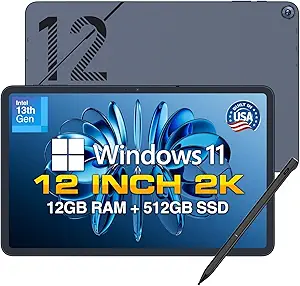
Fusion5 Helios 12 Windows 11 Tablet – 12-inch 2K Display, 12GB DDR5 RAM, 512GB SSD, Stylus Pen Included
The Fusion5 Helios 12 is my higher-end Windows tablet pick because it pairs a sharper 12-inch 2K display with DDR5 memory, an Intel 13th Gen CPU, active cooling, and much better connectivity than most slim tablets. Compared with the QAZIPO 2-in-1, it has stronger hardware credentials, more ports, HDMI output, and a stylus in the box, making it better for note-taking, presentations, and heavier browser-based workloads. Compared with the Apple iPad 11-inch, it gives buyers desktop Windows software instead of the more touch-polished iPadOS ecosystem. The biggest drawbacks are practical: no physical keyboard is included, average battery life is only about four hours, and the fan-cooled design feels more work-machine than casual couch tablet.
Pros:- Intel 13th Gen CPU and 12GB DDR5 RAM give it the strongest Windows hardware in this batch
- 2K IPS display with 400-nit brightness is well suited to documents, drawing, and media
- Dual USB-C, USB 3.0, HDMI, and audio jack reduce adapter dependence
- Stylus is included, unlike the Apple iPad 11-inch accessory setup
Cons:- Four-hour average battery life trails the iPad and many Android tablets
- No physical keyboard included, which weakens laptop replacement value
- Built-in fan adds complexity and may not suit silent tablet use
Best for: Professionals, students, and mobile desk workers who want a Windows tablet with stylus input, strong ports, and 512GB storage.
Not ideal for: Travelers who need all-day battery life or buyers who want a keyboard included in the box.
- Display Size:12 inches
- Resolution:2000 x 1200 IPS
- Processor:Intel 13th Gen CPU
- RAM:12GB DDR5
- Storage:512GB SSD
- Battery Life:4 hours average
- Ports:2 USB-C, USB 3.0, HDMI, 3.5mm jack
- Weight:690 grams / 1.52 pounds
- Included Input:Precision stylus pen
Bottom line: Choose this if Windows performance, stylus input, and real ports matter more than battery life or bundled keyboard value.

How We Picked
I ranked these options by how well they solve real buyer needs across performance, operating system fit, build quality, display usability, storage, accessory support, and value. The best picks are not simply the devices with the largest RAM or storage numbers; I gave more weight to models that pair their specs with a smoother platform, better software support, and fewer compromises for everyday use.
The order also reflects buyer confidence. The Apple iPad 11-inch with A16 chip rises because it is the safest all-around choice, while the Fusion5 Helios 12 and QAZIPO 2-in-1 rank well for people who need Windows flexibility. Budget and renewed options are judged more carefully because their lower prices come with tradeoffs in battery age, processor speed, app support, or long-term updates.
Factors to Consider When Choosing Best Computers, Tablets & Components
Choosing from this lineup is less about finding one perfect device and more about matching the operating system, screen size, storage, and accessories to the way the device will be used. I would start with the jobs the device needs to handle, then decide whether iPadOS, Android, or Windows gives the least friction.
Pick The Operating System Before The Specs
iPadOS, Android, and Windows each change what these devices feel like day to day. The Apple iPads are better for buyers who want polished apps, strong touch controls, and a simpler setup, while Windows models make more sense for desktop software, file handling, and keyboard-heavy work. Android tablets such as the Samsung Galaxy Tab A11+ and URAO X109 are strongest for media, web use, and lighter productivity. A common mistake is buying a Windows tablet for casual streaming when a simpler tablet would feel faster and cleaner. The reverse also happens: buyers pick an iPad or Android tablet, then discover a required work app needs full Windows. I would choose the platform first, then compare RAM, storage, and accessories.
Do Not Treat RAM Numbers As The Whole Story
High RAM can help with multitasking, but processor quality and software efficiency matter just as much. The Apple iPad 11-inch with A16 chip can feel more responsive than some Windows or Android tablets with larger memory claims because the chip and operating system are tightly matched. Windows 11 models benefit from 8GB or 12GB of RAM, especially when running browser tabs, Office apps, and background tools at the same time. Android listings with very high RAM figures may include virtual memory, which does not behave like physical RAM. For buyers comparing the URAO X109 with Samsung or Apple options, the practical question is app smoothness, update support, and storage speed, not just the biggest number on the page. I would give more weight to balanced hardware than inflated spec sheets.
Storage Matters More On Windows Devices
Storage needs vary sharply by platform. A 32GB renewed iPad can work for streaming, reading, school portals, and cloud-based apps, but it is tight for downloads, games, photos, or offline video. On Windows tablets, 128GB is a workable floor, while 512GB gives breathing room for updates, documents, desktop apps, and local media. That is why the Fusion5 WIN PRO, Fusion5 Helios 12, and QAZIPO 2-in-1 are better suited to buyers who want one device to cover tablet and laptop duties. The trap is buying the cheapest model and then relying on external storage for everything. If the device will be used as a main computer, I would favor 512GB over saving a small amount upfront.
Keyboard And Stylus Support Can Change The Category
A tablet becomes a different kind of purchase when it includes or strongly supports a keyboard, kickstand, or stylus. The QAZIPO 2-in-1 and Fusion5 Helios 12 appeal because they are closer to compact laptop replacements than pure tablets. The Surface Go 2 also fits that role, though buyers need to check accessory availability and condition on renewed units. For note-taking, forms, light design work, or remote work, included accessories can raise the real value of a device. For streaming and casual browsing, those extras may add bulk without much benefit. I would pay for keyboard support only when typing is a regular part of the plan.
Renewed Devices Need A Different Value Test
Renewed products can be smart buys, but they should be judged by age, battery health, software support, and return policy, not price alone. The iPad 7th Generation is attractive for buyers who want Apple polish at a lower cost, but its 32GB storage and older hardware narrow its role. The Surface Go 2 gives Windows buyers a more familiar brand and a laptop-like feel, yet it is still an older compact machine with modest headroom. A renewed device makes the most sense for light use, secondary screens, kids, travel, or basic schoolwork. It is less appealing when the device needs to last many years as a main computer. I would only choose renewed when the savings are large enough to justify those limits.
Screen Size Should Match How The Device Will Be Held
A larger screen is not always the better choice. A 10-inch tablet is easier to hold for reading, travel, couch browsing, and kids, while a 12-inch 2K display is better for split-screen work, documents, spreadsheets, and keyboard use. The Fusion5 Helios 12 and QAZIPO 2-in-1 gain productivity space, but they are less pocketable and more likely to be used on a desk. The iPad 11-inch sits in the middle, which helps explain why it ranks so well as an all-purpose device. Buyers often focus on display sharpness and forget hand comfort, stand stability, and desk space. I would pick the larger model only when productivity matters more than one-handed use.
Frequently Asked Questions
Should I Buy An iPad, Android Tablet, Or Windows Tablet From This Lineup?
I would choose an iPad if smooth apps, long-term usefulness, and simple setup matter most. An Android tablet makes more sense for streaming, browsing, Google services, and lower-cost everyday use. A Windows tablet is the better fit when desktop apps, file management, external drives, or work software are part of the plan. The tradeoff is that Windows models often need more RAM and storage to feel comfortable. For most general buyers, the Apple iPad 11-inch is the safest choice, while Windows options suit more specific productivity needs.
Is The Renewed iPad 7th Generation Still Worth Buying In 2026?
The renewed iPad 7th Generation can still make sense as a budget tablet for streaming, web use, reading, light school tasks, and basic apps. Its main limits are the 32GB storage, older chip, and shorter remaining software runway compared with the newer iPad 11-inch. It is not the best pick for heavy games, large downloads, or buyers who want several years of headroom. Compared with budget Android tablets, it may still offer a cleaner app experience, but storage pressure will show up faster. I would buy it only if the price is low and the return policy is clear.
Which Pick Is Closest To A Laptop Replacement?
The QAZIPO 2-in-1, Fusion5 Helios 12, and Microsoft Surface Go 2 are the most laptop-like choices because they run Windows and pair better with keyboard-based work. The Fusion5 Helios 12 stands out for its 12-inch 2K display, 12GB DDR5 RAM, 512GB SSD, and included stylus, while the QAZIPO adds a magnetic keyboard in a similar productivity-minded format. The Surface Go 2 has the strongest brand familiarity, but its older Core m3 hardware makes it less powerful than newer high-spec Windows tablets. For a true main computer, I would favor the models with 512GB storage. For lighter office work, the Surface Go 2 can still be appealing if the renewed price is right.
Are High-RAM Budget Tablets Actually Better?
Not always. A tablet with 12GB or 30GB listed RAM may look stronger than an iPad or Samsung tablet on paper, but the processor, storage speed, display quality, and software support shape the real experience. Some Android tablets advertise expanded or virtual RAM, which helps with app switching but does not match the feel of faster physical memory and a stronger chip. Windows tablets do benefit from more RAM because Windows 11 is heavier than tablet-first operating systems. I would compare the whole package rather than ranking devices by memory alone. The best value comes from balanced specs, not the biggest single number.
Which Option Should I Pick For A Student Or Beginner?
For a beginner, I would lean toward the Samsung Galaxy Tab A11+ or the Apple iPad 11-inch, depending on budget. The Samsung is simpler, cheaper, and strong enough for notes, video lessons, browsing, and everyday apps. The newer iPad costs more but gives better app quality, smoother performance, and a longer useful life. For students who need Windows-only software, the QAZIPO 2-in-1 or Fusion5 Helios 12 makes more sense, especially with keyboard use. I would avoid the smallest-storage renewed options for students who download lots of files, videos, or large apps.
Conclusion
My overall recommendation is the Apple iPad 11-inch with A16 chip because it gives the best blend of speed, display quality, app support, and long-term everyday usefulness. The Samsung Galaxy Tab A11+ is the best value pick for Android buyers, casual users, and families who want a capable tablet without paying iPad prices. For a more premium Windows-style setup, the Fusion5 Helios 12 makes the most sense thanks to its larger 2K display, 12GB DDR5 RAM, 512GB SSD, and included stylus. Beginners should start with the Samsung Galaxy Tab A11+ or the newer iPad, while buyers who need desktop software should look at the Fusion5 Helios 12, Fusion5 WIN PRO, QAZIPO 2-in-1, or Surface Go 2. The renewed iPad 7th Generation is best treated as a low-cost secondary tablet, not the strongest long-term main device.