
The best VR glasses for most buyers in this lineup are the Meta Quest 3 512GB: it combines standalone play, mixed reality, and ample storage without requiring a gaming PC. The Pimax Crystal Super is the specialist choice for PC VR users who prioritize high-end display hardware, while the Meta Quest 3S models offer a more accessible route into standalone VR. Your main tradeoffs are image quality and PC dependence versus ease of setup, comfort, and flexibility. Bundle contents also vary, but a game or strap should not outweigh the headset itself when comparing options. Read on for the full breakdown and advice on matching a headset to your use.

Play games on Amazon Luna for your next adventure, included with Prime
- A rotating selection of games, no download needed
- Play on TV, laptop or phone
- Fast, free delivery for your gear, too
Complete the kit

Key Takeaways
- Quest 3 512GB is the strongest all-around fit here because it pairs standalone use with mixed reality and more storage than the Quest 3S models.
- Pimax Crystal Super targets a different buyer: its PC-focused display and eye-tracking features matter most to people with a capable computer and a strong preference for visual fidelity.
- Quest 3S is the entry point in this group, but its lower storage and different headset design make it a distinct compromise rather than a smaller Quest 3.
- The two GOLF+ bundles add a game-focused extra, but buyers should choose between Quest 3 and Quest 3S based on headset capability first.
- A renewed Quest 3S can appeal to buyers open to refurbished hardware, though condition and included accessories deserve closer checking than with a new unit.


| VR glasse | Refresh rate | Storage | Display | Resolution |
|---|---|---|---|---|
| Meta Quest Pro 256 GB VR Heads | 90 Hz | 256 GB | LCD | 1920 × 1080 per eye |
| Meta Quest 3 512GB VR Headset | 90 Hz | 512 GB | LCD | 1920 × 1080 per eye |
| Pimax Crystal Super PC VR Head | 90 Hz | — | — | 3840 × 3552 pixels per eye |
| Meta Quest 3S 128GB VR Headset | 60 Hz | 128 GB | 3.5-inch LCD | 1832 × 1920 per eye |
| Meta Quest 3S 128GB Mixed Real | 90 Hz | 128 GB | — | 1832 × 1920 per eye |
| Meta Quest 3S 128GB VR Headset | 90 Hz | 128 GB | LCD, 2064 × 2208 pixels | — |
| Meta Quest 3 512GB VR Headset | 120 Hz | 512 GB | LCD | — |
More Details on Our Top Picks
Meta Quest Pro 256 GB VR Headset with Optima Academy Online Field Trip Subscription
I’d choose the Meta Quest Pro for mixed-reality work and interactive learning rather than as the default gaming headset. Its full-color passthrough keeps the room visible while you use resizable virtual screens, a practical advantage over the more gaming-oriented Meta Quest 3. Touch Pro controllers add self-tracking and haptics, supporting detailed hand movements without relying only on basic controller input. The pancake lenses also contribute to a slimmer design, though the product data does not specify a weight or guarantee a particular fit.
The tradeoff is value in capability, not storage: its 256 GB is half the capacity of the Quest 3 512GB, and the LCD display is a less compelling choice for buyers prioritizing display technology. I’d also verify the Optima Academy subscription length before buying; the listing gives conflicting durations.
Pros:- Full-color passthrough supports mixed-reality use while keeping the physical room visible.
- Self-tracking Touch Pro controllers offer detailed finger movement and haptic feedback.
- Resizable virtual screens support multitasking.
- Pancake lenses contribute to a slimmer headset design.
Cons:- LCD display may not suit buyers prioritizing other display technologies.
- 256 GB storage is half that of the Meta Quest 3 512GB.
- The included field-trip subscription duration is stated inconsistently.
Best for: People who want full-color mixed reality, multiple virtual work screens, and detailed controller input for learning or productivity.
Not ideal for: Buyers focused on maximum game storage or a clearly specified education-bundle term; the Quest 3 512GB offers twice the storage, and this bundle’s subscription duration is unclear.
- Storage:256 GB
- RAM:12 GB
- Display:LCD
- Resolution:1920 × 1080 per eye
- Refresh rate:90 Hz
- Field of view:110 degrees
- Lens technology:Pancake lenses
- Controllers:Meta Quest Touch Pro motion-sensing controllers
- Connectivity:Wi-Fi; USB Type-C
Our verdict“Choose the Quest Pro if mixed-reality multitasking and advanced controllers matter more to you than storage capacity or a clearly defined bundle subscription.”
Meta Quest 3 512GB VR Headset with Elite Strap
The Meta Quest 3 512GB is my strongest all-around pick here for buyers who want a standalone headset with room for a sizable games and apps library. Unlike the DisplayPort-connected Pimax Crystal Super, it does not require a PC VR setup, so it suits people who want to get into VR without building their experience around a computer. Its 512 GB storage also gives it a clear capacity advantage over both 128 GB Quest 3S bundles in this lineup.
The included adjustable Elite Strap helps distinguish this bundle from a basic headset package, while the IPD adjustment dial lets users tune lens spacing. The compromise is the LCD display and a listed resolution of 1920 × 1080 per eye; buyers chasing the Pimax’s much higher specified resolution should look elsewhere. I’d pick this over the Quest Pro for a larger standalone library, but not for its advanced mixed-reality controllers.
Pros:- Standalone platform does not require a PC for use.
- 512 GB storage gives more room for games and apps than either 128 GB Quest 3S bundle.
- Includes an adjustable Elite Strap.
- IPD adjustment dial allows lens spacing adjustment.
Cons:- LCD display may disappoint buyers seeking the Pimax Crystal Super’s OLED panel.
- Listed resolution is 1920 × 1080 per eye, well below the Pimax’s specified resolution.
- The product information does not specify battery life.
Best for: Standalone VR buyers who want generous storage for games and apps, an adjustable strap included, and no PC connection requirement.
Not ideal for: PC VR enthusiasts seeking the Pimax Crystal Super’s high-resolution OLED displays, or buyers who specifically want the Quest Pro’s self-tracking Touch Pro controllers.
- Storage:512 GB
- Display:LCD
- Resolution:1920 × 1080 per eye
- Refresh rate:90 Hz
- Field of view:110 degrees
- Platform:Standalone
- Controller type:Motion-sensing
- Headband:Adjustable Elite Strap
- Connectivity:USB Type-C
Our verdict“Pick the Quest 3 512GB for a flexible, standalone VR library with a strap included, unless display resolution is your main priority.”
Pimax Crystal Super PC VR Headset with Micro-OLED Displays and Eye Tracking
The Pimax Crystal Super is the specialist choice in this group: its 3840 × 3552 resolution per eye and OLED displays make it the clearest fit for PC VR buyers who put visual detail ahead of convenience. Its 116-degree field of view is also wider than the 110-degree listings for the Meta Quest 3 and Quest Pro. Eye tracking and inside-out 6DOF tracking add useful tracking options, while a 90Hz refresh rate matches the listed rate of those two Meta headsets.
This performance focus comes with a hard boundary: it is a PC VR headset requiring DisplayPort, unlike the standalone Quest 3 and Quest 3S bundles. At a listed 8.8 pounds, the stated weight is another point to check carefully when considering comfort and setup. I’d skip it if wireless simplicity matters more than resolution, but choose it over the Meta options when PC-connected visual detail is the priority.
Pros:- 3840 × 3552 resolution per eye is substantially higher than the listed Meta Quest resolutions.
- OLED display technology differentiates it from the LCD Meta Quest Pro and Quest 3.
- 116-degree field of view exceeds the 110-degree listings for the Meta headsets.
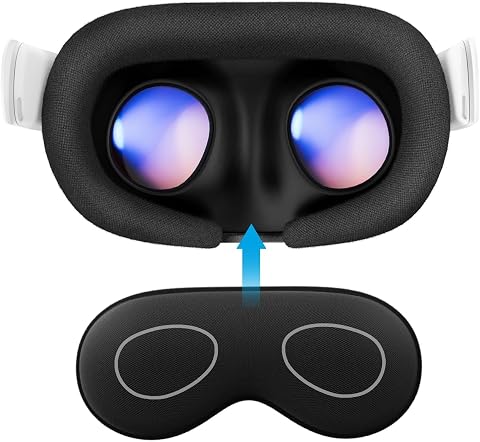
- Includes eye tracking, inside-out 6DOF tracking, and face cushion covers.
Cons:- Requires a DisplayPort connection and PC VR setup.
- Listed weight is 8.8 pounds, a substantial fit and comfort consideration.
- Not a standalone wireless alternative to the Quest headsets.
Best for: PC VR enthusiasts with a DisplayPort-equipped setup who prioritize high per-eye resolution, OLED displays, and eye tracking.
Not ideal for: Buyers seeking a lightweight-feeling, untethered headset or a straightforward standalone option like the Meta Quest 3; this model is PC-focused, DisplayPort-connected, and listed at 8.8 pounds.
- Display type:OLED
- Resolution:3840 × 3552 pixels per eye
- Field of view:116 degrees
- Refresh rate:90 Hz
- Pixel density:53 PPD
- Tracking:Eye tracking; inside-out 6DOF
- Connectivity:DisplayPort
- Platform compatibility:PC VR
- Weight:8.8 pounds
Our verdict“Choose the Pimax Crystal Super if you have a PC VR setup and value high-resolution OLED visuals more than wireless convenience.”
Meta Quest 3S 128GB VR Headset with GOLF+
This Meta Quest 3S bundle stands out for buyers who want a standalone headset with a golf game ready to play. It includes GOLF+ and 1,800 in-game credits, giving it a more specific appeal than the Meta Quest 3 512GB, which offers much more storage but no GOLF+ bundle in the product listing. The Snapdragon XR2 Gen 2 processor and 8 GB of RAM support its wireless VR and mixed-reality use without requiring a PC.
The price of that focused bundle is limited capacity: 128 GB storage is less than the Quest 3’s 512 GB, so it is a weaker fit for anyone planning a large installed library. The listed 2.5-hour battery life and 60Hz refresh rate also make this a more constrained choice than the 90Hz Quest 3 and Quest Pro. I’d choose it for the included golf content, not as the lineup’s most capable display or longest-session option.
Pros:- Includes GOLF+ with 1,800 in-game credits.
- Standalone wireless design supports use without a PC.
- Snapdragon XR2 Gen 2 processor and 8 GB of RAM are specified.
- Supports VR and mixed-reality experiences.
Cons:- 128 GB storage is substantially lower than the Quest 3 512GB.
- Listed battery life is 2.5 hours.
- Listed 60Hz refresh rate is lower than the 90Hz Quest 3 and Quest Pro.
Best for: Golf fans who want a standalone VR headset with GOLF+ and included in-game credits, plus access to a games-catalog trial.
Not ideal for: Players who plan to install many large games or want longer sessions and a 90Hz listed refresh rate; the 128 GB capacity and 2.5-hour battery life are limiting points.
- Storage:128 GB
- RAM:8 GB
- Processor:Snapdragon XR2 Gen 2
- Resolution:1832 × 1920 per eye
- Display:3.5-inch LCD
- Refresh rate:60 Hz
- Battery life:2.5 hours
- Weight:515 g
- Included content:GOLF+ with 1,800 in-game credits
Our verdict“Choose this Quest 3S bundle if GOLF+ is the draw, but pick the Quest 3 512GB for a larger library and a higher listed refresh rate.”
Meta Quest 3S 128GB Mixed Reality Headset with Elite Strap
This Meta Quest 3S bundle is the more comfort-focused 128 GB choice, thanks to the included Elite Strap with a flexible top strap and soft silicone support. That makes it a better fit for buyers who want an adjustable headband out of the box than the GOLF+ Quest 3S bundle, whose listed extras center on game content and credits. It supports both immersive VR and mixed reality, including multiple screens and a personal theater, so it can serve as more than a gaming headset.
Its 128 GB storage is still a clear limit beside the Meta Quest 3 512GB, and the listing does not give a battery-life figure to help buyers plan longer sessions. I’d also check the display details before choosing: this listing specifies OLED, while the GOLF+ Quest 3S listing specifies LCD. A USB-C adapter is needed for 3.5mm headphones, and the headset does not fit the Compact Carrying Case.
Pros:- Includes an adjustable Elite Strap with a flexible top strap.
- Soft silicone support is intended to help balance the fit.
- Supports immersive VR, mixed reality, multiple screens, and a personal theater.
- USB Type-C connectivity and motion-sensing controllers are specified.
Cons:- 128 GB storage is far below the Meta Quest 3 512GB.
- 3.5mm headphones require a separately sold USB-C adapter.
- Does not fit the Compact Carrying Case.
Best for: Quest buyers who want a 128 GB mixed-reality headset with an adjustable Elite Strap and soft silicone support included.
Not ideal for: People who need ample game storage, wired 3.5mm headphone use without an adapter, or a headset that fits Meta’s Compact Carrying Case.
- Model:Meta Quest 3S
- Storage:128 GB
- Display type:OLED
- Resolution:1832 × 1920 per eye
- Refresh rate:90 Hz
- Field of view:110 degrees
- Connectivity:USB Type-C
- Included strap:Adjustable Elite Strap with flexible top strap and silicone support
- Case compatibility:Does not fit the Compact Carrying Case
Our verdict“Choose this Quest 3S bundle for the included adjustable strap and mixed-reality features, but opt for the Quest 3 512GB if storage is more important.”
Meta Quest 3S 128GB VR Headset (Renewed Premium)
I’d choose this renewed Quest 3S for standalone VR and mixed reality when a smaller library is enough and wireless play matters more than display refinement. Its Snapdragon XR2 Gen 2 chip, 8GB of RAM, hand tracking, and Touch Controllers support a broad range of gaming, exercise, and video uses without a PC. Dual RGB cameras add full-color passthrough, so mixed-reality apps can show your surroundings in color.
Compared with the Meta Quest 3 512GB in this roundup, the 3S offers much less storage and a lower listed resolution, but keeps the same processor generation and standalone approach. The LCD display and 128GB capacity are the main compromises, while its advertised battery life is just over two hours. I’d also account for its Renewed Premium condition rather than treating it as a new headset.
Pros:- Standalone wireless design supports play without a PC connection
- Snapdragon XR2 Gen 2 processor and 8GB RAM
- Dual RGB cameras provide full-color passthrough
- Supports hand tracking and Touch Controllers
Cons:- 128GB storage can limit how many large games stay installed
- LCD display is a compromise for buyers prioritizing display refinement
- Renewed Premium condition may not suit buyers seeking a new headset
Best for: Buyers who want a wireless Meta headset for gaming, fitness, and mixed reality, and who expect to keep only a modest number of apps installed.
Not ideal for: Players with large game libraries or a strong preference for more storage and higher listed display resolution; the Quest 3 512GB is a better fit for those priorities.
- Storage:128 GB
- Memory:8 GB RAM
- Processor:Snapdragon XR2 Gen 2
- Display:LCD, 2064 × 2208 pixels
- Refresh rate:90 Hz
- Field of view:96 degrees
- Battery life:Over 2 hours advertised; 3 hours average listed
- Weight:515 g
- Condition:Renewed Premium
Our verdict“Choose this renewed Quest 3S if you want standalone mixed-reality play and can live with 128GB storage and an LCD display.”
Meta Quest 3 512GB VR Headset with GOLF+
The Quest 3 512GB is the stronger choice here for buyers who want a standalone headset but don’t want to manage a tight storage limit. Its 512GB capacity gives a substantial cushion for games and other content, while the Snapdragon XR2 Gen 2 processor, 8GB RAM, and full-color passthrough support gaming, fitness, and mixed-reality use. The bundle adds GOLF+ with in-game credits and a three-month games catalog trial.
Compared with the Quest 3S 128GB Renewed Premium, this model has four times the listed storage and a higher maximum display resolution, along with a listed 120Hz refresh rate. That makes it the more accommodating pick for a growing library, though it still uses an LCD display and its battery lasts about 2.2 hours. The distinction between maximum and per-eye resolution in the specs may also confuse shoppers, so I’d focus on the stated per-eye figure when comparing display detail.
Pros:- 512GB storage leaves more room for games and other content
- Snapdragon XR2 Gen 2 processor with 8GB RAM
- Full-color passthrough supports mixed-reality experiences
- Includes GOLF+ content and a three-month games catalog trial
Cons:- Battery life is approximately 2.2 hours
- Uses an LCD display rather than a different listed display technology
- Maximum and per-eye resolution figures may be confusing to compare
Best for: Standalone VR players who install many games, want room for a growing library, and are interested in the included GOLF+ content and catalog trial.
Not ideal for: Buyers who mainly want a lower-storage headset for a few apps, or who need longer sessions without recharging; the Quest 3S 128GB is the simpler storage choice.
- Storage:512 GB
- RAM:8 GB
- Processor:Snapdragon XR2 Gen 2
- Display:LCD
- Maximum display resolution:4128 × 2208 pixels
- Resolution per eye:2064 × 2208 pixels
- Refresh rate:120 Hz
- Battery life:Approximately 2.2 hours
- Included content:GOLF+ with 1,800 in-game credits; 3-month games catalog trial
Our verdict“Pick the Quest 3 512GB if you want a standalone headset with generous storage and the included GOLF+ bundle.”
How We Picked
I ranked these seven options by how well their headset capabilities match common VR buying needs: standalone usability, mixed-reality support, display focus, storage, comfort-related bundle contents, and the kind of setup each requires. I also weighed whether a product has broad appeal or serves a narrower audience, since a PC-dependent specialist should not rank above an easier all-purpose headset for most buyers.
The Quest 3 512GB leads for its balance of flexibility and capacity; the Pimax earns a distinct premium position for PC VR priorities rather than general convenience. Quest 3S versions follow as accessible standalone choices, with bundles and renewed status affecting their fit but not changing the underlying headset class. I treat included straps and software as useful extras, not substitutes for checking comfort, compatibility, or your intended games.
| VR glasse | Connectivity |
|---|---|
| Meta Quest Pro 256 GB VR Heads | Wi-Fi; USB Type-C |
| Meta Quest 3 512GB VR Headset | USB Type-C |
| Pimax Crystal Super PC VR Head | DisplayPort |
| Meta Quest 3S 128GB VR Headset | — |
| Meta Quest 3S 128GB Mixed Real | USB Type-C |
| Meta Quest 3S 128GB VR Headset | — |
| Meta Quest 3 512GB VR Headset | — |
Factors to Consider When Choosing Best VR Glasses
Before choosing among these VR glasses, I would start with how and where you plan to use them. A headset that suits a PC sim setup can be the wrong pick for casual, untethered play, and bundles can distract from the basics that shape daily use.
Choose Standalone or PC-Connected VR First
A standalone headset runs games without a separate computer, which makes it easier to set up and move between rooms. PC VR can provide access to demanding games and experiences, but it depends on a compatible computer and a connection that suits the headset. The Pimax Crystal Super belongs to the PC-focused side of this comparison, while the Meta Quest models are the more flexible choices for untethered use. A common mistake is buying a PC headset before checking whether the computer can run the software and graphics load you want. If you expect to play in different spaces or share the headset, standalone capability may matter more than the highest-end display features.
Match the Headset to Your Comfort Needs
Comfort depends on more than a headset’s weight: facial fit, pressure distribution, strap adjustment, and how long you play all shape the experience. An included Elite Strap may reduce the need to buy an accessory later, but it cannot guarantee a good fit for every head shape. If possible, check return terms and accessory compatibility before choosing, especially if you wear glasses or plan long sessions. New buyers often focus on technical specifications and overlook whether the headset can be adjusted quickly between users. A secure fit also matters for active games, where a loose headset can interrupt play.
Estimate Storage From Your Actual Library
Headset storage affects how many games and apps you can keep installed at once, not the visual quality of each experience. Larger installations and frequent game switching make extra capacity more useful, while a small rotating library can work with less. The Quest 3 models in this group have 512GB, whereas the Quest 3S options list 128GB, so the gap is meaningful for buyers who want a broad library ready to launch. Do not assume cloud access removes the need for local storage; downloads and updates still take space. Check whether you are comfortable uninstalling and reinstalling titles before choosing a lower-capacity model.
Treat Bundles as Extras, Not the Main Decision
A bundled game such as GOLF+ can add immediate value if it is already on your list, and an included strap can address an accessory need. Neither extra changes the headset’s underlying display, storage, or platform capabilities. Compare bundles only after deciding which headset fits your use, then verify exactly what software and accessories are included. One frequent buying mistake is choosing a bundle for its headline extra even when another headset better matches the buyer’s needs. Also check whether the bundled content is a code, subscription, or physical accessory and whether it suits the intended user.
Decide How Much Display Specialization You Need
Display-focused features matter most when visual clarity is a leading priority, particularly for PC simulations or detailed virtual environments. They may bring added system demands, setup complexity, or a narrower use case compared with a more general standalone headset. The Pimax Crystal Super’s Micro-OLED displays and eye tracking make it the specialized option here, not automatically the best choice for every buyer. Think about the games you actually play and whether your computer can support the experience you want. If you mainly want casual games, social apps, or mixed reality, broad usability may be a better reason to choose than specialized display hardware.
Check Condition and Support Before Buying Renewed
A renewed headset may suit a buyer willing to accept refurbished hardware, but the purchase requires more attention to condition and included parts. Read the seller’s condition description and return policy, and confirm that controllers, chargers, facial interfaces, and other expected accessories are present. Battery condition and signs of wear can affect day-to-day use even when the headset powers on normally. A new bundle may be the simpler choice for a first headset or a gift, while a renewed unit can make sense for someone comfortable checking details. Do not treat the word renewed as a guarantee that every accessory or component is equivalent to a new product.
Frequently Asked Questions
Should I choose the Quest 3 or Quest 3S for a first VR headset?
I would choose based on how much you value the headset’s overall capability and storage, not only on being new to VR. The Quest 3 512GB is the more flexible option in this lineup, while the Quest 3S models provide a simpler entry point with less storage. If you expect to keep many games installed or want the broader all-around pick, Quest 3 is the stronger fit. If you want to start with standalone VR and a smaller library, Quest 3S may be enough. The included bundle should come after that decision.
Do I need a gaming PC for the Pimax Crystal Super?
The Pimax Crystal Super is positioned as a PC VR headset, so buyers should plan around having a compatible computer and the space and setup needed to use it. Before choosing it, check the headset’s current PC requirements and compare them with your computer’s graphics hardware and connections. A capable PC can make this specialist route appealing for demanding VR experiences, but it adds cost and setup beyond the headset itself. If you want VR without relying on a computer, the Meta Quest models in this roundup are a more natural match. Choose Pimax for a PC-centered setup, not as a plug-and-play substitute for standalone VR.
Is 128GB enough storage for a Quest 3S?
It can be enough if you keep a modest selection of games installed and do not mind removing titles to make room for others. Buyers who like to keep a larger library available, install several large games, or avoid managing storage may prefer the Quest 3’s 512GB capacity. Remember that updates and system software also use space, so the full listed capacity is not all available for games. Your download habits matter as much as the number of titles you own. If storage management sounds frustrating, the larger-capacity model is the safer fit.
Does a GOLF+ bundle make the Quest 3 a better buy than the Quest 3S?
The bundle makes the most difference if GOLF+ is a game you already want; it does not remove the hardware differences between Quest 3 and Quest 3S. Compare headset capability, storage, fit, and how you plan to play before giving the bundled game weight. If you are choosing between the two GOLF+ versions, the Quest 3 512GB is the broader all-around headset, while the Quest 3S is the more entry-focused route. Confirm the exact bundle contents and software redemption terms before purchase. A game you will not use should not decide the headset choice.
What should I check before buying the renewed Quest 3S?
Check the seller’s stated condition, return window, warranty or support terms, and the exact accessories included. For a VR headset, missing controllers or a worn facial interface can affect usability even if the headset itself appears functional. Ask how battery condition is handled if that information is available, and review the process for returning a unit that does not match its description. A renewed model may suit buyers who are comfortable checking these details, but a new headset is usually the more straightforward choice for a gift or a first purchase. Compare the complete package rather than the headset label alone.
Conclusion
For the best overall balance, I recommend the Meta Quest 3 512GB; the GOLF+ bundle version makes the most sense if that game is already on your list. For a best value-style entry, look to a Quest 3S bundle that includes an extra you will actually use, while accepting its smaller storage. The best premium specialist is the Pimax Crystal Super for PC VR buyers focused on display hardware and eye tracking. For beginners, a new Quest 3S is the simpler starting point; for specific needs, choose the renewed Quest 3S only if you are comfortable checking condition and return terms. In short, buy Quest 3 for versatility, Quest 3S for a straightforward start, and Pimax for a PC-centered visual upgrade.