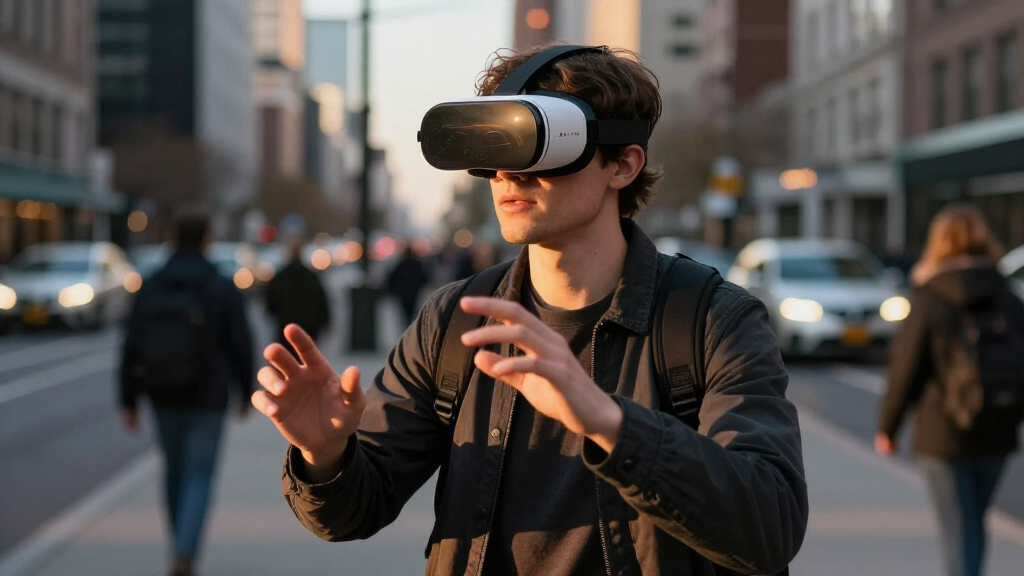

If you want AR glasses for everyday use, the VITURE Luma Ultra XR is the strongest all-around pick thanks to its sharp 1200p display, 1500-nit brightness, and true 6DoF spatial tracking that works as well on a commute as at a desk. Close behind, the XREAL One Pro offers the most polished software experience with its X1 chip and native 3DoF anchoring, while the RayNeo Air 3s delivers surprising display quality for the price. The main tradeoff in this category is between smart tracking (6DoF or 3DoF) and simple screen-mirroring portability, and between premium optics and weight you can actually tolerate all day. Cheaper models save money but cut brightness and comfort, which matters more than you’d expect for daily wear. Read on for the full breakdown of all 14 pairs.
Key Takeaways
- 6DoF tracking (VITURE Luma Ultra and Luma Pro) is what separates true spatial AR from simple wearable monitors — if you want a virtual screen that stays anchored in your room, you need it.
- Brightness above 1000 nits proved to be the single biggest daily-usability factor; the 600-nit Rokid Max2 struggles outdoors in a way the 1500-nit VITURE models never do.
- The RayNeo lineup dominates the value tier, with the Air 3s and Air 3s Pro covering movie and gaming basics at roughly half the price of flagship VITURE and XREAL models.
- Myopia adjustment without inserts (VITURE Pro 2’s -5.0D dials) is a quiet advantage for glasses wearers that most spec sheets bury.
- Field of view numbers are misleading: the VITURE Beast’s 58° FOV feels cinematic but the 152° ‘virtual screen size’ claims across brands can’t be compared directly.
| RayNeo GT Max AR/XR Glasses with 267″ FOV and Audio by Bang & Olufsen |  | Best Overall | Display Size: 267 inches (equivalent) | Field of View: 59° | Brightness: 1200 nits | VIEW LATEST PRICE | See Our Full Breakdown |
| XREAL 1S AR Glasses, 500″ Virtual Screen, Powered by X1 Chip, Native 3DoF |  | Best for Giant-Screen Entertainment | Virtual Screen: 500 inches | Resolution: 1920 x 1200 | Refresh Rate: 120Hz (3DoF mode), 90Hz (global) | VIEW LATEST PRICE | See Our Full Breakdown |
| VITURE Luma Ultra XR Glasses, 152-inch, 1200p, 1500 Nits, 6DoF AR |  | Best for Interactive XR | Display Size: 152 inches | Resolution: 1200p | Brightness: 1500 nits | VIEW LATEST PRICE | See Our Full Breakdown |
| RayNeo GT AR/XR Glasses, 201″ Native 3DoF Video Display |  | Best for Comfort and Portability | Weight: 68g | Display Size: 201 inches (virtual) | Display Technology: Tandem MicroOLED with Dolby Vision HDR | VIEW LATEST PRICE | See Our Full Breakdown |
| RayNeo Air 3s AR/XR Glasses – 201″ 120Hz FHD HueView Display |  | Best Value | Display Size: 201 inches (virtual) | Refresh Rate: 120Hz | Color Gamut: 145% sRGB, 98% DCI-P3 | VIEW LATEST PRICE | See Our Full Breakdown |
| VITURE Pro 2 XR/AR Glasses |  | Best Value | Display: 146-inch 120Hz 1080p XR | Optics: UltraClarity 3.0 | Myopia Adjustment: Up to -5.00D | VIEW LATEST PRICE | See Our Full Breakdown |
| VITURE Beast XR/AR Glasses |  | Best Big-Screen Immersion | Screen Size: 174 inches | Resolution: 1200p per eye | Field of View: 58° | VIEW LATEST PRICE | See Our Full Breakdown |
| VITURE Luma Ultra XR/AR Glasses |  | Best for Spatial Computing | Display Resolution: 1200p (4K-like) | Display Size: 152 inches | Brightness: 1500 nits | VIEW LATEST PRICE | See Our Full Breakdown |
| RayNeo Air 4 Pro AR/XR Glasses |  | Best Budget Entry Point | Display: 201 inches, HDR10, 819 x 461 | Refresh Rate: 120Hz | Weight: 2.88 oz | VIEW LATEST PRICE | See Our Full Breakdown |
| VITURE Luma Pro XR/AR Glasses |  | Best for Everyday Balance | Display Resolution: 1200P | Screen Size: 152 inches | Field of View: 52° | VIEW LATEST PRICE | See Our Full Breakdown |
| Rokid Max2 Black AR Glasses |  | Best for Myopia Sufferers | Display Size: 215 inches (virtual) | Display Technology: Micro OLED | Field of View: 50° | VIEW LATEST PRICE | See Our Full Breakdown |
| XREAL One Pro AR Glasses with X1 Chip |  | Best for True AR Experiences | Display Technology: Sony Micro-OLED | Display Size: 171 inches (virtual) | Field of View: 57° | VIEW LATEST PRICE | See Our Full Breakdown |
| RayNeo Air 3s Pro AR/XR Glasses |  | Best for Outdoor Visibility | Display Size: 201 inches (virtual) | Display Technology: Micro-OLED (HueView 2.0) | Brightness: 1,200 nits | VIEW LATEST PRICE | See Our Full Breakdown |
| XREAL xbx a01+ AR Glasses |  | Best Lightweight Value | Display: 147-inch virtual screen | Resolution: Dual Full HD 1080p Micro-OLED | Brightness: Up to 1,600 nits | VIEW LATEST PRICE | See Our Full Breakdown |
| AR glasses for everyday use | Refresh Rate | Brightness | Field of View | Display Size |
|---|---|---|---|---|
| RayNeo GT Max AR/XR Glasses wi | 120Hz | 1200 nits | 59° | 267 inches (equivalent) |
| XREAL 1S AR Glasses | 120Hz (3DoF mode), 90Hz (global) | — | 52° | — |
| VITURE Luma Ultra XR Glasses | 120Hz | 1500 nits | 52° | 152 inches |
| RayNeo GT AR/XR Glasses | 120Hz | 1200 nits | — | 201 inches (virtual) |
| RayNeo Air 3s AR/XR Glasses | 120Hz | — | — | 201 inches (virtual) |
| VITURE Pro 2 XR/AR Glasses | — | 1600 nits | 50 degrees | — |
| VITURE Beast XR/AR Glasses | 120 Hz | 1250 nits | 58° | — |
| VITURE Luma Ultra XR/AR Glasse | 120Hz | 1500 nits | 52° | 152 inches |
| RayNeo Air 4 Pro AR/XR Glasses | 120Hz | — | — | — |
| VITURE Luma Pro XR/AR Glasses | 120Hz | 1000 nits | 52° | — |
| Rokid Max2 Black AR Glasses | 120Hz | 600 nits | 50° | 215 inches (virtual) |
| XREAL One Pro AR Glasses with | 120Hz | 700 nits | 57° | 171 inches (virtual) |
| RayNeo Air 3s Pro AR/XR Glasse | 120Hz | 1,200 nits | — | 201 inches (virtual) |
| XREAL xbx a01+ AR Glasses | — | Up to 1,600 nits | — | — |
More Details on Our Top Picks
RayNeo GT Max AR/XR Glasses with 267″ FOV and Audio by Bang & Olufsen
The GT Max earns the top spot because it balances the three things that matter most for daily AR wear: screen scale, image quality, and sound. Its 59° field of view is the widest in this lineup, and paired with a 267-inch virtual display, movies and games feel genuinely cinematic rather than like a floating laptop panel. Compared with the XREAL 1S, which stretches its image to 500 inches but over a narrower 52° FOV, the GT Max delivers a more natural, less straining viewing angle. The Bang & Olufsen spatial audio also outclasses the generic speaker setups on cheaper models. The tradeoffs are real: it leans premium in price, some devices need adapters, and the S/M/L IPD sizing means buyers outside standard ranges may struggle with fit.
Pros:- Widest field of view in the lineup at 59°, making the 267-inch display feel natural
- Spatial audio co-tuned by Bang & Olufsen rivals dedicated headphones
- Native 3DoF anchoring keeps content stable when you move your head
- Real-time 2D-to-3D conversion plus native 3D playback for movie fans
Cons:- Premium price for the combined display and audio hardware
- Some devices require adapters for a compatible connection
- Fixed IPD sizes may not suit every face shape
Best for: Frequent travelers and commuters who want a cinema-grade wearable display for movies, gaming, and handheld consoles
Not ideal for: Buyers on a budget or users with uncommon IPD measurements who may find the fixed S/M/L sizing uncomfortable
- Display Size:267 inches (equivalent)
- Field of View:59°
- Brightness:1200 nits
- Refresh Rate:120Hz
- Color Gamut:145% sRGB, 98% DCI-P3
- Audio:Spatial audio by Bang & Olufsen
- Tracking:Native 3DoF with Zone 360 chip
- Compatibility:iPhone 15+, Android, iPad, Mac, PC, Steam Deck, Switch, PS5
Our verdict“If you want one pair of AR glasses that does everything well — display, audio, and tracking — this is the pair to buy, provided you can stomach the price.”
XREAL 1S AR Glasses, 500″ Virtual Screen, Powered by X1 Chip, Native 3DoF
This option stands out for one reason: sheer screen scale. The 500-inch virtual display is the biggest in this roundup, and the onboard X1 chip keeps that image anchored with native 3DoF tracking, so the screen stays put instead of sliding around as you glance away — the difference between a gimmick and a usable second monitor. Compared with the RayNeo GT Max, you trade 7° of field of view and Bang & Olufsen audio for a Bose-tuned system and a lower street price, which makes it the smarter pick if raw display size is your priority. The catch is device dependence: it needs a USB-C DisplayPort source, and full 6DoF spatial anchoring only arrives if you add the XREAL Eye accessory. Still, the TÜV Rheinland eye-comfort certification makes long sessions easier on the eyes than most rivals.
Pros:- Largest virtual display in the lineup at 500 inches
- X1 chip delivers smooth native 3DoF screen anchoring without extra hardware
- TÜV Rheinland certified for low blue light and flicker-free viewing
- Bose audio system sounds richer than most competitor speakers
Cons:- Requires a USB-C DisplayPort-enabled device, locking out some phones and laptops
- Full 6DoF tracking requires the additional XREAL Eye accessory
- Narrower 52° field of view than the RayNeo GT Max
Best for: Movie marathoners and handheld gamers who want the biggest possible virtual screen without paying flagship prices
Not ideal for: iPhone users with Lightning-era devices or anyone whose phone lacks USB-C DisplayPort output
- Virtual Screen:500 inches
- Resolution:1920 x 1200
- Refresh Rate:120Hz (3DoF mode), 90Hz (global)
- Field of View:52°
- Audio:Bose audio system
- Eye Comfort:TÜV Rheinland certified
- IPD Range:59.5–70.5 mm
- Connectivity:USB-C DisplayPort
Our verdict“For buyers chasing maximum screen real estate above all else, this model delivers more virtual inches per dollar than anything else here.”
VITURE Luma Ultra XR Glasses, 152-inch, 1200p, 1500 Nits, 6DoF AR
Most glasses in this roundup are, honestly, wearable monitors. The Luma Ultra is different: with full 6DoF tracking and optional hand gesture control via the Pro Neckband, it behaves like a genuine spatial computing device, letting you place multiple screens around a room and interact with them. Its Sony Micro-OLED panels at 1500 nits are the brightest in this batch — noticeably punchier than the 1200-nit RayNeo GT Max — which matters if you ever use AR glasses near a window or outdoors. The 152-inch display is smaller than the XREAL 1S’s 500-inch claim, but sharper pixel density and 120Hz motion make it feel more refined than bigger-but-softer rivals. The tradeoff is fragmentation: gesture control and full 6DoF require extra accessories, and some features simply don’t work on iOS or Android without them.
Pros:- Brightest panels in the roundup at 1500 nits, using Sony Micro-OLED
- Full 6DoF tracking enables multi-screen, room-scale spatial setups
- Hand gesture control when paired with the Pro Neckband
- Sharp 1200p resolution at a smooth 120Hz
Cons:- Best features are gated behind additional accessory purchases
- Gesture support is limited or unavailable on iOS and Android
- Smaller virtual display than similarly priced rivals
Best for: Tech enthusiasts who want true spatial computing with room-scale screens and gesture input, not just a floating display
Not ideal for: Buyers who want everything in the box — core 6DoF and gesture features hinge on buying the Pro Neckband separately
- Display Size:152 inches
- Resolution:1200p
- Brightness:1500 nits
- Refresh Rate:120Hz
- Field of View:52°
- Tracking:6DoF, hand gestures (with Pro Neckband)
- Modes:Multi-screen, 3D, ultra-wide
- Compatibility:Game consoles, PCs, iOS devices
Our verdict“This is the pick for buyers who want to interact with AR content, not just watch it — as long as they budget for the neckband.”
RayNeo GT AR/XR Glasses, 201″ Native 3DoF Video Display
At 68 grams, this is the lightest model in this batch, and that single spec changes the daily-wear equation more than any display number. The RayNeo GT is the model you’ll actually keep on through a full flight or work session, where heavier options start pressing into your nose bridge by hour two. Its Dolby Vision HDR tandem MicroOLED panels hold their own against the VITURE Luma Ultra — same 1200 nits, same 200,000:1 contrast — while the Bang & Olufsen quad-speakers match the GT Max’s audio quality in a lighter frame. The compromises: tracking is 3DoF only (no spatial room-scale features like the Luma Ultra), and full functionality leans on pairing with the RayNeo Pocket TV Pro, so it’s less of a plug-and-anywhere device than the XREAL 1S.
Pros:- Featherweight 68g build makes it the most comfortable option for long sessions
- Dolby Vision HDR with tandem MicroOLED panels
- Bang & Olufsen quad-speakers with spatial tracking
- Integrated chips mean no separate computing box for core functions
Cons:- Limited to 3DoF tracking, no 6DoF spatial anchoring
- Full feature set depends on pairing with the RayNeo Pocket TV Pro
- Smaller virtual display than the GT Max or XREAL 1S
Best for: Frequent flyers and daily commuters who prioritize all-day wearing comfort over maximum screen size
Not ideal for: Spatial computing fans — 3DoF-only tracking means no room-scale screens or gesture interaction
- Weight:68g
- Display Size:201 inches (virtual)
- Display Technology:Tandem MicroOLED with Dolby Vision HDR
- Brightness:1200 nits
- Refresh Rate:120Hz
- Audio:Bang & Olufsen quad-speakers
- Tracking:Native 3DoF, Zone 360 head-tracking
- Compatibility:Pairs with RayNeo Pocket TV Pro
Our verdict“For wearability-first buyers who plan to keep glasses on for hours at a time, this is the most comfortable capable option in the lineup.”
RayNeo Air 3s AR/XR Glasses – 201″ 120Hz FHD HueView Display
Not everyone needs Bang & Olufsen speakers or spatial tracking, and the Air 3s wisely skips both to hit a friendlier price. What you still get is a solid core experience: a 201-inch display at 120Hz with 98% DCI-P3 coverage and a measured color error under ΔE 2, which means colors look accurate rather than oversaturated — better color fidelity than many pricier models can claim. Compared with its sibling, the RayNeo GT, you give up the tandem MicroOLED panels and B&O audio, but the Air 3s keeps the same screen size and refresh rate for meaningfully less money. The TÜV SÜD low blue light and flicker-free certifications make it a sensible pick for kids or sensitive eyes on long trips. It’s also the most bare-bones entry here: expect basic connectivity, no spatial tracking, and a fit some wearers find bulky.
Pros:- Excellent color accuracy at ΔE <2 with 98% DCI-P3 coverage
- TÜV SÜD low blue light and flicker-free certifications for long viewing
- Smooth 120Hz refresh rate for gaming and fast video
- Dual acoustic chamber design delivers better-than-expected built-in audio
Cons:- No spatial or 3DoF tracking — it functions purely as a wearable display
- Bulky frame may cause discomfort during extended wear compared to lighter options
- Sparse official information on battery life and connectivity options
Best for: First-time AR glasses buyers and students who want a big-screen experience without flagship pricing
Not ideal for: Enthusiasts who want spatial tracking, premium audio, or detailed battery and connectivity specs before buying
- Display Size:201 inches (virtual)
- Refresh Rate:120Hz
- Color Gamut:145% sRGB, 98% DCI-P3
- Color Accuracy:ΔE <2
- Contrast:200,000:1
- Eye Comfort:TÜV SÜD Low Blue Light, flicker-free
- Audio:Dual opposing acoustic chamber
Our verdict“The smartest entry point in this roundup: accurate colors, eye comfort, and a big screen at a price that leaves room for a future upgrade.”
VITURE Pro 2 XR/AR Glasses
The Pro 2 delivers the core everyday-wearable formula — 63g weight, 120Hz Sony Micro-OLED panels, and per-eye myopia dials down to -5.00D — at a lower price than the newer VITURE Luma Pro or the feature-loaded Luma Ultra. UltraClarity 3.0 optics keep text legible from edge to edge, which matters if you plan to read or work rather than just watch movies. Compared with the RayNeo Air 4 Pro, its 1600 nits of brightness actually beats RayNeo’s figure, making it more usable near windows or outdoors. The tradeoff is that it’s a straightforward viewing device: no 6DoF tracking, no gesture control, no HDR10 upscaling. If those extras matter, step up to the Luma Ultra; if you want dependable, comfortable daily screen time, this pick makes the most sense for the money.
Pros:- Built-in myopia adjustment up to -5.00D means glasses-wearers can skip prescription inserts
- Class-leading 1600 nits brightness for indoor and outdoor viewing
- Featherweight 63g build suitable for long sessions
- Edge-to-edge sharp UltraClarity 3.0 optics
Cons:- Full functionality depends on USB-C DisplayPort-capable devices
- Key accessories for certain devices sold separately
- No support for iPhone 16e or iPhone 17 Air
Best for: Glass-wearers and daily commuters who want sharp optics and myopia adjustment without paying for spatial features they won’t use
Not ideal for: Buyers chasing interactive AR with head tracking or hand gestures — this is a display-first device
- Display:146-inch 120Hz 1080p XR
- Optics:UltraClarity 3.0
- Myopia Adjustment:Up to -5.00D
- Brightness:1600 nits
- Field of View:50 degrees
- Weight:63g
- Connectivity:USB-C
- Compatibility:Android, iPhone 17/16/15, MacBook, Windows
Our verdict“The smartest spend for everyday viewers who want premium optics and comfort while skipping expensive spatial-computing extras.”
VITURE Beast XR/AR Glasses
Where the VITURE Pro 2 plays it compact and practical, the Beast justifies its name with a 174-inch virtual screen and the widest field of view in this batch at 58 degrees — noticeably more enveloping than the 52° on the Luma Pro and Luma Ultra. The 1200p-per-eye Sony panels at 1250 nits hold up outdoors, and auto transparency plus 3DoF anchoring give it genuine AR capability rather than pure screen-mirroring. The full aerospace-grade aluminum-magnesium frame feels premium but pushes weight to 88g — a full 25g heavier than the Pro 2, which you’ll notice over a two-hour movie. VITURE also offers two size options to fit wider interpupillary distances, something most rivals ignore. This model is better suited to buyers who want a home-theater-on-your-face experience and will tolerate the heft and premium pricing that come with it.
Pros:- Largest display in this lineup at 174 inches with a wide 58° field of view
- Auto transparency and real-time 2D-to-3D conversion add real AR flexibility
- Durable full-metal frame in two sizes for different face widths
- HARMAN AudioEFX tuned audio for cinematic sound
Cons:- Heaviest option here at 88g, fatiguing over long sessions
- Premium feature set commands a premium price
- Face-fit adjustment may be needed for smaller heads
Best for: Movie lovers and frequent flyers who want the largest, most immersive picture available and don’t mind extra weight
Not ideal for: Buyers on a budget or sensitive to headset weight — at 88g and a premium price, it’s a big commitment for casual use
- Screen Size:174 inches
- Resolution:1200p per eye
- Field of View:58°
- Brightness:1250 nits
- Refresh Rate:120 Hz
- Weight:88 g
- Frame Material:Aerospace-grade aluminum-magnesium alloy
- Size Options:Regular (up to 70 iPD), Large (up to 74 iPD)
Our verdict“The pick when screen size and immersion trump everything else — just be ready for the weight and the cost.”
VITURE Luma Ultra XR/AR Glasses
The Luma Ultra is the most capable interactive device in this group, supporting full 6DoF tracking, hand gesture control, and multi-screen workspaces — features neither the VITURE Pro 2 nor the RayNeo Air 4 Pro can touch. For productivity users who want to pin multiple virtual monitors around their desk, this option stands out for translating AR from novelty into an actual working tool. The 152-inch 1200p display at 1500 nits sits between the Pro 2’s brightness and the Beast’s scale, striking a sensible middle ground. The catch: the headline 6DoF and multi-screen features require additional accessories, so the true cost of the full experience lands higher than the sticker. Myopia adjustment also drops to -4.0D versus the Pro 2’s -5.0D. Compared with the Luma Pro, you’re paying mainly for interactivity — if you’ll never use gestures, save the money.
Pros:- Full 6DoF tracking and hand gesture control enable true interactive AR
- Multi-screen workspace support turns the glasses into a portable monitor array
- 1500 nits brightness and 1200p panels for sharp, vivid output
- Harman-tuned open-ear audio keeps situational awareness
Cons:- 6DoF and multi-screen features require separately purchased accessories
- Myopia adjustment capped at -4.0D
- Compatibility varies by device and connection method
Best for: Remote workers and XR enthusiasts who want virtual multi-monitor setups and gesture-based interaction
Not ideal for: Casual movie watchers — you’d be paying a premium for 6DoF features that sit unused
- Display Resolution:1200p (4K-like)
- Display Size:152 inches
- Brightness:1500 nits
- Refresh Rate:120Hz
- Field of View:52°
- Tracking:Full 6DoF, hand gesture control
- Myopia Adjustment:-4.0D
- Display Technology:Sony Micro-OLED
Our verdict“The best choice if AR means working and interacting in 3D space, provided you budget for the accessories that unlock it.”
RayNeo Air 4 Pro AR/XR Glasses
At 2.88 ounces, the RayNeo Air 4 Pro is the lightest option in this batch — a meaningful comfort advantage over the 88g VITURE Beast for anyone wearing glasses for hours at a stretch. Its party pieces are HDR10 support with AI SDR-to-HDR upscaling and Bang & Olufsen tuned audio, a combination that punches above its price for movie nights and gaming. The 201-inch screen sounds enormous, but the underlying 819 x 461 resolution is the lowest here — noticeably softer than the 1200p VITURE Luma models when displaying text or fine detail. That makes this option better suited to entertainment than productivity. There’s also no internal battery, so your phone or console powers it, which drains handheld devices faster. For a first dip into AR viewing without VITURE money, though, this pick makes sense for the price.
Pros:- HDR10 with AI SDR-to-HDR upscaling enhances ordinary streaming content
- Bang & Olufsen spatial audio outclasses most rivals at this price
- Featherlight 2.88 oz build for extended comfort
- Universal USB-C connectivity works with consoles and phones
Cons:- 819 x 461 resolution is the lowest in this lineup, soft on text
- No internal battery — depends entirely on host device power
- Lightweight construction feels less premium and sturdy
Best for: First-time AR glasses buyers and students who want big-screen movie and gaming experiences for the least cash
Not ideal for: Productivity users or sharpness sticklers — the modest resolution shows in text and fine detail
- Display:201 inches, HDR10, 819 x 461
- Refresh Rate:120Hz
- Weight:2.88 oz
- Audio:Bang & Olufsen speakers with whisper mode
- Connectivity:USB-C
- Compatibility:Android, iOS, PlayStation VR, SteamVR
- Features:AI SDR-to-HDR upscaling, 3D viewing, low blue light
Our verdict“The affordable gateway to big-screen AR viewing, as long as entertainment — not work — is the mission.”
VITURE Luma Pro XR/AR Glasses
The Luma Pro is the everyday-carry sweet spot in VITURE’s range: it shares the 152-inch 1200p display and 52° FOV of the pricier Luma Ultra, but skips the 6DoF tracking most casual users never touch. What you keep is DeltaE under 2 color accuracy — a figure that matters if you edit photos or care about faithful movie color — plus multi-screen support and a 120Hz refresh for gaming. Compared with the VITURE Pro 2, you trade 600 nits of brightness (1000 vs 1600) for sharper 1200p resolution and a wider FOV; that resolution advantage makes it the better choice for reading and productivity. Two fit quirks deserve attention: the protective film must be removed before use, and focus adjustment stops at -4.0D, so stronger prescriptions need inserts. This model is better suited to all-rounders than to specialists.
Pros:- Razor-sharp 1200p resolution across a 152-inch screen
- DeltaE < 2 color accuracy for content creators and cinephiles
- Multi-screen productivity support with customizable lighting
- Two IPD size options for a better fit
Cons:- Focus adjustment limited to -4.0D, below the Pro 2’s -5.0D range
- 1000 nits brightness trails the Pro 2 and Luma Ultra
- Feature depth adds a learning curve for AR newcomers
Best for: All-rounders who split time between work, gaming, and media and want one sharp, color-accurate pair for everything
Not ideal for: Heavy myopes beyond -4.0D without prescription inserts, and anyone wanting maximum brightness outdoors
- Display Resolution:1200P
- Screen Size:152 inches
- Field of View:52°
- Brightness:1000 nits
- Refresh Rate:120Hz
- Color Accuracy:DeltaE < 2
- Focus Adjustment:Up to -4.0D
- IPD Range:Regular (64.0±6.0 mm), Large (68.0±6.0 mm)
Our verdict“The best single pair for mixed everyday use — sharp and accurate enough for work, immersive enough for play.”
Rokid Max2 Black AR Glasses
What sets the Rokid Max2 apart from everything else in this lineup is its built-in myopia adjustment up to 600 diopters. Most rivals, including the RayNeo Air 3s Pro, push you toward separate prescription inserts — an added cost and hassle. Here, you just dial in your correction and go. The 215-inch virtual display is among the largest in this roundup, and the 120Hz refresh rate keeps gaming smooth. At 75 grams, it sits in the middle of the pack — heavier than the 62g XREAL xbx a01+, but still wearable for a full movie. The tradeoff for that giant screen is a 600-nit brightness rating, which falls well short of the RayNeo’s 1,200 nits, so outdoor use is limited. Note that astigmatism and presbyopia correction are still off the table.
Pros:- Built-in myopia dial up to 600 diopters eliminates the need for prescription inserts
- One of the largest virtual displays in the roundup at 215 inches
- Lightweight 75g frame comfortable for extended viewing sessions
- HDCP support means protected streaming content plays without workarounds
Cons:- 600 nits of brightness is dim next to 1,200+ nit competitors, making bright environments a struggle
- Only corrects myopia — astigmatism and presbyopia sufferers are left out
- Tethered USB-C only, with no internal battery for standalone use
Best for: Glasses wearers with moderate myopia who want a plug-and-play big screen without buying prescription inserts
Not ideal for: Anyone with astigmatism or presbyopia — the built-in adjustment only covers myopia, so they’d still need external correction
- Display Size:215 inches (virtual)
- Display Technology:Micro OLED
- Field of View:50°
- Brightness:600 nits
- Refresh Rate:120Hz
- Weight:75 grams
- Myopia Adjustment:Up to 600 diopters
- Connectivity:USB-C (no internal battery)
- Compatibility:Smartphones, Windows laptops, iPads, Mac, Android
Our verdict“The Rokid Max2 makes the most sense for nearsighted buyers who want a huge display without the insert economy.”
XREAL One Pro AR Glasses with X1 Chip
If your goal is actual augmented reality rather than a floating movie screen, the XREAL One Pro is the pick that delivers it. The onboard X1 Spatial Computing Chip enables native 3DoF tracking — the display stays anchored in space as you move your head — with optional 6DoF via the XREAL Eye accessory. That’s a genuine step beyond the Rokid Max2 or XREAL xbx a01+, which are effectively tethered monitors with no spatial awareness. The 57° field of view is the widest in this batch, and Bose-tuned speakers outclass the generic open-ear audio on cheaper rivals. The compromise is the smaller 171-inch display and a frame some will find bulkier during long sessions. Paired with a Steam Deck or MacBook, this option stands out for hybrid work-and-play buyers.
Pros:- Native 3DoF anchoring with optional 6DoF — real AR, not just screen mirroring
- Widest field of view in this batch at 57°
- Bose-tuned audio is a clear upgrade over rivals’ generic speakers
- Broad compatibility from Steam Deck to iPhone and Windows PCs
Cons:- 171-inch display is smaller than the Rokid Max2’s 215 inches for pure movie viewing
- Likely the priciest option here given the X1 chip and Bose tuning
- May feel bulky during extended wear compared with lighter rivals
Best for: Tech enthusiasts and gamers who want spatially anchored screens and future-ready AR tracking, not just mirroring
Not ideal for: Buyers who just want the biggest, cheapest movie screen — the tracking hardware adds cost and bulk they’ll never use
- Display Technology:Sony Micro-OLED
- Display Size:171 inches (virtual)
- Field of View:57°
- Refresh Rate:120Hz
- Chip:XREAL X1 Spatial Computing
- Tracking:Native 3DoF; optional 6DoF with XREAL Eye
- Brightness:700 nits
- IPD Adjustment:Dual design, 57–66mm and 66–75mm
- Audio:Bose-tuned speakers
Our verdict“Choose the XREAL One Pro if you want your glasses to understand space — skip it if you only need a big mirrored screen.”
RayNeo Air 3s Pro AR/XR Glasses
Brightness is where the RayNeo Air 3s Pro wins its place. At 1,200 nits, it doubles the output of the XREAL One Pro and triples the Rokid Max2, which means the 201-inch virtual display stays watchable on a sunny patio or a bright train carriage — places where cheaper glasses wash out entirely. The HueView 2.0 Micro-OLED panels deliver a 200,000:1 contrast ratio and 98% DCI-P3 coverage, so HDR content looks properly punchy. RayNeo has also invested in comfort credentials: TÜV SÜD low blue light and flicker-free certifications with 3,840Hz PWM dimming make marathon sessions easier on the eyes. The catch is vision correction — unlike the Rokid’s built-in dial, you’ll need custom prescription lenses sold separately, and the higher brightness hardware may add noticeable weight.
Pros:- 1,200 nits of brightness leads this batch for bright-environment viewing
- 200,000:1 contrast and 98% DCI-P3 coverage produce vivid, HDR-quality visuals
- TÜV SÜD certified low blue light and flicker-free panels reduce eye fatigue
- 20 brightness levels give fine-grained control across lighting conditions
Cons:- Requires separately purchased custom lenses for prescription correction
- Advanced display hardware may make these heavier and bulkier than basic rivals
- No published battery or weight details to compare against competitors
Best for: Commuters and travelers who watch movies or game in bright, uncontrolled environments where dimmer glasses fail
Not ideal for: Budget-conscious glasses wearers — prescription lenses cost extra, and cheaper models like the xbx a01+ cover indoor viewing for less
- Display Size:201 inches (virtual)
- Display Technology:Micro-OLED (HueView 2.0)
- Brightness:1,200 nits
- Refresh Rate:120Hz
- Contrast Ratio:200,000:1
- Color Coverage:98% DCI-P3
- Eye Comfort:TÜV SÜD Low Blue Light & Flicker-Free; 3,840Hz PWM
- Brightness Levels:20
- Prescription Support:Custom lenses (sold separately)
Our verdict“The RayNeo Air 3s Pro is the clear pick if you’ll actually use AR glasses outside — indoors-only viewers can save money elsewhere.”
XREAL xbx a01+ AR Glasses
At 62 grams, the XREAL xbx a01+ is the lightest option in this batch, and that single fact shapes who it’s for. Compared with the 75g Rokid Max2 or the bulkier XREAL One Pro, these disappear on your face during a long flight or work session. The 147-inch virtual display is the smallest here — a real tradeoff if you crave immersion — but dual 1080p Micro-OLED panels with up to 1,600 nits and HDR support actually out-brighten everything else in this group. Add TÜV Eye Comfort 5.0 certification with 3,840Hz flicker-free dimming and open-ear directional speakers, and you get a well-rounded everyday pair. Just remember prescription inserts cost extra, and Nintendo Switch owners will need an adapter.
Pros:- Lightest in this batch at 62 grams for genuinely all-day wear
- Up to 1,600 nits brightness — the brightest rating in this lineup
- Dual 1080p Micro-OLED panels with HDR support deliver crisp, vivid images
- TÜV Eye Comfort 5.0 certification for fatigue-free extended use
Cons:- 147-inch virtual screen is the smallest in this batch
- Prescription inserts sold separately, unlike the Rokid Max2’s built-in dial
- Adapters needed for some devices, including Nintendo Switch
Best for: Frequent travelers and daily commuters who prioritize all-day comfort and bright, sharp visuals over maximum screen size
Not ideal for: Home-cinema enthusiasts — the 147-inch display is noticeably smaller than the 201–215 inch screens of rivals
- Display:147-inch virtual screen
- Resolution:Dual Full HD 1080p Micro-OLED
- Brightness:Up to 1,600 nits
- Weight:62 grams
- Connectivity:USB-C DisplayPort
- Eye Comfort:Flicker-free 3,840Hz, low blue light, TÜV Eye Comfort 5.0
- Audio:Open-ear directional speakers
- Compatibility:iPhone, iPad, Android, Steam Deck, ROG Ally, Mac, PC, Switch (adapter)
Our verdict“The xbx a01+ is the smart choice for comfort-first daily wearers who’d rather have a bright, featherlight screen than the biggest one.”
How We Picked
I evaluated every pair through one filter: could a normal person wear and use these glasses every day without frustration? That meant prioritizing comfort and weight for extended sessions, brightness for use outside a dark room, and tracking capability — native 3DoF or 6DoF anchoring versus basic mirror-to-screen behavior. Display fundamentals like resolution, refresh rate (90Hz vs 120Hz for gaming), and color accuracy were weighed next, followed by practical factors: myopia adjustment, audio quality, and device compatibility with phones, laptops, and consoles.
Ranking also reflected value positioning. Flagship models with 6DoF and 1500-nit panels earned top spots only when their price premium was justified for daily use, not just spec-sheet bragging rights. Mid-tier picks like the XREAL 1S and RayNeo Air 4 Pro ranked high when they delivered 80% of the flagship experience at a much lower cost, while entry-level models were graded on whether their compromises (dimmer panels, no tracking) would frustrate an everyday user within a month.
Factors to Consider When Choosing AR Glasses For Everyday Use
Before settling on a pair, it helps to understand what actually drives satisfaction with AR glasses over months of daily use — and where buyers most often regret their choice.Tracking: 6DoF vs 3DoF vs None
This is the decision that shapes everything else. Glasses with no tracking simply mirror your device’s screen in front of your eyes — fine for flights and couch viewing, but the image moves with your head, which causes fatigue over long sessions. 3DoF models (the XREAL One Pro and XREAL 1S) anchor the screen in place when you turn your head, which is the sweet spot for most people. 6DoF models like the VITURE Luma series add positional tracking, letting the virtual screen exist at a fixed spot in your room you can walk around. A common mistake is paying for 6DoF when you’ll only ever sit still and watch movies — that money is better spent on display quality. But if you want a genuine monitor replacement at a virtual desk, 3DoF minimum is non-negotiable.
Brightness and Where You’ll Actually Use Them
Manufacturer brightness numbers (nits) translate directly into where you can use the glasses. Anything under 800 nits effectively confines you to dim rooms, which contradicts the point of everyday use — most daily moments happen on trains, in offices, or near windows. Models at 1200–1500 nits, like the VITURE lineup and RayNeo Air 3s Pro, hold up in bright environments. A trap many buyers fall into: evaluating display quality in a dark store or bedroom, then finding the image washed out the first time they use them during the day. If portability is your reason for buying, prioritize brightness over resolution — a slightly softer image beats an invisible one.
Weight, Fit, and Prescription Reality
All-day wear is decided by grams and nose pads. The difference between a 75g and 90g pair sounds trivial until hour three of a work session, and weight distribution matters as much as the number itself. Check whether the model includes built-in myopia dials (like the VITURE Pro 2’s -5.0D adjustment) or requires prescription lens inserts — an added cost and lead time that surprises many buyers. Also verify compatibility with your face shape: some brands assume narrower Asian or wider Western fit profiles, and returns for discomfort are the most common reason AR glasses get resold barely used. If you already wear glasses daily, factor inserts into the total budget from day one.
Ecosystem and Device Compatibility
Not every pair works well with every source device. Some models lean on proprietary docks or phone apps (VITURE’s ecosystem, XREAL’s Nebula software) to unlock tracking and multi-screen features, while others are plug-and-play USB-C displays that work with anything but do nothing extra. If your main device is an iPhone, confirm whether full features require a specific adapter or app, because Apple’s restrictions have caught out many buyers. PC users get the most flexibility; console and handheld gamers should verify 120Hz support over their specific cable path. The mistake to avoid: assuming ‘USB-C’ means full compatibility — it guarantees an image, not the features you’re paying for.
Refresh Rate and Audio for Media
If gaming or sports streaming is part of your daily routine, 120Hz support separates smooth motion from distracting judder — the RayNeo Air 3s and VITURE Pro 2 handle this well, while 60Hz-only models feel dated fast. Audio is the underrated spec: onboard speakers vary enormously, and the Bang & Olufsen tuning on the RayNeo GT Max is a genuine differentiator if you hate earbuds. Bone-conduction and open-ear designs trade bass for situational awareness, which is actually safer for commuting. Budget buyers often plan to ‘just use headphones,’ then discover the onboard audio is fine and the cable management of headphones-plus-glasses is not.
Price Tiers and When to Pay More
The market splits cleanly into three tiers: sub-$300 mirror-only glasses, $300–500 tracked mid-rangers, and $500+ flagships with 6DoF and premium optics. The honest advice: most everyday users are best served by the middle tier, where XREAL’s X1-chip models and the RayNeo Air 4 Pro live. Flagship spending makes sense only if spatial tracking, maximum brightness, or top-tier optics map to your actual routine. The budget tier is riskiest — dim panels and weak ergonomics are why cheap AR glasses end up in drawers. Since this category iterates fast, also check the resale and firmware-update track record of the brand; VITURE and XREAL have both supported older models with meaningful updates, which extends value well past purchase.
Frequently Asked Questions
Can AR glasses actually replace my monitor for daily work?
For focused single-screen work, yes — tracked models like the VITURE Luma Ultra or XREAL One Pro can pin a large virtual display at a fixed distance, and many users find it more comfortable than a laptop screen. The honest caveats: text sharpness still trails a good physical monitor, sessions beyond 3–4 hours test your neck and eyes, and multi-window workflows are clunkier than a real dual-monitor setup. The best everyday approach is hybrid use — AR glasses for travel, focus sessions, and coffee shops, physical monitors at your desk. If you’re buying purely as a monitor replacement, prioritize 3DoF or 6DoF tracking and a 1200p-class panel, since an untracked mirrored screen shifts with your head and gets tiring within an hour.
Is 6DoF worth the extra money over 3DoF glasses?
Only if you’ll genuinely move around your virtual setup. 3DoF anchoring — what the XREAL One Pro and 1S offer — keeps the screen pinned as you rotate your head, which covers the seated use case most people actually have. 6DoF, found on the VITURE Luma Ultra and Luma Pro, adds positional freedom: you can lean in, stand up, and have multiple virtual screens placed around you. That matters for virtual-desk workflows and gaming, but adds cost, battery drain on the tethered device, and more complex setup. If your routine is ‘sit down, watch, work, leave,’ save the difference and put it toward brightness or comfort instead.
Will these work with my iPhone or Android phone?
Almost all of them display video over USB-C DisplayPort, which covers most modern Android flagships, iPads, Macs, and Windows laptops without issue. iPhones are the exception — you’ll need a compatible adapter or Apple’s own video-out path, and even then some glasses’ advanced features (multi-screen, tracking modes) depend on companion apps that may be limited or unavailable on iOS. Android users get deeper integration with brands like XREAL and VITURE, whose apps unlock features on supported devices. Before buying, check the manufacturer’s compatibility page for your exact phone model, because ‘works’ can mean anything from full spatial features to a basic mirrored picture.
What happens if I wear prescription glasses?
You have three paths, and choosing wrong is the most common first-week frustration. Some models, like the VITURE Pro 2, include built-in myopia dials down to -5.0D, so mild-to-moderate nearsightedness needs no extra hardware — the most convenient option by far. Otherwise, most brands sell magnetic prescription inserts; expect an added cost and roughly a week or two of lead time from third-party lens makers. Wearing AR glasses over your regular frames technically works sometimes but almost always compromises fit, weight, and field of view. Check your actual prescription strength against the diopter range before ordering, since astigmatism corrections usually require inserts regardless.
Why do screen sizes like ‘500-inch’ or ‘267-inch’ differ so much between brands?
Because there’s no standardized measurement — each brand picks its own assumed viewing distance to generate an impressive number. A ‘500-inch screen’ at XREAL’s assumed distance may look identical to a ‘152-inch screen’ at VITURE’s, because what your eyes actually perceive is set by the field of view in degrees and the panel resolution. Compare FOV (the VITURE Beast’s 58° is genuinely wider than the Rokid Max2’s 50°) and pixels per degree instead of inch claims, which are marketing more than measurement. A useful rule: ignore the inch figure entirely, and use FOV for apparent size and native resolution for sharpness. This single insight will make spec sheets across all 14 of these models far easier to read honestly.
Conclusion
For best overall, the VITURE Luma Ultra XR earns it — 6DoF tracking, a genuinely bright 1500-nit 1200p display, and comfort that holds up across a full day make it the most complete everyday package. The XREAL One Pro is the strongest alternative if you prefer polished software and 3DoF simplicity over full spatial freedom. For best value, the RayNeo Air 3s and its Pro sibling deliver the core movie-and-gaming experience at a price that makes daily experimentation painless. Best premium goes to the VITURE Beast XR for its wide 58° FOV if cinematic immersion is the priority, with the RayNeo GT Max close behind for its Bang & Olufsen audio. Best for beginners is the Rokid Max2 or XREAL xbx a01+ — simple, plug-and-play, and low-risk ways to learn your preferences before spending flagship money. For specific needs: glasses wearers should shortlist the VITURE Pro 2’s built-in myopia dials, gamers the 120Hz RayNeo Air 4 Pro, and virtual-desk workers the tracked XREAL 1S. Whatever you choose, match the tracking level and brightness to your real routine — that’s what separates a pair you wear daily from one that lives in a drawer.