
TL;DR

Play games on Amazon Luna for your next adventure, included with Prime
- A rotating selection of games, no download needed
- Play on TV, laptop or phone
- Fast, free delivery for your gear, too
Smithsonian has debuted a 40-minute VR experience called Starstruck, allowing users to explore stars, exoplanets, and space observatories. The experience aims to engage space enthusiasts and broaden public understanding of the universe through immersive technology.
Smithsonian has launched a new virtual reality experience called Starstruck, which offers a 40-minute immersive tour of the universe, including visits to stars, exoplanets, and space observatories. The exhibit debuted in Washington, DC, in May 2023, with plans for expansion to other U.S. cities later this year. This development provides a new way for the public to engage with astronomy and space science using VR technology.
The Starstruck experience is accessible via HTC Vive Focus 3 headsets, with some locations planning to upgrade to newer models like the Vive Focus Vision. Participants are guided through scenes such as the Big Bang, star nurseries like the Pillars of Creation, and the vicinity of a supermassive black hole at the galaxy’s center. The tour also features close-ups of NASA’s key space telescopes, including the Hubble, Chandra X-Ray Observatory, and James Webb Space Telescope. Users can interact with models of these observatories and take virtual ‘pictures,’ though these interactions are currently non-functional.
The experience emphasizes the lifecycle of stars and the inhospitable environments of many exoplanets, such as Janssen (55 Cancri Ae), which orbits very close to its star, resulting in extreme surface conditions. The VR tour concludes with a view of the upcoming Giant Magellan Telescope in Chile, illustrating future advancements in space observation technology.
Impact of VR Space Tours on Public Engagement
This VR experience represents a significant step in making complex astronomical concepts accessible to a broad audience. By offering immersive, visualized journeys through space, Smithsonian aims to foster greater interest in science and education. It also demonstrates how virtual reality can supplement traditional museum exhibits, potentially transforming public outreach and science communication. For space enthusiasts, it provides a compelling, interactive way to explore the universe beyond static images and text, potentially inspiring future generations of scientists and explorers.As an affiliate, we earn on qualifying purchases.
Background and Development of Virtual Space Experiences
Virtual reality has increasingly been used in educational and entertainment contexts to simulate experiences that are otherwise impossible or impractical for most people. Museums and science institutions have experimented with VR to enhance visitor engagement, but practical, large-scale applications remain limited. Smithsonian’s Starstruck is part of a broader trend to leverage immersive technology for science outreach, building on prior VR projects that visualize space phenomena. The experience’s debut aligns with ongoing efforts to expand public access to space science amid rising interest in astronomy, spurred by recent telescope missions like James Webb.
While the concept of VR space tours is not new, Smithsonian’s implementation is notable for its detailed scenes, high-quality visuals, and integration of real NASA observatories, offering a more scientifically grounded experience than many commercial VR titles.
“VR allows us to visualize and experience the universe in ways that were previously impossible, making space science more accessible and engaging.”
— an anonymous researcher
As an affiliate, we earn on qualifying purchases.
Technical Limitations and Future Improvements
Current VR hardware, such as the HTC Vive Focus 3 used in the exhibit, has limitations including noticeable blurring when moving the head, which may impact immersion. It is not yet clear how much future hardware upgrades will improve visual fidelity or interactivity. Additionally, some features, like the ‘Take a picture’ button, are non-functional, indicating ongoing development. It remains uncertain whether the experience will be expanded with additional scenes or more interactive features in the future.
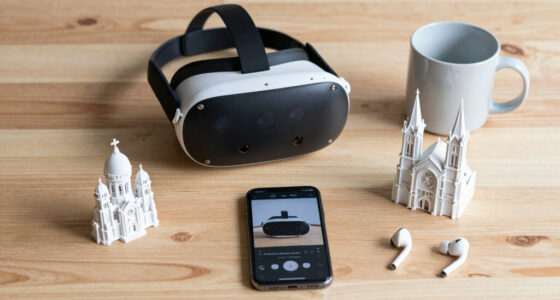
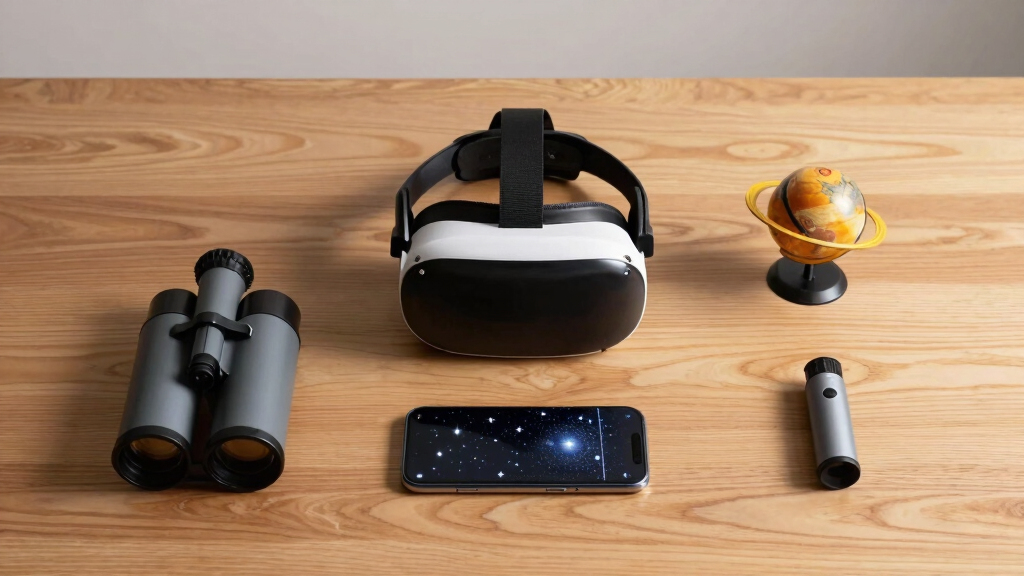
virtual reality space experience headset
As an affiliate, we earn on qualifying purchases.
As an affiliate, we earn on qualifying purchases.
Planned Expansion and Technological Enhancements
Smithsonian plans to expand Starstruck to additional cities such as Denver, Orlando, and San Antonio later in 2023. Upgrades to newer VR headsets are also expected to improve visual quality and interactivity. Developers may introduce more interactive elements, additional scenes, and educational content, further enhancing the experience. The project could serve as a model for other institutions seeking to incorporate VR into science education and outreach programs.
As an affiliate, we earn on qualifying purchases.
Key Questions
How long does the VR space tour last?
The experience lasts approximately 40 minutes, providing a comprehensive virtual journey through various space phenomena.
What equipment is needed to participate?
Participants need access to HTC Vive Focus 3 headsets, with some locations planning to upgrade to newer models like the Vive Focus Vision.
Can I interact with the space objects or telescopes in the VR experience?
While users can select models and press ‘Take a picture,’ these features are currently non-functional or limited, with future updates likely to improve interactivity.
Is this experience suitable for children?
The experience is designed for adult audiences, but specific age recommendations have not been officially published. Parental discretion is advised.
Source: Ars Technica
Halloween Picks
halloween
As an affiliate, we earn on qualifying purchases.