
TL;DR

Play games on Amazon Luna for your next adventure, included with Prime
- A rotating selection of games, no download needed
- Play on TV, laptop or phone
- Fast, free delivery for your gear, too
Steam Frame unveils a new RGB passthrough add-on, enhancing its mixed reality capabilities, while GPT-6 Astra demonstrates significant progress in AI-generated 3D content. These developments could reshape VR experiences and 3D content creation, but details remain emerging.
Steam Frame has revealed an upcoming color passthrough add-on developed by Arcturus Industries, promising a significant upgrade to its mixed reality capabilities. Simultaneously, GPT-6 Astra has demonstrated advanced AI-powered 3D content creation, sparking discussions about the future of VR and AI-generated environments. These innovations could influence both consumer VR hardware and AI-driven creative workflows, making them highly relevant to the tech community and content creators alike.
Sources indicate that the Steam Frame passthrough update involves an add-on called the Arcturus Vision Camera, which features two 32-megapixel HDR cameras capable of capturing 10-bit HDR video at 2,464 x 2,464 pixels at 60 FPS, with higher frame rates possible through software optimizations. The cameras are spaced at 64mm, mimicking human IPD, enabling stereo vision similar to natural eyesight. This modular upgrade aims to address prior criticisms of Steam Frame’s limited passthrough quality, bringing it closer to high-end mixed reality standards.
Meanwhile, GPT-6 Astra has showcased its ability to generate 3D models and environments that integrate with tools like Blender, offering a pathway for democratized 3D content creation. Users have already tested Astra by creating models of objects and scenes, with some experiments including animated objects and even real-world reconstructions. Industry figures like Jensen Huang and Andrew Chen have publicly commented on Astra’s potential, suggesting it signals a new era for AI-assisted creative work.
VR Innovations Spotlight · Emerging Technology
Passthrough Vision Meets an AI-Built 3D World
Reported developments around Steam Frame’s modular RGB passthrough and GPT-6 Astra’s generative 3D capabilities point toward a shared destination: immersive environments that are easier to capture, create, and deploy.
01 · Two innovation tracks
The physical and generative layers converge
One development aims to improve how a headset perceives the real world; the other could transform how creators build virtual worlds. Together, they suggest a tighter loop between capture, generation, editing, and immersive use.
Steam Frame passthrough
The reported Arcturus Industries module uses paired color cameras to deliver stereoscopic HDR passthrough, addressing earlier criticism of limited mixed reality image quality.
GPT-6 Astra 3D generation
Early demonstrations describe models and environments created with minimal input, including animated objects and real-world reconstructions that can move into tools such as Blender.
02 · Capability map
What each innovation could unlock
The technologies solve different bottlenecks. Passthrough improves the interface between physical and digital space; generative 3D compresses the labor required to populate that space.
| Capability | Steam Frame add-on | GPT-6 Astra | Potential combined value |
|---|---|---|---|
| Real-world perception | ✓ Stereo HDR capture | ~ Reconstruction input | Digitize surroundings for mixed reality scenes |
| 3D asset generation | ✗ Not the core function | ✓ Models and environments | Faster production of spatial content |
| Professional workflows | ~ Collaboration and capture | ~ Requires validation | Rapid visualization for design and production |
| Consumer accessibility | ~ Depends on price | ✓ Reduces skill barriers | More creators building more VR experiences |
| Commercial readiness | ~ Release details pending | ~ Maturity uncertain | Adoption depends on reliability and integration |
Legend: ✓ direct strength · ~ emerging or conditional · ✗ outside the primary scope
03 · Traceability chain
From physical space to immersive experience
The strategic opportunity is not a single device or model. It is the end-to-end pipeline connecting real-world sensing with AI-assisted world building.
Capture the environment
Paired RGB cameras perceive depth, color, and spatial context.
Reconstruct the scene
Visual inputs become a usable representation of physical space.
Create 3D content
AI produces objects, environments, variants, and motion.
Edit in creative tools
Creators validate geometry, materials, behavior, and intent.
Deploy into VR and MR
Digital content is anchored within an immersive setting.
04 · Outlook and risks
The promise is tangible; the timeline is not
Both stories remain shaped by early reports and demonstrations. The critical next phase is validation: official specifications, real-world testing, dependable integrations, and evidence of repeatable professional value.
Steam Frame pricing, availability, final specifications, and performance across varied lighting conditions have not been officially established.
Astra’s demonstrations do not yet establish production reliability, geometric accuracy, licensing clarity, or the level of human refinement required.
Automation may expand creative access while also displacing parts of established modeling, animation, and design workflows.
Success depends on comfort, cost, ecosystem support, export compatibility, and whether creators can turn novelty into durable experiences.
When will the passthrough add-on arrive?
No official date is available; additional details are expected in the coming months.
Will passthrough materially improve MR?
Potentially. High-resolution stereo HDR could improve immersion and practical use beyond gaming.
Can Astra support professional work?
Possibly, pending validation of precision, control, compatibility, and commercial maturity.
This infographic summarizes claims attributed to early reports and demonstrations. Specifications, quotations, product naming, and performance claims should be treated as provisional until corroborated by official announcements and independent testing. Source cited in the supplied report: The Ghost Howls.
Potential Impact on VR and 3D Content Creation
The introduction of a high-quality color passthrough for Steam Frame could significantly enhance mixed reality experiences, making the headset more versatile beyond gaming, including applications like environment reconstruction and remote collaboration. This modular upgrade exemplifies how VR hardware is evolving to meet broader use cases.
Simultaneously, GPT-6 Astra’s ability to generate detailed 3D models and environments with minimal input could democratize content creation, reducing reliance on specialized skills and accelerating the development of virtual worlds. This progress may catalyze a VR resurgence and foster new workflows in design, entertainment, and education, although concerns about automation and job displacement are also emerging.
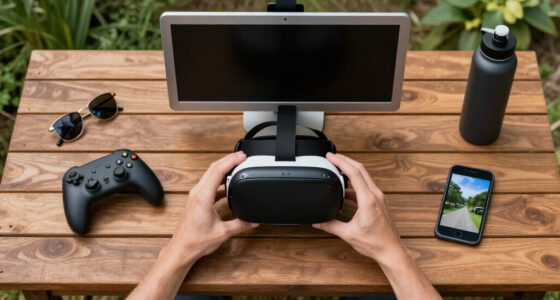
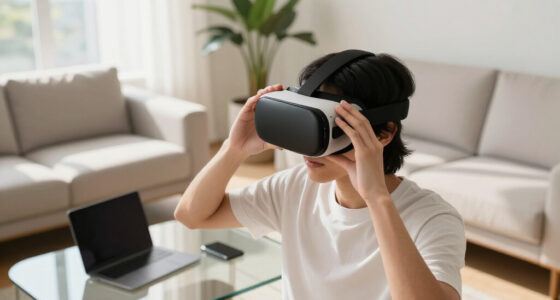
VR mixed reality passthrough headset
As an affiliate, we earn on qualifying purchases.
As an affiliate, we earn on qualifying purchases.
Recent Advances in VR Hardware and AI
Earlier this year, VR hardware saw incremental improvements, like the Meta Quest 3 supporting 240 Hz refresh rates, and the Horizon Store highlighting apps with enhanced performance. The Steam Frame’s modular design has consistently allowed for hardware upgrades, and the upcoming passthrough add-on continues this trend.
On the AI front, models like GPT-6 Astra have pushed boundaries by creating 3D content that previously required extensive manual effort. Industry leaders have expressed optimism about AI’s potential to revolutionize content creation, but also voice caution regarding the societal impacts of automation.
“We’re witnessing the arrival of AGI, and Astra’s capabilities are a clear sign of how fast AI is advancing.”
— Jensen Huang, NVIDIA CEO
As an affiliate, we earn on qualifying purchases.
Unconfirmed Details and Future Risks
While the specifications of the Steam Frame passthrough add-on are based on leaks and early reports, official confirmation, including pricing and release date, remains pending. It is also unclear how widespread adoption will be or how the hardware will perform in diverse real-world settings.
Regarding GPT-6 Astra, although initial demonstrations are promising, it is uncertain how mature the technology is for commercial deployment, and whether it will require substantial fine-tuning for different applications. There are also ongoing debates about the societal impact of AI-generated content, including potential job displacement in creative industries.
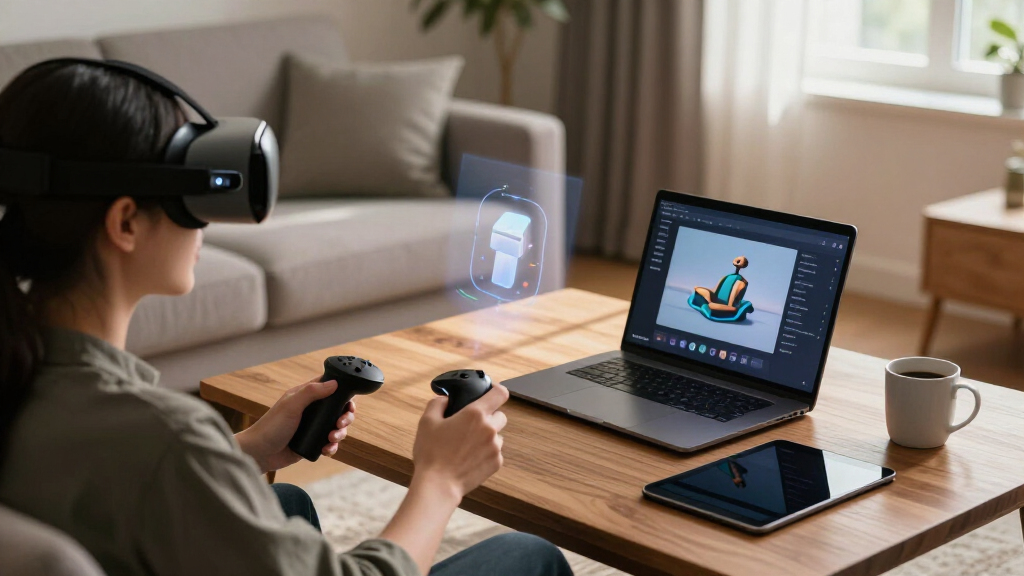
AI 3D modeling software for creators
As an affiliate, we earn on qualifying purchases.
As an affiliate, we earn on qualifying purchases.
Next Steps for Hardware and AI Innovations
The Steam Frame team is expected to release official details about the passthrough add-on, including pricing and availability, within the coming months. If successful, this could lead to further modular upgrades for the headset, expanding its utility.
For Astra, developers and early adopters will likely continue testing its capabilities, with more refined versions potentially launching in the near future. Industry observers will watch for broader adoption and integration into creative workflows, alongside ongoing discussions about ethical and societal implications.
As an affiliate, we earn on qualifying purchases.
Key Questions
When will the Steam Frame passthrough add-on be available?
Official release details have not yet been announced; expect more information in the upcoming months.
How does Astra compare to previous AI models for 3D creation?
Astra demonstrates significantly improved ability to generate detailed 3D models and environments, with some users already testing it for real-world reconstructions and animations.
Will the new passthrough significantly improve mixed reality experiences?
Yes, the high-resolution, HDR color passthrough could make mixed reality more immersive and practical for applications beyond gaming.
Are there ethical concerns with AI-generated 3D content?
Yes, concerns include job displacement for artists and designers, as well as broader societal impacts of automation and AI influence.
Could Astra be used in professional industries?
Potentially, yes. Its ability to quickly generate models and environments could benefit fields like architecture, design, and virtual production, pending further development and validation.
Source: The Ghost Howls
Halloween Picks
halloween
As an affiliate, we earn on qualifying purchases.