TL;DR

Play games on Amazon Luna for your next adventure, included with Prime
- A rotating selection of games, no download needed
- Play on TV, laptop or phone
- Fast, free delivery for your gear, too
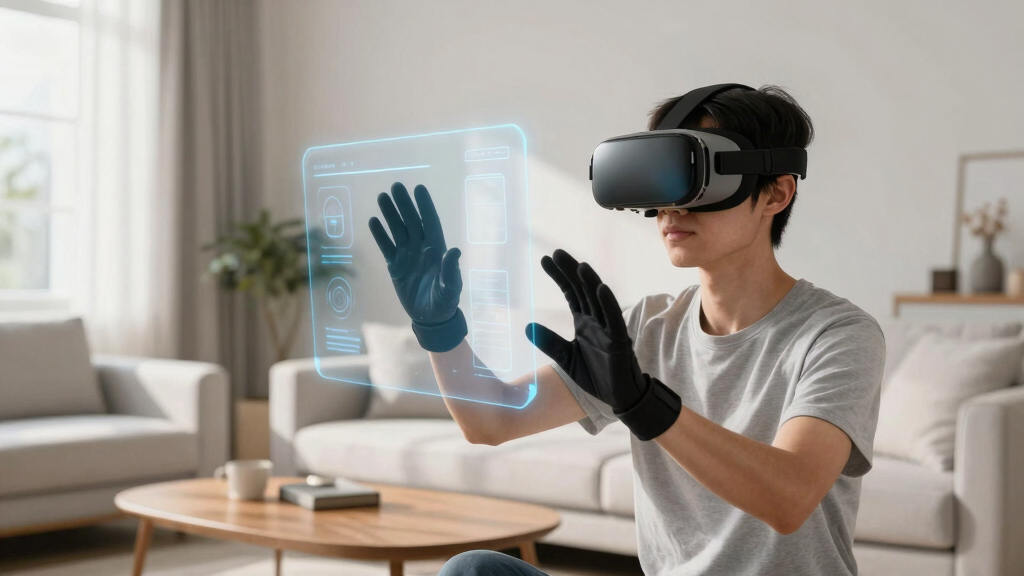
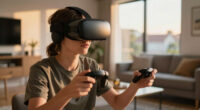
SelfBlending is a new technology that integrates real object interaction into virtual reality without breaking immersion. It offers a more natural and seamless VR experience by combining digital and physical elements. This development could impact VR applications across gaming, training, and design.
SelfBlending technology has been showcased as a method to preserve VR immersion while users physically interact with real objects, marking a significant step forward in mixed reality applications.
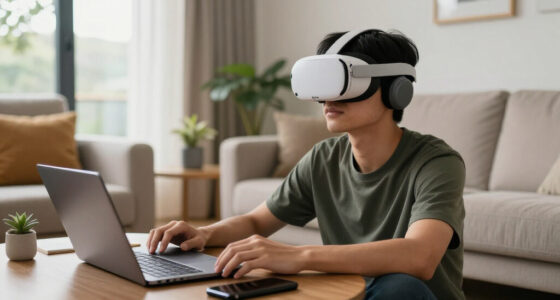
According to reports, SelfBlending allows virtual reality users to manipulate physical objects without losing the sense of immersion. The technology integrates real-world objects into the VR environment through advanced tracking and display techniques, enabling seamless interaction.
During recent demonstrations, users were able to pick up, move, and interact with tangible objects while remaining fully immersed in the virtual scene. The system reportedly maintains visual continuity and spatial awareness, reducing the dissonance typically experienced when switching between physical and virtual interactions.
Developers claim that SelfBlending enhances realism and could expand the use of VR in fields such as training simulations, industrial design, and gaming. The technology is still in early stages, with further testing needed to assess scalability and user experience over extended periods.
Potential Impact on VR Interaction and Realism
This development matters because it addresses a key challenge in virtual reality: maintaining immersion during physical interactions. By enabling users to handle real objects without breaking the virtual experience, SelfBlending could make VR more practical and engaging for various applications, from professional training to entertainment. If widely adopted, it could significantly improve the realism and usability of VR systems.
As an affiliate, we earn on qualifying purchases.
Advances in Mixed Reality and Interaction Techniques
Previous efforts in mixed reality have sought to combine physical and virtual elements, but often faced issues with disjointed experiences or technical complexity. Recent innovations have focused on improving tracking accuracy and display synchronization to create more seamless interactions. SelfBlending appears to build on these trends, leveraging new hardware and software solutions to integrate real objects into the VR environment more naturally.
This represents a step forward from earlier prototypes that required cumbersome setups or limited interaction fidelity, suggesting a move toward more practical, user-friendly systems.
“SelfBlending maintains the illusion of immersion even when users are physically manipulating real objects within the VR environment.”
— an anonymous researcher
As an affiliate, we earn on qualifying purchases.
Unconfirmed Aspects and Technical Limitations
It is not yet clear how well SelfBlending performs over long-term use or in complex scenarios involving multiple objects. Details about hardware requirements, cost, and scalability remain undisclosed. Additionally, the extent of real-world object integration in different VR platforms is still under development, and user feedback is limited at this stage.
As an affiliate, we earn on qualifying purchases.
Next Steps for Development and Adoption
Further testing and refinement are expected, including wider demonstrations and user trials. Developers may also explore integrating SelfBlending into commercial VR headsets and environments. Industry observers anticipate that upcoming months will reveal more about its practical applications, limitations, and potential for mass adoption.
As an affiliate, we earn on qualifying purchases.
Key Questions
How does SelfBlending work?
SelfBlending uses advanced tracking and display techniques to combine real objects with virtual scenes, allowing users to interact with physical items while remaining immersed in VR.
Is SelfBlending available for consumer VR devices?
Currently, the technology is in demonstration and development stages. It is not yet available for commercial consumer VR headsets but could be integrated into future products.
What are the main benefits of SelfBlending?
It enhances realism by enabling physical interactions without breaking immersion, which could improve training, design, gaming, and other VR applications.
What challenges remain for SelfBlending?
Technical scalability, long-term use performance, cost, and compatibility across different VR systems are still being addressed.
When might SelfBlending become widely available?
There is no confirmed timeline yet; further testing and development are needed before potential commercial release.
Source: rss
Fall Picks
fall essentials
As an affiliate, we earn on qualifying purchases.