
TL;DR

Play games on Amazon Luna for your next adventure, included with Prime
- A rotating selection of games, no download needed
- Play on TV, laptop or phone
- Fast, free delivery for your gear, too
RayNeo has introduced the iO Smart Glasses, featuring a lightweight design, privacy-oriented no-camera approach, and AI-powered functionalities. This hands-on review offers early insights into their performance and comfort, with further testing upcoming.
RayNeo has unveiled the iO Smart Glasses, a lightweight, privacy-focused wearable featuring a monochrome display and AI capabilities, designed to appeal to users wary of camera-equipped smart glasses. The device’s first hands-on impressions reveal promising display quality and a sleek form factor, though comfort issues emerge after extended wear. This development matters as it signals a new approach in the smart glasses market, emphasizing privacy and AI integration.
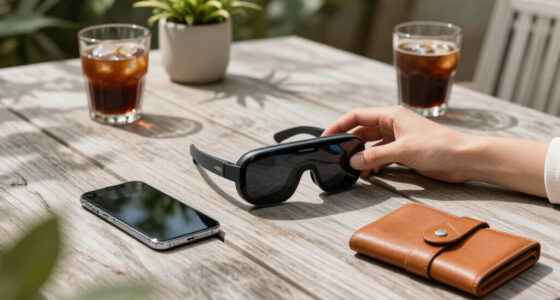
The RayNeo iO Smart Glasses weigh only 33 grams and feature a dual monochrome display powered by TCL’s Firefly Nano Optical Engine, offering a 23.5° field of view and 1200 nits brightness, making notifications visible even in bright outdoor conditions. Notably, the glasses lack a camera, addressing privacy concerns prevalent among potential users. The design is minimalistic, resembling regular glasses, with no visible camera modules, which distinguishes them from many competitors.
During initial testing, the reviewer found the glasses very light and unobtrusive, but noted some discomfort after wearing them for about 90 minutes. The thick protrusions behind the ears, likely designed to prevent slipping, exert pressure that caused discomfort over time. For more on privacy concerns and regulations, see Smart Glasses Privacy Risks in NZ. The glasses also pressed lightly on the nose bridge, leading to mixed feelings about their long-term wearability. The reviewer plans to experiment with fit adjustments to improve comfort.
Functionally, the glasses support voice control, head gestures, and AI-powered features like translation and teleprompter modes, with a battery life estimated at 48 hours of typical use. The device’s transparency and brightness allow for outdoor readability, and the monochrome display is sharp and easy to read, with no significant glare or darkening of the environment. This makes them suitable for various outdoor activities, similar to the features highlighted in the best smart glasses reviews. Overall, the initial performance appears promising, though comfort remains an area for further improvement.
Hands-on report · Privacy-first wearable
RayNeo iO Smart Glasses
Early impressions point to a compelling combination of low weight, outdoor-readable optics and camera-free AI. The display makes a strong entrance; long-session comfort remains the unresolved question.
01 · First impression
A discreet frame with useful intelligence
TCL’s Firefly Nano Optical Engine powers a sharp monochrome interface while the minimal frame avoids the conspicuous camera modules found on many rivals.
Ordinary at a glance
The restrained silhouette resembles regular eyewear, supporting more discreet daily use.
Camera-free by design
No imaging hardware means fewer bystander concerns and a clearer privacy proposition.
Bright and transparent
1200-nit output keeps information visible outdoors without noticeably darkening the environment.
Hands-light control
Voice commands and head gestures provide quick access to translation, prompts and notifications.
02 · Market position
Privacy is the differentiator
RayNeo is trading camera-led capture for subtle, productivity-oriented assistance—a distinct position in an experimental market.
| Capability | RayNeo iO | Camera-led glasses | Practical impact |
|---|---|---|---|
| Built-in camera | ✗ No | ✓ Common | Lower bystander anxiety; no first-person capture. |
| Visual interface | ✓ Dual monochrome | ~ Varies | Readable, focused information without a full-color overlay. |
| AI productivity | ✓ Translation and prompts | ✓ Assistant features | Useful for communication, presentations and daily tasks. |
| Social discretion | ✓ Strong | ~ Camera-dependent | The frame appears closer to conventional eyewear. |
| Long-term comfort | ~ Still testing | ~ Model-dependent | Fit may determine whether the product succeeds as an all-day wearable. |
Comparison reflects product positioning and early hands-on observations, not a completed long-term review.
03 · Experience chain
From glanceable input to useful action
The value proposition is straightforward: preserve awareness of the real world while placing concise AI assistance inside the user’s line of sight.
Speak or gesture
Voice control and head movement initiate the interaction.
AI interprets
The system processes a request for translation, prompts or information.
Display responds
Sharp monochrome content appears within the dual optical system.
User stays present
High lens transparency preserves a clear view of the surroundings.
Retention adds pressure
Thicker rear protrusions may prevent slipping, but they caused discomfort over time.
Light contact remains
Minor pressure on the bridge contributed to mixed long-term wear impressions.
Fit adjustments
Further experimentation may reveal whether positioning can reduce pressure points.
More wear time needed
Extended testing across daily activities is required before drawing a firm conclusion.
Early verdict
Promising optics, unresolved ergonomics
RayNeo’s strongest idea is not a single specification—it is the combination of privacy, visibility and restraint. The iO looks well suited to discreet AI assistance, outdoor notifications and teleprompter use. Whether it becomes an everyday wearable will depend on comfort after several hours, not several minutes.
Can it handle bright sunlight?
Early testing says yes: the 1200-nit display remained readable outdoors.
What can the AI features do?
Translation, teleprompter support, voice control and productivity assistance lead the feature set.
Is it ready for all-day wear?
Not yet proven. Ear and nose pressure emerged after roughly 90 minutes.
What comes next?
Longer wear tests, fit experiments and potential software improvements should clarify the final value.
Implications for Privacy and Productivity
The RayNeo iO Smart Glasses represent a notable shift in the smart glasses landscape by prioritizing privacy through the absence of a camera, addressing a key concern among potential users. Their AI features aim to enhance productivity and daily convenience, potentially broadening the appeal of smart glasses beyond niche markets. If comfort issues are resolved, these glasses could become a practical, everyday wearable for professionals and casual users seeking discreet, intelligent augmentation of their environment.
As an affiliate, we earn on qualifying purchases.
Market Position and Competitor Landscape
RayNeo, subsidiary of TCL, has been active in the smart glasses sector, with previous models like the X3 Pro showcasing high-end displays but at a premium price. The iO model shifts focus towards privacy and AI, aligning with broader industry trends emphasizing user data protection and seamless integration with digital assistants. Competing products, such as Ray-Ban Meta and Even Realities glasses, offer camera-equipped options, making RayNeo’s camera-free approach a differentiator. The market is still evolving, with many devices in early stages of adoption and user feedback shaping future iterations.
AI smart glasses with monochrome display
As an affiliate, we earn on qualifying purchases.
As an affiliate, we earn on qualifying purchases.
Long-Term Comfort and User Experience Still Unclear
While initial impressions of the display and AI features are positive, it remains unclear whether the glasses can be comfortably worn for extended periods without causing discomfort. The reviewer experienced some pressure behind the ears and on the nose, which could impact long-term usability. Further testing and user feedback are needed to confirm if comfort issues can be mitigated through adjustments or design changes.
lightweight smart glasses for outdoor use
As an affiliate, we earn on qualifying purchases.
As an affiliate, we earn on qualifying purchases.
Upcoming Testing and Potential Software Updates
The reviewer plans to continue testing the RayNeo iO Smart Glasses over extended periods, experimenting with fit adjustments to improve comfort. RayNeo is expected to release firmware updates that may enhance AI functionalities, battery management, and wearability. Future reports will evaluate real-world performance, user acceptance, and whether the device can meet the demands of daily, long-term use.
As an affiliate, we earn on qualifying purchases.
Key Questions
How do the RayNeo iO Smart Glasses differ from other smart glasses?
They are camera-free, focusing on privacy, and feature a monochrome display with AI capabilities, unlike many competitors that include cameras and color displays.
Are the glasses comfortable for all-day wear?
Initial testing indicates some discomfort after about 90 minutes due to pressure from the frame design, but future adjustments may improve this. Long-term comfort remains to be confirmed.
What AI features are included?
The glasses support voice control, translation, teleprompter mode, and other AI-powered tools designed to boost productivity and ease communication.
Can the glasses be used outdoors in bright sunlight?
Yes, the display brightness reaches up to 1200 nits, allowing readability even in sunny conditions, with high transparency lenses not darkening the environment.
What is the expected battery life?
The device offers around 48 hours of typical use, with standby times exceeding 60 hours, depending on feature usage.
Source: The Ghost Howls
Halloween Picks
halloween
As an affiliate, we earn on qualifying purchases.