
TL;DR

Play games on Amazon Luna for your next adventure, included with Prime
- A rotating selection of games, no download needed
- Play on TV, laptop or phone
- Fast, free delivery for your gear, too
Indra has announced new augmented reality goggles designed for tank crews, allowing them to see through vehicle armor. This innovation aims to improve battlefield awareness and operational safety. The technology is in development, with confirmed demonstrations but no widespread deployment yet.
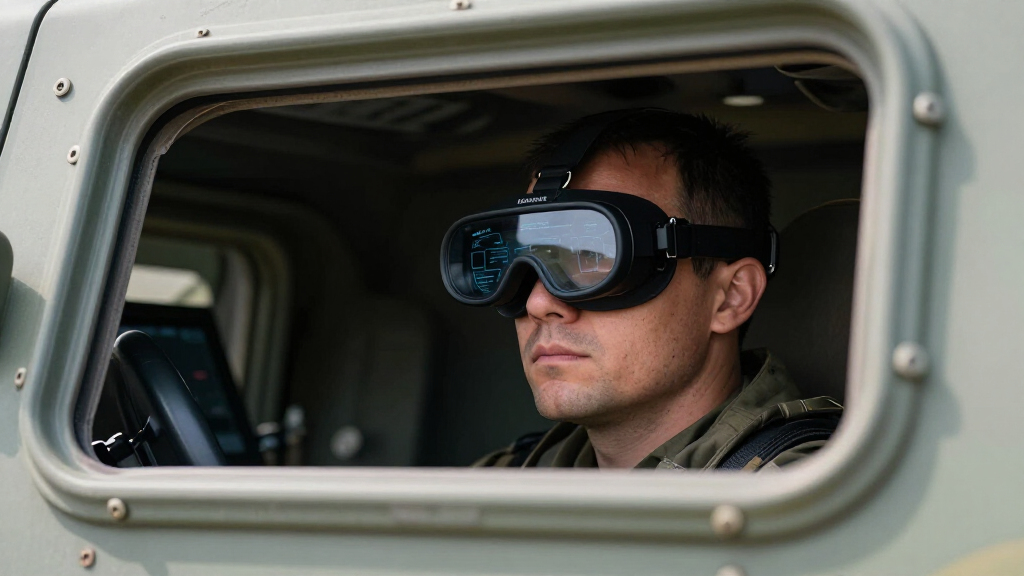
Indra, a defense and technology company, has revealed a new set of augmented reality (AR) goggles that allow tank crews to see through the armor of their vehicles. This development, confirmed by the company, could significantly enhance battlefield situational awareness and crew safety, representing a major leap in armored vehicle technology.
The AR goggles, developed by Indra, utilize advanced imaging and sensor technology to project the view from outside the vehicle directly into the crew’s helmet display. According to Indra, this system can provide real-time imagery of objects and threats outside the tank, even through thick armor, which traditionally obstructs visual perception.
Indra has demonstrated prototypes of these goggles during recent military technology expos, showcasing their ability to transmit high-resolution images from external cameras mounted on the vehicle. The company states that these goggles integrate seamlessly with existing tank systems and can be operated with minimal training. While specific deployment timelines remain unconfirmed, sources indicate that testing phases are ongoing with potential for future integration into armored units.
Experts note that this technology relies on a combination of multi-spectral imaging, such as infrared and radar, to penetrate armor and environmental obstructions. The goggles are designed to offer crew members a comprehensive situational picture, reducing the need for external reconnaissance and potentially decreasing response times during combat.
Indra’s New AR Goggles Let Tank Crews “See” Through Armor
A sensor-fed augmented-reality system projects the vehicle’s exterior view into a crew member’s headset—promising earlier threat detection, faster decisions, and greater awareness without leaving armored protection.
Announced March 2024 · Demonstrated in prototype form · Active deployment not confirmed
How the “see-through” effect works
The goggles do not make steel physically transparent. They combine feeds from equipment outside the hull and display a synchronized digital view inside the vehicle.
Sense the exterior
Vehicle-mounted cameras and potential infrared or radar inputs capture the surrounding environment.
Fuse the feeds
Processing systems align multiple sensor streams into a coherent picture of nearby terrain and objects.
Track the wearer
The system relates the crew member’s viewing direction to the corresponding external sensor perspective.
Project the scene
High-resolution imagery appears in the headset, creating the impression of looking through the hull.
Important distinction
The armor remains opaque. The experience depends on external sensors, data processing, accurate alignment, low latency, and a dependable connection to the crew display.
What changes inside the vehicle
Broader visibility could shorten the gap between detecting a threat and acting on it. The scale of that advantage will depend on reliability in real combat conditions.
Fewer blind zones
A panoramic sensor view may reveal nearby obstacles or threats that conventional optics cannot show simultaneously.
Faster reactions
Direct visual context could reduce time spent interpreting reports or switching between separate displays.
Less external exposure
Crew members may gain exterior awareness without opening hatches or relying as heavily on exposed observation.
Shared spatial picture
Integrated imagery could help commanders, drivers, and gunners understand the same immediate environment.
A wider view than traditional optics
AR does not eliminate conventional periscopes, cameras, or reconnaissance. Its advantage is the potential to combine their information into an intuitive, head-aligned display.
| Capability | Periscope | Fixed camera | External reconnaissance | Indra AR concept |
|---|---|---|---|---|
| Head-aligned exterior view | ✗ No | ✗ No | ✗ No | ✓ Yes |
| Multiple sensor feeds | ✗ Limited | ~ Possible | ~ Indirect | ✓ Intended |
| Crew remains under armor | ✓ Yes | ✓ Yes | ~ Vehicle crew only | ✓ Yes |
| Natural panoramic orientation | ✗ Narrow | ~ Screen-based | ✗ Report-based | ✓ Core aim |
| Combat-scale validation | ✓ Mature | ✓ Mature | ✓ Mature | ✗ Not confirmed |
Demonstration phase
Publicly described evidence places the system around prototype demonstration and continuing tests. A verified transition into routine operational service has not been announced.
What still needs proof
From expo demo to armored unit
Each gate must connect technical performance to operational trust. Demonstration alone does not establish battlefield readiness.
Demonstrate
Show the external view and headset integration.
Field-test
Measure latency, reliability, and crew usability.
Harden
Validate environmental and electronic resilience.
Integrate
Connect platforms, sensors, and command systems.
Approve
Secure procurement, regulatory, and budget decisions.
Likely sequence · Exact Indra program milestones and deployment dates remain unconfirmed
The promise is clear. The evidence gap is not.
The decisive issue is whether the system can preserve a stable, trustworthy view when sensors, networks, and crews are operating under battlefield pressure.
What happens when a camera is obscured or damaged?
Operational value depends on graceful degradation, redundant coverage, and clear warnings when the reconstructed view becomes incomplete.
Can the display resist jamming, spoofing, or intrusion?
A compromised sensor picture could mislead a crew, making cybersecurity and source authentication central safety requirements.
Does the interface reduce workload or add visual overload?
Trials must show that crews can interpret the scene quickly without distraction, motion discomfort, or confusion between live imagery and digital overlays.
How broadly can the technology fit existing fleets?
Adoption will depend on compatibility with different sensor suites, vehicle electronics, power systems, and command architectures.
Could the same concept extend beyond tanks?
Potentially. If testing succeeds, similar systems could support infantry fighting vehicles and armored personnel carriers, subject to platform-specific development and validation.
Indra’s goggles offer a compelling new window onto the battlefield—but widespread adoption will depend on whether that digital window remains accurate, secure, and available when crews need it most.
Potential Impact on Armored Warfare Tactics
This innovation could dramatically alter how armored units operate on the battlefield. By allowing crews to see through their vehicle’s armor, soldiers could detect threats earlier, identify targets more accurately, and react more swiftly to changing combat conditions. Such capabilities might reduce the vulnerability of tank crews and improve operational effectiveness. However, the true battlefield impact depends on the technology’s reliability, cost, and integration into existing military systems.
augmented reality goggles for military
As an affiliate, we earn on qualifying purchases.
As an affiliate, we earn on qualifying purchases.
Advances in AR and Sensor Tech for Military Vehicles
Indra’s AR goggles build on ongoing developments in military sensor and imaging technology, which aim to enhance vehicle situational awareness. Similar systems have been tested by various defense agencies, but practical deployment remains limited. Historically, armored vehicle crews have relied on external reconnaissance, periscopes, and external cameras, which can be obstructed or limited by terrain and environmental conditions. The introduction of AR goggles that can see through armor marks a significant step forward in overcoming these limitations.
Previous efforts in augmented reality for military use have focused on head-up displays and external sensor integration. However, the specific capability to penetrate armor and provide real-time external views directly to crew members is a newer development, with Indra’s system representing one of the most advanced efforts to date.
As an affiliate, we earn on qualifying purchases.
Unresolved Questions About Technology Deployment
It is not yet clear when or if the AR goggles will be deployed in active military units. Details about the cost, durability under combat conditions, and integration with various tank platforms remain undisclosed. Additionally, questions about the system’s vulnerability to electronic warfare and hacking are still unaddressed. The extent of testing and validation phases is also uncertain, leaving open questions about readiness for combat deployment.
As an affiliate, we earn on qualifying purchases.
Next Steps in Testing and Potential Deployment
Indra plans to continue field testing of the AR goggles, with potential pilot programs in select military units. Further demonstrations are expected at upcoming defense expos, where the company may showcase operational scenarios. Military stakeholders will closely monitor the system’s performance, durability, and integration capabilities before considering widespread adoption. Regulatory and budget approvals will likely influence the timeline for deployment.
As an affiliate, we earn on qualifying purchases.
Key Questions
How do the AR goggles work to see through armor?
The goggles use advanced sensors such as infrared imaging and radar to penetrate armor and environmental obstacles, transmitting real-time images to the crew’s helmets.
Are these goggles currently in use by any military?
No, the technology is still in the demonstration and testing phase, with no confirmed deployment in active military units.
What are the main benefits of this technology?
It could improve battlefield awareness, reduce response times, and enhance crew safety by providing external views without exposing the vehicle or crew to external threats.
What challenges remain before widespread adoption?
Key challenges include ensuring system durability under combat conditions, addressing cybersecurity vulnerabilities, and integrating with existing military hardware and command systems.
Could this technology be used in other armored vehicles?
Potentially yes, if successful, the technology could be adapted for use in other military vehicles such as APCs and IFVs, pending further development and testing.
Source: rss
Fall Picks
fall essentials
As an affiliate, we earn on qualifying purchases.