
TL;DR

Play games on Amazon Luna for your next adventure, included with Prime
- A rotating selection of games, no download needed
- Play on TV, laptop or phone
- Fast, free delivery for your gear, too
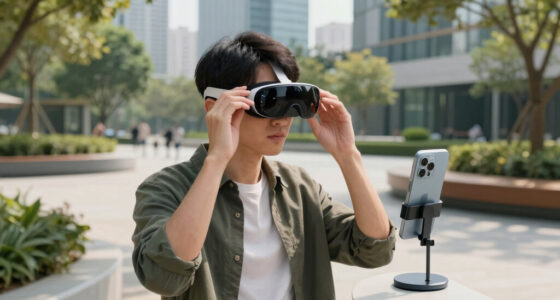
Augmented reality (AR) is rapidly reshaping retail by enabling immersive shopping experiences. Retailers are adopting AR tools for virtual try-ons and product visualization, improving customer engagement and sales.
Major retail brands are expanding their use of augmented reality (AR) tools to create more interactive shopping experiences, according to recent industry reports. This shift is confirmed by multiple retailers adopting AR for virtual try-ons and product visualization, reflecting a significant change in retail technology integration. The development matters because it could influence consumer behavior, sales, and the future of shopping.
Several leading retail companies have introduced augmented reality applications across their platforms, allowing customers to virtually try on clothing, accessories, or visualize furniture in their homes. For example, some fashion brands now offer AR try-on features via mobile apps, enabling shoppers to see how items look without visiting a store. Furniture retailers are using AR to help customers visualize how products would fit and look in their own spaces, reducing uncertainty and increasing purchase confidence.
Industry sources confirm that the adoption of AR technology has increased markedly over the past year, with surveys indicating that around 60% of major retail brands are testing or deploying AR solutions. Retailers report that these tools boost engagement, reduce return rates, and improve overall customer satisfaction. However, the extent of AR’s impact on sales figures remains under study, with some claims suggesting significant increases in conversion rates, though definitive data is still emerging.
Impact of AR on Customer Engagement and Sales
AR’s integration into retail is significant because it transforms the traditional shopping experience, making it more interactive and personalized. This technology can help bridge the gap between online and in-store shopping, offering consumers more confidence in their purchases. For retailers, AR provides a competitive edge in a crowded marketplace, potentially increasing sales and reducing product returns. As AR becomes more widespread, it could reshape retail strategies and consumer expectations.
Products Worth Considering

Bose Lifestyle Ultra Wireless Home Speaker

Logitech MX Brio Ultra HD 4K Webcam, Graphite

DJI Osmo Pocket 3 Creator Combo Vlogging Camera with Mic 2, 1 CMOS, 4K/120fps, 3-Axis Stabilization, 128GB Card
As an affiliate, we earn on qualifying purchases.
Recent Growth of AR in Retail Environments
Over the past few years, AR has moved from niche applications to mainstream retail use. Early examples included virtual fitting rooms and furniture visualization tools, but recent developments show broader adoption across sectors. Major brands have publicly announced AR initiatives, often supported by advancements in mobile device capabilities and AR software. Industry analysts note that the COVID-19 pandemic accelerated digital transformation efforts, including AR adoption, as retailers sought contactless shopping solutions and innovative ways to attract customers.
While some claims suggest AR could replace physical stores, experts clarify that it is more likely to complement existing retail channels, enhancing the overall shopping experience. The technology’s success depends on continued improvements in user interfaces, device compatibility, and content quality, which are currently evolving rapidly.
“Our AR features have significantly improved customer satisfaction and helped us stand out in a competitive market.”
— a retail executive
Unverified Claims About AR’s Revenue Impact
While early data suggests positive trends, it is still unclear how much AR directly increases overall retail sales or reduces costs long-term. Some claims about dramatic revenue boosts are based on preliminary or anecdotal evidence, and comprehensive studies are ongoing to quantify AR’s true financial impact.
Future Developments and Broader Adoption of AR
Retailers are expected to expand AR functionalities, integrating them more deeply into their online and physical stores. Future developments may include more sophisticated AR experiences, enhanced personalization, and wider device compatibility. Industry forecasts suggest that AR could become a standard feature in retail, with ongoing technological improvements making it more accessible and effective. Monitoring how consumer adoption evolves will be key to understanding AR’s full impact on retail.
Key Questions
Will AR replace physical stores?
Currently, experts view AR as a complement to physical stores rather than a replacement, enhancing the shopping experience and providing additional tools for consumers.
Which retail sectors are most adopting AR?
Fashion, furniture, and beauty sectors are leading in AR adoption, offering virtual try-ons and visualization tools to improve customer confidence and engagement.
How does AR affect online shopping?
AR enhances online shopping by allowing customers to visualize products in real-world settings, reducing uncertainty and increasing purchase likelihood.
Are AR tools expensive for retailers to implement?
The cost varies depending on the complexity of the AR solutions, but many platforms now offer scalable options, making implementation more accessible for retailers of different sizes.
Source: rss