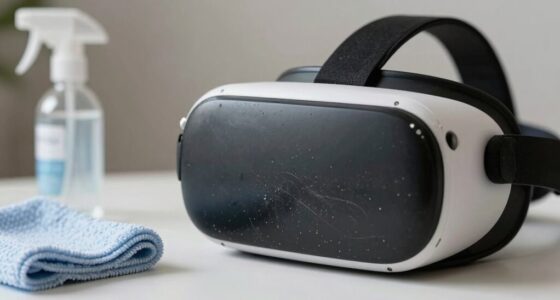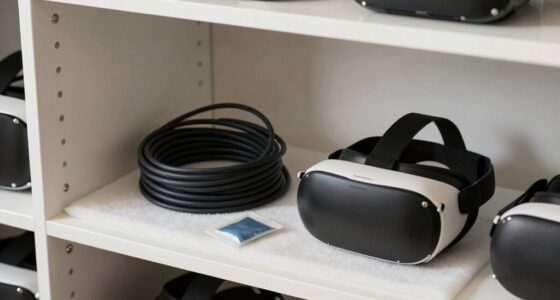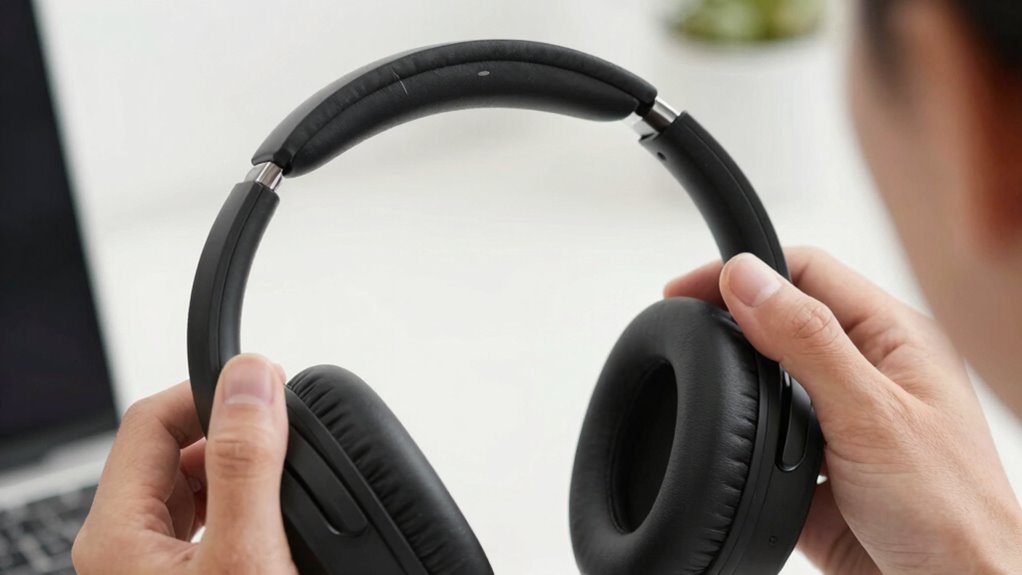

To share a headset without turning it into a mess, you should use disposable or washable covers on ear pads and clean the device with alcohol-based wipes after every use. Remind users to wash their hands or sanitize before handling. Consider assigning specific headsets to individuals with color-coding for easy identification. Regularly disinfect ear pads and microphones, and follow manufacturer guidelines for cleaning. Proper hygiene and maintenance make sharing cleaner and more comfortable—keep exploring for more practical tips.

Get VR and gaming gear delivered free — and shop member deals
- Fast, free delivery on millions of items
- Access to Prime Big Deal Days deals on October 6–7
- Prime Video, Amazon Music and more included
Key Takeaways
- Use disposable or washable covers on ear pads, and replace or wash them after each use.
- Wipe down the headset with alcohol-based disinfectant wipes regularly, especially on frequently touched parts.
- Assign specific headsets to individuals, using color-coding or labels to prevent cross-contamination.
- Encourage users to wash hands or use hand sanitizer before handling the headset.
- Follow manufacturer guidelines for cleaning to avoid damage and ensure thorough disinfection.

Sharing a headset can be tricky, especially when you want to avoid the hassle of cleaning or transferring germs. To keep things sanitary, consider using disposable or washable covers for the ear pads. These covers act as a barrier, preventing direct skin contact with the headset surface. When you’re done, simply remove and discard or wash the covers, ensuring the next person gets a clean experience. If covers aren’t an option, wipe down the headset with alcohol-based disinfectant wipes after each use. Regular cleaning prevents the buildup of sweat, oil, and bacteria, which can cause skin irritation or infections over time. It’s also helpful to understand that disinfection methods vary depending on the material of the headset, so always check manufacturer guidelines for safe cleaning options. Proper hygiene protocols can further reduce the risk of germs spreading. Additionally, using antimicrobial coatings on the headset surface can provide an extra layer of protection against bacteria and germs, making shared use safer. Implementing proper cleaning techniques ensures that the headset remains hygienic between uses. Another tip is to assign a specific headset to each person, if possible. Marking or color-coding your headsets helps avoid confusion and accidental sharing of dirty surfaces. When sharing a headset, always remind everyone to wash their hands beforehand or use hand sanitizer. This simple step minimizes the risk of transferring germs from hands to the headset and vice versa. If you’re in a workplace or gaming environment, establish a protocol for cleaning and sanitizing the headset after each use. Incorporating proper hygiene practices ensures a safer, more hygienic sharing experience for everyone involved. Additionally, consider the comfort and fit of the headset. Proper fit reduces the need for adjustments, which can transfer germs from your hands to the device. Ensure the headsets are adjustable and comfortable enough for different users, making it easier for everyone to share without fuss. Finally, if the headset has a microphone, remind users to avoid touching it directly, and clean it regularly to maintain hygiene.
As an affiliate, we earn on qualifying purchases.
Frequently Asked Questions
Can I Share a Headset With People Who Have Different Audio Preferences?
Yes, you can share a headset with people who have different audio preferences, but it might lead to compatibility issues and limited audio customization. To avoid problems, consider using a headset with adjustable sound settings or a splitter that allows individual volume control. This way, each person can personalize their audio experience, reducing frustration and making sharing more enjoyable despite differing preferences.
What Safety Precautions Should I Take When Sharing a Headset?
When sharing a headset, prioritize headphone hygiene by cleaning the ear cups and mic regularly to prevent germs. Follow sharing etiquette by asking others to use their own ear tips or sanitize the parts before sharing. Avoid sharing if you or others feel unwell to prevent infections. Keep the headset’s cord and connections clean and dry. These precautions help guarantee safe, hygienic sharing while maintaining comfort for everyone involved.
How Do I Prevent the Spread of Germs When Sharing Headphones?
To prevent the spread of germs when sharing headphones, follow hygiene tips like wiping the earbuds with alcohol wipes before and after use. Use disposable or washable covers for added protection. Practice sharing etiquette by asking if others are comfortable sharing and avoid touching the parts that go into your ears. This way, you protect everyone’s health and keep the experience clean and enjoyable.
Are There Wireless Options for Sharing a Headset?
Imagine you and a friend both want to enjoy the same music without sharing earphones directly. Using Bluetooth connectivity or wireless adapters, you can connect separate headphones to a single device, allowing simultaneous listening. Wireless options make sharing effortless, reducing mess and germs. Just guarantee each headset supports Bluetooth or pair via wireless adapters, so you both enjoy your favorite tunes without hassle or physical contact.
What Are the Best Ways to Clean and Disinfect Shared Headsets?
To clean and disinfect shared headsets, you should use gentle cleaning techniques and effective disinfection methods. Start by wiping the ear cups and headband with a microfiber cloth dampened with isopropyl alcohol or a mild disinfectant. Avoid excess moisture to prevent damage. For deeper cleaning, use disinfectant wipes designed for electronics, ensuring you reach all surfaces. Regular cleaning helps prevent bacteria buildup, making sharing safer and more hygienic.
As an affiliate, we earn on qualifying purchases.
Conclusion
Sharing a headset doesn’t have to turn into a tangled web of chaos. With a little planning, you’re like a skilled conductor, guiding each user smoothly through their turn. Keep things tidy, communicate clearly, and treat the headset as a precious gem — handling it with care. Soon, sharing becomes a dance, effortless and harmonious, where everyone gets their moment without stepping on each other’s toes. Now, go ahead and share with confidence!
As an affiliate, we earn on qualifying purchases.
headset cleaning disinfectant wipes
As an affiliate, we earn on qualifying purchases.
As an affiliate, we earn on qualifying purchases.
Fall Picks
fall essentials
As an affiliate, we earn on qualifying purchases.