
TL;DR

Play games on Amazon Luna for your next adventure, included with Prime
- A rotating selection of games, no download needed
- Play on TV, laptop or phone
- Fast, free delivery for your gear, too
A new open source add-on called CheekyFoveatedDLSS significantly increases frame rates in VR by up to 30% by applying foveated upscaling. It supports experimental DLSS 5.0 and is available for community development. The tool’s release could impact VR performance optimization.
CheekyFoveatedDLSS, an open source ReShade add-on that implements foveated DLSS, has been released, promising over 30% performance gains by only upscaling the central part of the screen. The tool also includes experimental support for DLSS 5.0, marking a notable development for VR enthusiasts and developers seeking to improve frame rates without sacrificing visual quality.
The CheekyFoveatedDLSS project was announced on r/virtualreality by an anonymous developer, who shared that the add-on applies foveated rendering techniques to DLSS, a popular AI-based upscaling technology. By focusing the upscaling process on the central vision area, the tool reduces GPU load, leading to reported performance improvements of over 30% in VR titles.
The add-on is built on the ReShade framework, a widely used post-processing injector, and is now open source, allowing the community to modify and adapt it for various VR hardware and software configurations. The developer also mentioned that the add-on supports experimental DLSS 5.0, though details on stability and compatibility remain limited at this stage.
According to the initial reports, users have observed significant FPS boosts, which could translate into smoother VR experiences and the potential for higher visual fidelity or more demanding graphics settings without dropping frame rates. The open source nature aims to foster further development and testing among enthusiasts and developers alike.
Potential Impact on VR Performance Optimization
The release of CheekyFoveatedDLSS could represent a meaningful step forward in VR performance enhancement. By leveraging foveated rendering—an approach that prioritizes visual fidelity where the eye is focused—the add-on allows for more efficient GPU usage. This can enable VR headsets to deliver higher frame rates, reduce latency, and improve overall visual quality, especially in demanding titles.
Moreover, the support for experimental DLSS 5.0 suggests that future improvements in AI upscaling could further boost performance and image quality. As VR hardware continues to evolve, community-driven tools like this may play a crucial role in bridging the gap between hardware limitations and user expectations.
However, it is still early days, and widespread adoption depends on stability, compatibility, and ease of integration into existing VR setups. Nonetheless, this development underscores the ongoing interest in open source solutions for performance enhancement in immersive gaming.
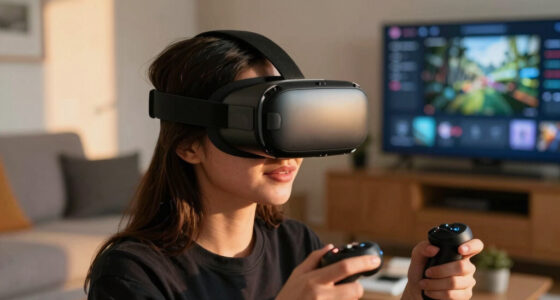
VR gaming foveated rendering software
As an affiliate, we earn on qualifying purchases.
As an affiliate, we earn on qualifying purchases.
Background on Foveated Rendering and DLSS
Foveated rendering is a technique that reduces rendering workload by focusing high-quality visuals only where the user is looking, which is especially beneficial in VR where GPU demands are high. NVIDIA’s DLSS (Deep Learning Super Sampling) is an AI-driven upscaling technology that enhances frame rates and visual fidelity by reconstructing high-resolution images from lower-resolution inputs.
Prior to this release, DLSS was primarily used in traditional gaming contexts, with limited community-driven implementations for VR. ReShade, a popular post-processing injector, has enabled various visual modifications, but foveated DLSS support has been scarce or experimental. The CheekyFoveatedDLSS project builds on these foundations, combining foveated rendering principles with DLSS to optimize VR performance.
This approach is part of a broader trend toward community-led innovations aimed at squeezing more performance out of existing hardware, especially as VR hardware becomes more demanding and expensive.
As an affiliate, we earn on qualifying purchases.
Unconfirmed Details on Stability and Compatibility
While initial reports are promising, it is not yet clear how stable the CheekyFoveatedDLSS add-on is across different VR headsets and software environments. Compatibility with existing VR titles and hardware remains to be thoroughly tested, and community feedback is still emerging. Additionally, support for DLSS 5.0 is described as experimental, with no official confirmation on its robustness or widespread usability at this stage.
As an affiliate, we earn on qualifying purchases.
Next Steps for Community Testing and Development
Moving forward, the developer and community members are expected to conduct further testing across various VR platforms. Updates to improve stability, expand compatibility, and refine the foveated rendering algorithm are likely. The open source nature encourages collaboration, and users are advised to monitor community forums for new releases and user experiences. Official documentation and potential integration into VR software pipelines could follow if the project gains traction.
As an affiliate, we earn on qualifying purchases.
Key Questions
How does CheekyFoveatedDLSS improve VR performance?
It applies foveated rendering by only upscaling the central part of the screen with DLSS, reducing GPU load and increasing frame rates by over 30% in reported cases.
Is this add-on compatible with all VR headsets?
Compatibility details are still emerging. Since it is community-developed and built on ReShade, it may require specific configurations and testing for different hardware.
Does it support the latest DLSS versions?
Support for DLSS 5.0 is included but is labeled as experimental. Compatibility with previous DLSS versions is expected but not officially confirmed for all titles.
Can I modify or contribute to the project?
Yes, since the add-on is open source, community members can contribute to its development, suggest improvements, or adapt it for their specific needs.
Are there any risks in using this add-on?
As an experimental community project, stability and compatibility are not guaranteed. Users should back up settings and proceed cautiously when testing in their VR setups.
Source: r/virtualreality
Halloween Picks
halloween
As an affiliate, we earn on qualifying purchases.