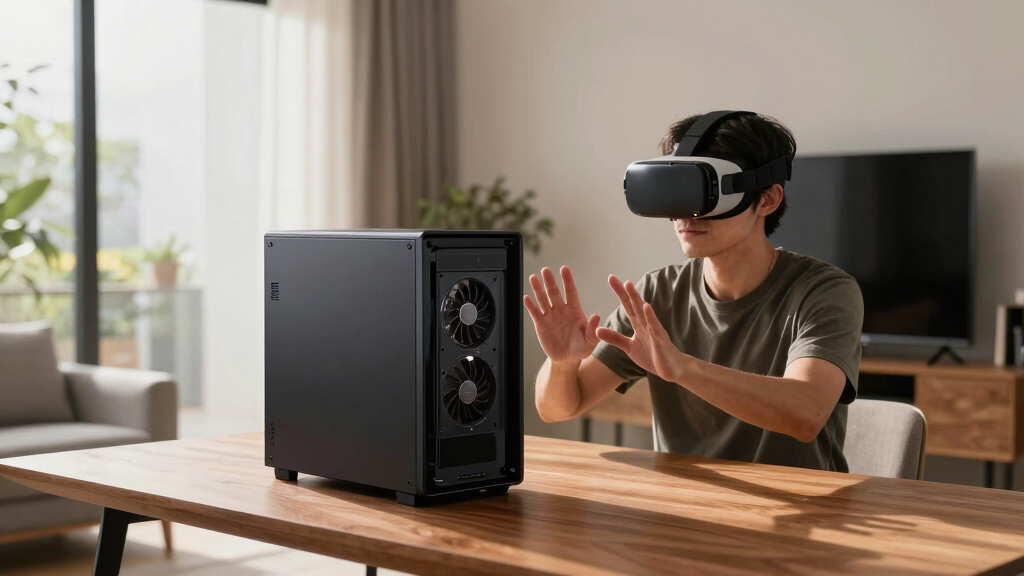

Finding the best AMD GPU for VR in 2026 means balancing raw performance with price and system compatibility. The ASRock Radeon RX 9060 XT Challenger 16GB stands out as the overall best due to its strong performance and 16GB of VRAM, ideal for demanding VR titles. The Sapphire Pulse AMD Radeon RX 7800 XT offers a premium experience with high frame rates, but at a higher cost. On the other hand, budget options like the MSI Radeon RX 6600 XT provide decent VR performance at a more accessible price point, though they may struggle with the most demanding VR applications. The main tradeoffs involve choosing between raw power, future-proofing, and budget constraints. Continue reading for a detailed breakdown of each GPU’s strengths and weaknesses.

Play games on Amazon Luna for your next adventure, included with Prime
- A rotating selection of games, no download needed
- Play on TV, laptop or phone
- Fast, free delivery for your gear, too
Key Takeaways
- The 16GB VRAM on models like the RX 9060 XT and RX 7800 XT offers better future-proofing for high-resolution VR headsets.
- Top-tier performance is concentrated in the RX 7800 XT, but it commands a premium price and higher power demands.
- Budget models like the RX 6600 XT can handle less demanding VR content but may fall short with newer, more demanding titles.
- There’s a clear performance leap between mid-range and high-end GPUs, making the choice crucial for VR enthusiasts seeking smooth experiences.
- Design and cooling solutions vary, with premium options offering quieter operation and better thermal management, which can influence long-term reliability.
| ASRock Radeon RX 7600 Challenger Pro 8GB OC Graphics Card |  | Best Overall for High-Performance VR Gaming | Memory: 8GB GDDR6 | Memory Interface: 128-bit | Boost Clock: 2695 MHz | VIEW LATEST PRICE | See Our Full Breakdown |
| ASRock Radeon RX 9060 XT Challenger 16GB OC Graphics Card |  | Best for 1440p VR and Creative Work | GPU Architecture: RDNA 4 | Memory: 16GB GDDR6 | Memory Interface: 128-bit | VIEW LATEST PRICE | See Our Full Breakdown |
| ASUS Prime Radeon RX 9070 XT 16GB GDDR6 OC Edition Gaming Graphics Card |  | Best for Overclocked, Customizable Gaming Performance | Memory: 16GB GDDR6 | GPU Model: Radeon RX 9070 XT | Cooling Technology: Axial-tech fans, phase-change pads | VIEW LATEST PRICE | See Our Full Breakdown |
| XFX Swift AMD Radeon RX 9060 XT OC Gaming Edition with 16GB GDDR6 |  | Best for High-Performance VR on a Budget | Chipset: AMD RX 9060 XT | Memory: 16GB GDDR6 | Cooling: Dual Fan | VIEW LATEST PRICE | See Our Full Breakdown |
| MSI Gaming Radeon RX 6600 XT MECH 2X 8G OC Graphics Card |  | Best for Entry-Level VR and Compact Setups | Model: Radeon RX 6600 XT MECH 2X 8G OC | Memory: 8GB GDDR6 | Interface: 128-bit | VIEW LATEST PRICE | See Our Full Breakdown |
| Sapphire Pulse AMD Radeon RX 7800 XT Gaming Graphics Card with 16GB GDDR6 |  | Best for Demanding VR Setups with High Memory Needs | Boost Clock: Up to 2430 MHz | Memory Size: 16GB | Memory Type: GDDR6 | VIEW LATEST PRICE | See Our Full Breakdown |
| AMD GPUs for VR | Memory | Boost Clock | Dimensions |
|---|---|---|---|
| ASRock Radeon RX 7600 Challeng | 8GB GDDR6 | 2695 MHz | 303 mm x 131 mm x 45 mm |
| ASRock Radeon RX 9060 XT Chall | 16GB GDDR6 | 3290 MHz | 249 mm x 132 mm x 41 mm |
| ASUS Prime Radeon RX 9070 XT 1 | 16GB GDDR6 | — | — |
| XFX Swift AMD Radeon RX 9060 X | 16GB GDDR6 | Up to 3320 MHz | — |
| MSI Gaming Radeon RX 6600 XT M | 8GB GDDR6 | — | — |
| Sapphire Pulse AMD Radeon RX 7 | — | Up to 2430 MHz | 280 x 128.75 x 52.57 mm |
More Details on Our Top Picks
ASRock Radeon RX 7600 Challenger Pro 8GB OC Graphics Card
This card stands out for its impressive high boost clock of up to 2695 MHz, delivering excellent frame rates in VR environments, especially when compared to the RX 6600 XT. Its triple-fan cooling system ensures low temperatures and quiet operation, beneficial for long VR sessions. However, its sizable 303 mm length and power requirements mean it’s not suitable for smaller or less robust systems. While it supports 4 displays at 8K, the PCIe 4.0 limitation might restrict future upgrades. Overall, this option best suits enthusiasts with mid-tower cases and ample power supplies who want top-tier VR performance without overpaying for premium features.
Pros:- High boost clock of up to 2695 MHz for fast VR rendering
- Triple-fan cooling system maintains low temperatures and quiet operation
- Supports up to four displays with 8K resolution
Cons:- Requires a 550W power supply and an 8-pin connector, limiting compatibility
- Large size may not fit smaller cases
- Limited to PCIe 4.0, not compatible with older motherboards
Best for: Gamers with spacious cases and robust power supplies seeking excellent VR performance on a budget.
Not ideal for: Owners of small form-factor or older systems with limited power capacity, due to size and power needs.
- Memory:8GB GDDR6
- Memory Interface:128-bit
- Boost Clock:2695 MHz
- Game Clock:2280 MHz
- Stream Processors:2048
- Interfaces:PCIe 4.0
- Dimensions:303 mm x 131 mm x 45 mm
- Power Requirement:1x 8-pin, 550W PSU
Our verdict“This card offers excellent VR performance for those with ample case space and power, but isn’t ideal for compact systems.”
ASRock Radeon RX 9060 XT Challenger 16GB OC Graphics Card
Compared with the RX 7600, the RX 9060 XT offers 16GB of GDDR6 memory, making it better suited for demanding VR applications and creative tasks. Its boost clock of up to 3290 MHz ensures smooth performance in modern VR titles, especially on the PCIe 5.0 interface that offers faster data transfer. While its size (249 mm) is more manageable than the RX 7600, it still requires a capable case and power setup. The dual-fan cooling is effective but might not keep temperatures as low as triple-fan designs under heavy load. This pick makes the most sense for users prioritizing large VR workloads or creative workflows over raw size or thermal silence.
Pros:- Large 16GB GDDR6 memory supports demanding VR and creative applications
- High boost clock of 3290 MHz ensures smooth performance
- Supports PCIe 5.0 for faster data throughput
Cons:- Requires a high-quality, 550W power supply
- Size may challenge smaller cases
- Limited info on noise levels during intensive use
Best for: VR content creators and gamers focusing on 1440p experiences with high memory demands.
Not ideal for: Users with small or older systems that lack PCIe 5.0 support or sufficient space for larger cards.
- GPU Architecture:RDNA 4
- Memory:16GB GDDR6
- Memory Interface:128-bit
- Boost Clock:3290 MHz
- Bus:PCIe 5.0
- Cooling:Dual Fans
- Power Connector:1x 8-pin
- Dimensions:249 mm x 132 mm x 41 mm
Our verdict“Ideal for users needing large VR memory buffers and faster transfer speeds, provided their system can accommodate its size and power requirements.”
ASUS Prime Radeon RX 9070 XT 16GB GDDR6 OC Edition Gaming Graphics Card
The ASUS Prime RX 9070 XT distinguishes itself with advanced cooling, including axial-tech fans and phase-change thermal pads, which support sustained overclocking—particularly compared to the RX 7600’s more basic cooling. Its up to 3030 MHz clock speeds in OC mode make it attractive for VR gamers seeking maximum performance. The dual-ball bearings and customizable BIOS profiles enhance durability and flexibility, but this comes at the cost of higher power consumption and a larger 2.5-slot footprint that might limit compatibility in smaller cases. This card suits users eager to push their hardware for the best VR experience, especially if they value tuning and durability over size or price.
Pros:- Advanced cooling with axial-tech fans and thermal pads
- High overclocking potential with customizable BIOS
- Durable dual-ball fan bearings prolong lifespan
Cons:- High power consumption requiring a robust power supply
- Large 2.5-slot design limits in smaller cases
- Premium price may be a barrier for budget-focused users
Best for: Overclockers and enthusiasts who want a reliable, customizable VR gaming GPU.
Not ideal for: Casual gamers or those with limited power capacity and small cases, due to size and power needs.
- Memory:16GB GDDR6
- GPU Model:Radeon RX 9070 XT
- Cooling Technology:Axial-tech fans, phase-change pads
- Clock Speeds:Up to 3030 MHz
- Fan Bearings:Dual-ball
- Features:0dB tech, Dual BIOS
Our verdict“Best suited for overclocking enthusiasts seeking maximum VR performance and customization, with ample case and power support.”
XFX Swift AMD Radeon RX 9060 XT OC Gaming Edition with 16GB GDDR6
The XFX Swift RX 9060 XT OC offers a compelling balance of performance and value, especially with its boost clock of up to 3320 MHz and 16GB of GDDR6 memory. It’s a straightforward choice for VR users who want high performance without the premium price of premium brands like ASUS or MSI. Its dual-fan cooling system is effective, though it may not match the thermal management of larger, more elaborate setups. The limited detailed specifications and absence of included accessories suggest it’s geared toward users comfortable with standard configurations. This card makes sense for gamers prioritizing raw power and memory capacity in a cost-effective package.
Pros:- High boost clock of 3320 MHz for fast VR rendering
- 16GB GDDR6 memory supports demanding applications
- Effective dual fan cooling design
Cons:- Limited detailed technical info available
- No accessories or bundled software mentioned
- Requires compatible desktop PC with appropriate power supply
Best for: Budget-conscious gamers seeking high VR performance with ample memory buffers.
Not ideal for: Users needing detailed cooling features or those who prefer brand-specific software and support, due to limited info.
- Chipset:AMD RX 9060 XT
- Memory:16GB GDDR6
- Cooling:Dual Fan
- Boost Clock:Up to 3320 MHz
Our verdict“A strong choice for performance-focused VR gaming on a budget, provided system compatibility is met.”
MSI Gaming Radeon RX 6600 XT MECH 2X 8G OC Graphics Card
The MSI RX 6600 XT MECH 2X is a sensible choice for those new to VR or with smaller cases. Its 8GB of GDDR6 memory is enough for many VR titles at 1080p and some 1440p, but it falls short of the high VR memory buffers offered by higher-tier options like the RX 9060 XT. Its overclocking support and FreeSync compatibility help improve visual fluidity, but it can’t match the raw performance or thermal management of the RX 7600 or RX 9070 XT. This makes it ideal for casual VR users or those with tight space constraints, but less suitable for demanding, high-fidelity VR experiences.
Pros:- 8GB GDDR6 memory adequate for many VR titles
- Supports overclocking for better performance
- VR Ready with tear-free FreeSync support
Cons:- Limited VR memory buffer compared to higher-end cards
- Potentially higher power consumption when overclocked
- Refurbished product might have limited warranty
Best for: Beginners or users with small cases seeking affordable VR-ready graphics.
Not ideal for: Power users or those aiming for high-end VR experiences, due to limited VR performance and memory.
- Model:Radeon RX 6600 XT MECH 2X 8G OC
- Memory:8GB GDDR6
- Interface:128-bit
- Outputs:DisplayPort, HDMI
- VR Ready:Yes
- Overclocking:Yes
Our verdict“A practical entry-level VR card best suited for casual users with space or budget constraints.”
Sapphire Pulse AMD Radeon RX 7800 XT Gaming Graphics Card with 16GB GDDR6
The Sapphire Pulse AMD Radeon RX 7800 XT stands out for its substantial 16GB GDDR6 memory, which is a clear advantage over the RX 7600 Challenger Pro’s 8GB when it comes to handling high-fidelity VR environments and complex textures without stuttering. Its boost clock of up to 2430 MHz ensures smooth rendering, but this performance comes with higher power consumption and a need for a robust power supply. The compact ATX form factor makes it adaptable for most gaming rigs, unlike larger models that might require special case considerations. While its multiple output options (2 HDMI, 2 DisplayPort) provide flexible connectivity, the absence of pricing info and potential for higher energy use are notable tradeoffs. This card makes the most sense for gamers who want high VR fidelity and have a system capable of supporting its power needs.
Pros:- 16GB GDDR6 memory ideal for complex VR environments
- High boost clock of up to 2430 MHz for smooth rendering
- Multiple connectivity options for versatile VR setups
- Compact ATX form factor fits in most standard cases
Cons:- No price information available, making budget planning difficult
- Requires a strong power supply and adequate space
- Potentially high power consumption, increasing energy costs
Best for: Enthusiast gamers seeking high VR performance and ample memory for demanding titles.
Not ideal for: Budget-conscious users or those with smaller cases and limited power supplies, as the card’s power demands and size may be problematic.
- Boost Clock:Up to 2430 MHz
- Memory Size:16GB
- Memory Type:GDDR6
- Memory Bus:256 bit
- Memory Clock:19.5 Gbps
- Outputs:2 x HDMI, 2 x DisplayPort
- Form Factor:2.5 slot, ATX
- Dimensions:280 x 128.75 x 52.57 mm
Our verdict“This GPU is best suited for VR enthusiasts who prioritize high memory capacity and performance, provided their system can support its power needs.”

How We Picked
We evaluated these GPUs based on their performance in VR workloads, focusing on frame rates, latency, and compatibility with popular VR headsets. Power efficiency and thermal management were also key, as VR gaming often stresses hardware for extended periods. Price-to-performance ratio played a significant role, ensuring each pick offers value for its segment. We prioritized models with recent driver support and good availability to ensure practical recommendations. The ranking reflects a balance between high-end performance, affordability, and real-world usability for VR setups.Factors to Consider When Choosing Best AMD GPUs For VR
Choosing the right AMD GPU for VR involves several considerations beyond raw specs. The most important factors are performance, VRAM, and compatibility with your existing system. Additionally, understanding how power requirements and cooling impact long-term reliability can save you from future headaches. Budget constraints often force tradeoffs, but knowing your priorities helps in selecting the best fit. This guide highlights key aspects to help you make an informed decision that aligns with your VR gaming goals.Performance and Frame Rates
VR experiences demand high and stable frame rates to prevent motion sickness and ensure immersion. When selecting a GPU, look for models that can consistently deliver 90 FPS or higher on your preferred settings. Mid-range options might suffice for less demanding VR titles, but high-end GPUs are better suited for the latest AAA VR games, especially at higher resolutions. Remember, higher frame rates often require a balance with other system components like CPU and RAM to avoid bottlenecks.
VRAM Capacity
VRAM directly influences how well a GPU handles high-resolution textures and complex scenes in VR. For most modern VR headsets, at least 8GB of VRAM is recommended, but 16GB offers better longevity and performance headroom, especially with future titles. Models like the RX 9060 XT and RX 7800 XT with 16GB VRAM are better prepared for demanding content, while 8GB cards may struggle at higher settings or with future updates.
Compatibility and Connectivity
Ensure your GPU supports the necessary outputs, such as HDMI 2.0/2.1 or DisplayPort 1.4/2.0, compatible with your VR headset. Additionally, verify that your power supply can handle the GPU’s wattage and that your case has adequate airflow. Compatibility with your motherboard’s PCIe slots is also essential, as older motherboards might limit performance or require BIOS updates. Proper connectivity ensures a seamless VR experience without interruptions.
Power Consumption and Cooling
VR gaming can push GPUs to their limits, making cooling and power efficiency important factors. High-performance cards like the RX 7800 XT demand robust cooling solutions, which can impact noise levels and system temperatures. Budget models may have simpler cooling, but this can lead to thermal throttling if airflow isn’t optimal. A quieter, more efficient GPU can improve your overall VR experience by reducing distractions and keeping hardware stable during extended play sessions.
Price and Future-Proofing
While premium GPUs offer the best performance, they come with higher costs and power demands. If you plan to upgrade your entire system soon or want to keep costs manageable, mid-range options like the RX 9060 XT can provide a good balance of performance and affordability. Consider how long you want your GPU to remain capable of handling upcoming VR titles; investing in a slightly more powerful model now can extend its usefulness and reduce the need for future replacements.
Frequently Asked Questions
Is VRAM more important than GPU power for VR gaming?
VRAM plays a significant role in VR performance, especially at higher resolutions and with detailed textures. While a powerful GPU can process frames faster, insufficient VRAM can cause stuttering and lower image quality because the GPU has to constantly swap data. For most VR headsets, 8GB is a minimum, but 16GB offers better resilience against future software demands. Ultimately, a balance of VRAM and GPU processing power yields the best VR experience.
Can I use a 4K monitor for VR gaming with these GPUs?
While these GPUs are primarily designed for VR, some can handle 4K gaming, but VR headsets typically operate at lower resolutions. If you plan to switch between VR and high-resolution monitor gaming, look for GPUs with high VRAM and strong processing capability like the RX 7800 XT. Keep in mind that VR performance relies more on frame rates and latency than resolution alone, so a high-end GPU will provide a better experience in both scenarios.
Will these AMD GPUs support the latest VR headsets?
Yes, most recent AMD GPUs like the RX 9060 XT and RX 7800 XT support current VR standards and headsets, including Oculus Quest Link, HTC Vive, and Valve Index. Compatibility also depends on your PC’s hardware and software setup. Always ensure your system drivers are up to date and check with the headset manufacturer for specific compatibility requirements to avoid issues during setup.
Is it worth paying extra for a high-end AMD GPU for VR?
Investing in a high-end GPU like the RX 7800 XT can significantly improve VR smoothness, reduce latency, and support higher resolutions and detail levels. If you value high fidelity VR experiences or plan to keep your system for several years, paying more upfront can be justified. However, for casual or less demanding VR use, mid-range options may suffice, saving you money without sacrificing much in usability.
How much should I budget for a GPU upgrade for VR?
The cost depends on your performance expectations and current hardware. Budget-friendly options like the MSI RX 6600 XT can start around $250-$300 and handle less demanding VR titles well. Mid-range cards such as the RX 9060 XT typically fall between $400-$500, offering better future-proofing. High-end options like the RX 7800 XT can exceed $600, providing top-tier performance for demanding VR content. Consider your specific needs and long-term plans when setting your budget.
Conclusion
For most users seeking a balance of performance and affordability, the ASRock Radeon RX 9060 XT Challenger 16GB represents the best overall choice, especially for those planning to play demanding VR titles regularly. If you’re willing to invest more for premium performance and future-proofing, the Sapphire Pulse AMD Radeon RX 7800 XT is ideal. Beginners and casual gamers should consider budget options like the MSI RX 6600 XT, which still delivers a decent VR experience without breaking the bank. Advanced users and VR enthusiasts aiming for maximum quality will find the high-end models worth the investment, ensuring smooth, immersive virtual worlds for years to come.