For immersive gaming, my leading pick is the Meta Quest 3 512GB: its higher-resolution display, 120 Hz refresh-rate specification, wireless play, and roomy storage make it the most capable all-rounder here. The Meta Quest 3S 128GB is the more accessible standalone route, pairing current-generation processing with color passthrough, while the Oculus Rift S suits players who already own a compatible Windows PC and want room-scale PC VR.

Play games on Amazon Luna for your next adventure, included with Prime
- A rotating selection of games, no download needed
- Play on TV, laptop or phone
- Fast, free delivery for your gear, too
The choice comes down to more than resolution. A standalone headset is easier to set up and play anywhere, but its battery limits long sessions. A PC headset can draw on a computer for its games, but requires the hardware and a cable-connected setup. I also include the original Quest 2 and a Renewed Premium Quest 3S; both may appeal to specific buyers, though their older platform or renewed condition makes them less straightforward choices than the current new Quest models.
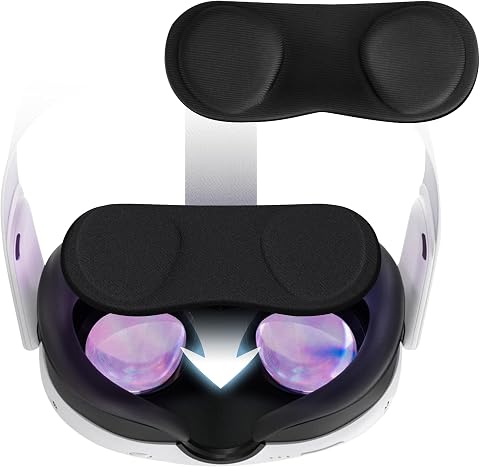
Complete the kit

Key Takeaways
- The Meta Quest 3 512GB ranks first for its combination of standalone freedom, 512GB storage, higher-resolution display, and a stated 120 Hz refresh rate.
- The Quest 3S 128GB is the better fit for wireless gaming on a smaller library budget, with Snapdragon XR2 Gen 2 processing and full-color passthrough, but just 128GB storage.
- The Rift S is the only PC-powered pick; choose it only if your Windows PC can run VR and you accept a tethered setup and Facebook-account login requirement.
- The Renewed Premium Quest 3S shares the 3S platform advantages but adds condition uncertainty; its listed 96-degree field of view and renewed status distinguish it from the new 3S listing.
- The Quest 2 remains a recognizable standalone option, but the supplied details do not establish its battery, refresh rate, or audio performance, so buyers should verify those details before choosing it over newer models.
| Meta Quest 3 512GB VR Headset with Gorilla Tag Monkenaut Bundle |  | Best Overall | Storage: 512GB | Memory: 8GB RAM | Processor: Snapdragon XR2 Gen 2 | VIEW LATEST PRICE | See Our Full Breakdown |
| Meta Quest 3S 128GB VR Headset with Gorilla Tag Bundle |  | Best New-Generation Standalone Value | Storage: 128GB | Memory: 8GB RAM | Processor: Snapdragon XR2 Gen 2 | VIEW LATEST PRICE | See Our Full Breakdown |
| Oculus Rift S PC-Powered VR Gaming Headset |  | Best for PC VR Players | Platform: PC VR | Display: LCD | Resolution: 2560 × 1440 | VIEW LATEST PRICE | See Our Full Breakdown |
| Meta Quest 3S 128GB VR Headset (Renewed Premium) |  | Best Renewed Standalone Pick | Condition: Renewed Premium | Storage: 128GB | Processor: Snapdragon XR2 Gen 2 | VIEW LATEST PRICE | See Our Full Breakdown |
| Oculus Quest 2 128GB VR Gaming Headset – White |  | Best for Familiar Quest 2 Gaming | Storage: 128GB | Resolution: 1832 × 1920 pixels per eye | Color: White | VIEW LATEST PRICE | See Our Full Breakdown |
| VR headsets for immersive gaming | Storage | Processor | Memory | Resolution |
|---|---|---|---|---|
| Meta Quest 3 512GB VR Headset | 512GB | Snapdragon XR2 Gen 2 | 8GB RAM | 2064 × 2208 pixels per eye |
| Meta Quest 3S 128GB VR Headset | 128GB | Snapdragon XR2 Gen 2 | 8GB RAM | — |
| Oculus Rift S PC-Powered VR Ga | — | — | — | 2560 × 1440 |
| Meta Quest 3S 128GB VR Headset | 128GB | Snapdragon XR2 Gen 2 | 8GB RAM | — |
| Oculus Quest 2 128GB VR Gaming | 128GB | Fast processor mentioned; model not specified | — | 1832 × 1920 pixels per eye |
More Details on Our Top Picks
Meta Quest 3 512GB VR Headset with Gorilla Tag Monkenaut Bundle
I rank the Meta Quest 3 512GB first because it makes the fewest compromises for a player who wants immersive VR without building a PC setup. It is a standalone wireless headset with a Snapdragon XR2 Gen 2 processor, 8GB of RAM, and a listed per-eye resolution of 2064 × 2208. That puts its stated pixel count above the Quest 2 and the standard Quest 3S listing, helping fine details in game environments look more defined. The listed 120 Hz refresh rate also gives this model the highest refresh-rate figure in the lineup, though individual games may not run at that rate.
Its 512GB of storage is a practical advantage over the 128GB Quest 3S models and Quest 2. Large games and a growing library can quickly make headset storage matter; extra room means fewer decisions about what to remove before installing something new. The color passthrough cameras add mixed-reality options that the product descriptions for the Quest 2 and Rift S do not offer. That does not replace a dedicated gaming display, but it broadens what the headset can do beyond fully immersive play.
The tradeoff is endurance: the listing gives a 2.2-hour battery life, so this is not a dependable choice for marathon sessions without breaks or a charging plan. The listed 360-degree field of view is an unusual specification and should be checked against the manufacturer’s current details rather than treated as a like-for-like advantage over the 3S. The Gorilla Tag cosmetics and three-month Horizon+ trial are welcome extras, but they should not drive the purchase if those games and services are not part of your plans. Compared with the 3S, I would choose the Quest 3 when display detail and storage matter more than keeping the setup basic.
Pros:- 512GB storage gives a growing game library more room than any other headset here.
- 2064 × 2208 pixels per eye is the highest stated per-eye resolution among these listings.
- Wireless standalone play and color passthrough support VR and mixed-reality gaming without a PC.
- Includes Gorilla Tag cosmetics and a three-month Horizon+ trial.
Cons:- Listed battery life is only 2.2 hours, which can cut short longer gaming sessions.
- The 360-degree field-of-view figure is unusual and should be verified before comparing it directly with other models.
- Bundle items and the game trial have limited appeal if you do not want those specific extras.
Best for: Players who want a wireless all-rounder, a larger game library stored locally, mixed-reality features, and the strongest stated display and refresh-rate figures in this group.
Not ideal for: Players who need long uninterrupted sessions, want to minimize charging breaks, or would not use the extra storage and mixed-reality features over a simpler 128GB headset.
- Storage:512GB
- Memory:8GB RAM
- Processor:Snapdragon XR2 Gen 2
- Resolution:2064 × 2208 pixels per eye
- Refresh rate:Up to 120Hz, as listed
- Battery life:2.2 hours, as listed
- Platform:Standalone Meta Horizon OS
- Included extras:Gorilla Tag cosmetics and three-month Meta Horizon+ trial
Our verdict“I would choose the Quest 3 512GB as the most capable gaming pick here if I value wireless freedom, display detail, and storage more than battery endurance.”
Meta Quest 3S 128GB VR Headset with Gorilla Tag Bundle
The Meta Quest 3S 128GB is my pick for players who want current-generation standalone gaming without stepping up to the Quest 3’s larger storage and higher listed display resolution. Its Snapdragon XR2 Gen 2 processor and 8GB of RAM put it in the same broad processing class as the Quest 3, and its wireless design removes the need to connect to a gaming PC. For room-scale games and active movement, that convenience is part of the appeal: the headset does not tie the player to a computer across the room.
Full-color passthrough is another meaningful distinction from the Quest 2 and Rift S descriptions. It lets the headset show the physical room in color for mixed-reality experiences and helps a player reorient without taking the headset off. The listing gives a 110-degree field of view, though the reported display and refresh details should be checked against the exact model and current product information. Its 128GB storage is half the capacity of the Quest 3, so players with many large games may need to manage what is installed.
Battery endurance is the clearest limit: the listing states about 2.5 hours. That is enough for many sessions, but it is shorter than a long evening of play and close to the Quest 3’s stated runtime. The Gorilla Tag bundle adds themed items and 2,000 Shiny Rocks, yet those extras matter most to players already interested in the game. The description also references a game-catalog trial with eligibility and auto-renewal terms; I would check those terms before activating it. Compared with the renewed 3S, this listing is the simpler choice for someone who prefers a new product rather than a renewed-condition unit.
Pros:- Snapdragon XR2 Gen 2 processor and 8GB RAM support current standalone VR gaming.
- Wireless setup and full-color passthrough suit active and mixed-reality play.
- Includes Gorilla Tag items and 2,000 Shiny Rocks.
- The 110-degree field-of-view figure is wider than the renewed 3S listing’s stated 96 degrees.
Cons:- 128GB storage can require game-library housekeeping.
- Listed battery life is about 2.5 hours.
- Catalog trial eligibility and auto-renewal terms need checking before activation.
Best for: Players seeking wireless standalone VR with current-generation processing and color passthrough, especially those who want a 128GB headset and will use the Gorilla Tag bundle.
Not ideal for: Players with a large installed library, those who need longer sessions between charges, or anyone who values the Quest 3’s greater storage and higher stated display resolution.
- Storage:128GB
- Memory:8GB RAM
- Processor:Snapdragon XR2 Gen 2
- Display:LCD, 1832 × 1920 pixels per eye
- Refresh rate:60Hz, as listed
- Field of view:110 degrees, as listed
- Battery life:2.5 hours, as listed
- Platform:Standalone Meta Horizon OS
Our verdict“I would pick the new Quest 3S for a capable, wire-free entry into current standalone VR, provided 128GB and short sessions fit my habits.”
Oculus Rift S PC-Powered VR Gaming Headset
The Oculus Rift S serves a different kind of gamer from the standalone Quest models. It is PC-powered, so the player needs a compatible Windows computer, but in return it opens a PC VR route rather than relying solely on a headset’s mobile hardware. If a gaming PC is already part of the setup, that distinction may matter more than the convenience of an all-in-one device. The listing cites access to hundreds of VR games and exclusives, while its 110-degree field of view and 2560 × 1440 LCD display provide a clear basis for room-scale play.
Its inside-out Oculus Insight tracking is a useful practical feature: the headset can track movement without external sensors placed around the room. That makes setup less involved than older sensor-based PC VR arrangements. A Halo headband and Touch controllers are included, and the adjustable fit may appeal to players who prefer a more structured headset than the strap style associated with some standalone options. Compared with the Quest 3 and 3S, however, the Rift S is less flexible because it depends on a PC and a tethered connection.
This is also an older product with meaningful platform caveats. The listing says a Facebook account is required to log in, so account requirements should be confirmed before purchase. It cannot match the Quest 3’s stated 512GB onboard storage or the standalone Quest 3S’s wireless convenience, and the supplied specifications do not give a battery figure or current software-support commitment. I would rank it third: a compelling fit for an existing PC VR library, but a poor default choice for someone buying a first headset and expecting a self-contained gaming system.
Pros:- PC VR access can suit players who already have a capable Windows gaming computer.
- Oculus Insight tracking supports room-scale play without external sensors.
- Touch controllers and an adjustable Halo headband are included.
- The listed 110-degree field of view supports an encompassing view in compatible games.
Cons:- Requires a compatible PC and a tethered gaming setup.
- The listing states that a Facebook account is required to log in.
- Its supplied resolution and platform details are less compelling than the Quest 3’s newer standalone feature set.
Best for: PC gamers with a compatible Windows computer who want room-scale VR tracking without external sensors and plan to use a PC VR game library.
Not ideal for: Buyers without a compatible gaming PC, players who prioritize wireless movement, or anyone unwilling to accept the stated Facebook-account login requirement.
- Platform:PC VR
- Display:LCD
- Resolution:2560 × 1440
- Field of view:110 degrees
- Tracking:Oculus Insight; no external sensors required
- Controllers:Touch controllers
- Connectivity:Bluetooth and USB 3.0
- Operating system:Windows
Our verdict“I would choose the Rift S only when a suitable PC and PC VR library are already central to my gaming setup.”
Meta Quest 3S 128GB VR Headset (Renewed Premium)
This Renewed Premium Quest 3S offers the current-generation standalone platform in a renewed listing. Its Snapdragon XR2 Gen 2 processor, 8GB of RAM, dual RGB cameras, and color passthrough put it in the same general gaming and mixed-reality lane as the new Quest 3S. It is also backward compatible with Quest 2 content, giving players familiar with that headset a route into newer 3S hardware without choosing the original Quest 2 again.
The supplied specifications list a maximum resolution of 2064 × 2208 pixels, a 90Hz refresh rate, and a 96-degree field of view. These figures do not match the separate new Quest 3S listing, which cites 1832 × 1920 pixels per eye, a 60Hz refresh rate, and a 110-degree field of view. Since the product names identify both as Quest 3S models, I would verify the exact hardware and listing details before treating those differences as a genuine advantage. The renewed listing also reports an average three-hour battery life, somewhat longer than the new 3S listing’s 2.5 hours, but real runtime depends on use.
Its main drawback is not the processor but the renewed condition. The listing includes a one-year warranty, yet buyers still need to understand what “Renewed Premium” means for cosmetic condition, included accessories, and returns. The Quest 3 512GB is a clearer choice for players who want more storage and the strongest stated refresh rate; the new 3S is more straightforward for someone who prefers an explicitly new listing. I would consider this model when renewed status is acceptable and the exact specification set and warranty terms are confirmed.
Pros:- Snapdragon XR2 Gen 2 processor and 8GB RAM support standalone gaming.
- Dual RGB cameras provide color passthrough for mixed-reality play.
- Hand tracking and Touch controllers give players multiple interaction options.
- Listing states a one-year warranty and backward compatibility with Quest 2.
Cons:- Renewed condition can mean more uncertainty than buying a new headset.
- The supplied display, refresh-rate, and field-of-view figures conflict with the new Quest 3S listing.
- Battery life is still limited to around three hours.
Best for: Players open to a renewed headset who want standalone Quest gaming, color passthrough, and a stated one-year warranty.
Not ideal for: Buyers who want a new unit, need predictable condition and included accessories, or would rather avoid conflicting Quest 3S specifications.
- Condition:Renewed Premium
- Storage:128GB
- Processor:Snapdragon XR2 Gen 2
- Memory:8GB RAM
- Maximum resolution:2064 × 2208 pixels, as listed
- Refresh rate:90Hz, as listed
- Field of view:96 degrees, as listed
- Battery life:Average three hours, as listed
- Warranty:One year, as listed
Our verdict“I would consider this renewed 3S only after confirming the exact specifications, accessories, condition policy, and warranty details.”
Oculus Quest 2 128GB VR Gaming Headset – White
The Oculus Quest 2 128GB earns a place for players who specifically want the older Quest 2 platform and its familiar standalone style. The listing gives a resolution of 1832 × 1920 pixels per eye, which is the same per-eye figure stated for the new Quest 3S listing. It also describes hand tracking, a fast processor, and a high-resolution display, though it does not provide a processor model or several other details that would help compare it precisely with the newer Quest headsets.
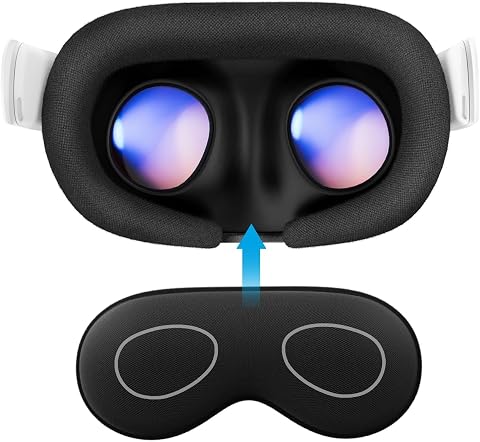
Its included Touch controllers, silicone cover, glasses spacer, charging cable, and power adapter make the package relatively complete. The silicone grip covers and adjustable knuckle straps are described as comfort and handling additions; those can help keep the controllers secure during active games. Unlike the Rift S, the Quest 2 is presented as a standalone headset, so it does not carry the same PC requirement. However, the product description does not establish the wireless or passthrough features listed for the current Quest 3S models, and I would not assume feature parity.
The gaps matter for gaming decisions. The listing gives no battery-life estimate, no refresh-rate or field-of-view figure, and no clear account of built-in audio. It also says the controllers use two AA batteries, which means keeping replacement batteries ready rather than relying on a rechargeable-controller detail in the box. Compared with the Quest 3S, the Quest 2 has less clearly documented current-generation hardware; compared with the Quest 3, it has less storage. I rank it fifth because the information supplied makes it harder to recommend as a main immersive-gaming headset unless a buyer has a specific reason to choose this model.
Pros:- 1832 × 1920 pixels per eye offers a clearly stated display resolution.
- Includes Touch controllers, silicone cover, glasses spacer, charging cable, and power adapter.
- Adjustable knuckle straps and grip covers can support secure controller handling.
- The listing describes hand tracking and a standalone-style VR gaming experience.
Cons:- No battery-life, refresh-rate, or field-of-view figure is supplied.
- Controllers use two AA batteries, so players need to manage replacements.
- Audio features and built-in speaker details are not specified.
Best for: Players who specifically want a Quest 2 headset, a familiar standalone setup, and the included grips, silicone cover, and glasses spacer.
Not ideal for: Buyers seeking the newest documented processing platform, color passthrough, clearly stated battery life, or a headset with thoroughly specified gaming performance.
- Storage:128GB
- Resolution:1832 × 1920 pixels per eye
- Color:White
- Controller power:Two AA batteries included
- Controllers:Two Touch controllers
- Included accessories:Silicone cover, glasses spacer, charging cable, and power adapter
- Tracking:Hand tracking described
- Processor:Fast processor mentioned; model not specified
Our verdict“I would choose the Quest 2 only for a specific preference for this older model, since the newer Quest options provide more clearly documented gaming features.”
How We Picked
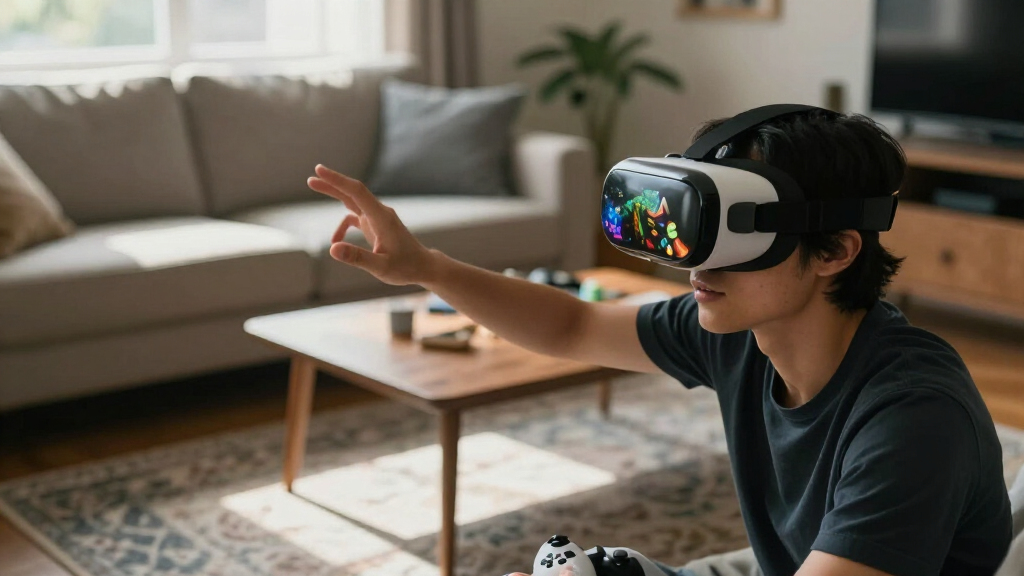
I ranked these headsets around the parts of VR that most affect gaming immersion: visual clarity, freedom of movement, access to games, comfort and tracking, and the practical limits that interrupt play. I favored models that combine strong gaming hardware with straightforward setup, then adjusted their position for drawbacks such as limited storage, short stated battery life, PC requirements, or renewed condition.
That approach puts the Meta Quest 3 512GB first because it combines wireless standalone play with the largest storage capacity in this group and a higher-resolution display specification than the Quest 2 and standard Quest 3S listing. The Quest 3S follows as a more basic current-generation wireless choice. The Rift S has a separate role: its PC connection can suit a player whose library and gaming computer are already in place, but it is not as convenient as a standalone headset. I placed the renewed 3S below the new-model choices because its condition is a real buyer variable, and the original Quest 2 last because the supplied product details leave important gaming-use questions unanswered.
I treated bundle content as a bonus rather than proof of better immersion. Gorilla Tag items and a Horizon+ trial may add value for someone who wants those particular extras, but they do not outweigh fit, display, game access, storage, or play-time limits. Specifications can vary by listing or region, so I call out uncertainty where the supplied details do not line up.
| VR headsets for immersive gaming | Processor | Platform |
|---|---|---|
| Meta Quest 3 512GB VR Headset | Snapdragon XR2 Gen 2 | Standalone Meta Horizon OS |
| Meta Quest 3S 128GB VR Headset | Snapdragon XR2 Gen 2 | Standalone Meta Horizon OS |
| Oculus Rift S PC-Powered VR Ga | — | PC VR |
| Meta Quest 3S 128GB VR Headset | Snapdragon XR2 Gen 2 | — |
| Oculus Quest 2 128GB VR Gaming | Fast processor mentioned; model not specified | — |
Factors to Consider When Choosing VR Headsets For Immersive Gaming
I would choose a headset by starting with where games run and how long I play, then comparing visual detail, storage, fit, and included extras. Those priorities separate these five picks more reliably than bundle names alone.Standalone freedom or PC-powered play?
The first decision is whether I want a self-contained headset or a headset that depends on a computer. The Quest 3, both Quest 3S listings, and Quest 2 are presented as standalone options, so they avoid a gaming PC requirement and suit active games where moving freely matters. This is the simpler route for a first VR setup, although standalone battery life and onboard storage place limits on long sessions and large libraries.
The Rift S belongs to a different category. Its PC connection makes it a more relevant pick if I already have a compatible Windows machine and want PC VR access, but it adds computer compatibility and tethering to the setup. I would not choose it just because PC VR sounds more powerful; the computer must be capable of running the games I want, and the listed Facebook-account requirement may affect whether I am comfortable using it.
Resolution, refresh rate, and field of view
Display numbers can help explain why one headset may show finer detail or smoother motion, but they are not a complete picture of visual quality. The Quest 3 lists 2064 × 2208 pixels per eye and 120Hz, while the new Quest 3S listing gives 1832 × 1920 pixels per eye and 60Hz. The Rift S provides a total 2560 × 1440 LCD figure, which is not directly comparable with a per-eye specification. For a buyer focused on the clearest stated display and highest listed refresh rate, the Quest 3 is the strongest paper choice.
I would verify the unusual or conflicting figures before deciding. The renewed 3S listing gives 2064 × 2208 maximum resolution, 90Hz, and a 96-degree field of view, unlike the new 3S listing’s values. The Quest 3 listing’s 360-degree field-of-view figure also stands apart from the other supplied numbers. Treat these as listing specifications to confirm rather than guaranteed apples-to-apples measurements. Comfort, lens clarity, and how a headset fits your face also affect whether a game feels immersive.
How much storage will my library need?
Storage matters most when I expect to keep several large games installed at once. The Quest 3’s 512GB leads this group and gives a growing library more breathing room than the 128GB Quest 3S models and Quest 2. With 128GB, a casual player who rotates through a few games may be comfortable; a player who prefers to keep a broad selection ready could face more frequent uninstalling and reinstalling.
The Rift S does not list onboard storage because PC VR depends on the connected computer for games. That shifts the capacity question to the PC rather than eliminating it. I would check free computer storage and game compatibility before choosing it. On any platform, consider how many games you actually play in a typical month rather than treating the largest capacity as useful by default.
Battery life and session length
Standalone convenience comes with a recharge cycle. The supplied listings state 2.2 hours for Quest 3, about 2.5 hours for the new Quest 3S, and an average of three hours for the renewed 3S. These are limited runtimes for players who expect long uninterrupted sessions, and actual play time can vary with game, settings, and use. The Quest 2 listing does not provide a battery estimate, so I would seek current product information before relying on it for a particular session length.
For short play sessions, the Quest models can be easy to pick up and use without a PC. For extended play, I would plan charging breaks and check whether any battery accessories are compatible and suitable. The Rift S avoids the standalone headset battery constraint by relying on its PC connection, but that does not make it the more convenient choice overall: cable management and computer placement remain part of the experience.
Comfort, tracking, and interaction
Immersion can fade quickly if a headset slips or controller tracking feels awkward. The Quest 2 listing highlights an adjustable strap, anti-slip grip covers, and knuckle straps; the Rift S includes a Halo headband and Touch controllers. The Quest 3S and renewed 3S descriptions add hand tracking and color passthrough, with cameras and sensors supporting the standalone experience. These differences matter by game type: active movement may reward secure controllers, while slower exploration may place more weight on fit and visual comfort.
I would check weight, facial fit, glasses compatibility, and adjustment options rather than assuming one strap suits everyone. The Quest 2 package includes a glasses spacer, but that does not prove it will fit every frame comfortably. The renewed 3S is listed at 515g, while equivalent weight details are not supplied for all models here. A specification sheet cannot settle comfort for an individual buyer, so return terms and fit guidance are useful parts of the buying decision.
Bundles, trials, and renewed condition
Bundle extras should be a tie-breaker, not the reason I rank a headset for gaming. The Quest 3 and new Quest 3S bundles include Gorilla Tag items, while the Quest 3 also includes a three-month Horizon+ trial and the new 3S description refers to a catalog trial with eligibility and auto-renewal terms. I would check what is included, how to redeem it, and whether a trial renews before assigning much value to it.
The renewed Quest 3S needs an extra check because its condition is part of the deal. I would read the renewal policy, warranty, returns, and included-accessory list, then confirm its exact display and refresh specifications. The listing states a one-year warranty, but buyers should verify the seller’s current terms. When I want the least ambiguity, the new Quest 3S or Quest 3 is an easier comparison; the renewed option makes sense only if its condition and terms suit me.
Frequently Asked Questions
Which headset in this group is best for immersive gaming overall?
I would start with the Meta Quest 3 512GB for the strongest mix of standalone freedom, storage, and stated display performance. Its 2064 × 2208 pixels per eye and listed 120Hz refresh rate lead the supplied standalone specifications, while 512GB gives a large library more room. Its short listed battery life is the main reason to choose another model if uninterrupted session length matters more than display and storage.
Should I choose the Quest 3S or the Quest 3?
I would choose the Quest 3S if 128GB is enough and I want current-generation standalone processing and color passthrough without needing the Quest 3’s larger storage. The Quest 3 is the better fit when I want more room for games and the higher stated per-eye resolution and refresh rate. Both listings give relatively short battery runtimes, so neither is an obvious pick for extended sessions without charging breaks.
Do I need a gaming PC for these VR headsets?
The Oculus Rift S is the PC-powered model in this selection and requires a compatible Windows computer. The Quest 3, Quest 3S, renewed Quest 3S, and Quest 2 are presented as standalone headsets, so a gaming PC is not listed as a requirement for their basic use. Before choosing the Rift S, I would check PC compatibility and confirm that its account and connection requirements suit my setup.
Is a renewed Quest 3S a better choice than a new Quest 3S?
That depends on how comfortable I am with a renewed unit and whether the listing’s exact specifications are confirmed. The renewed model states a one-year warranty and lists figures that differ from the separate new Quest 3S listing, including resolution, refresh rate, and field of view. I would verify condition, return terms, accessories, warranty coverage, and hardware details before preferring it over a new 3S.
How much VR headset storage do I need for gaming?
128GB can suit players who keep a small selection of games installed and remove titles they no longer play. The Quest 3’s 512GB is a better match for someone who wants a broader library ready without managing installations as often. For the Rift S, game storage is tied to the connected PC, so I would check the computer’s available space instead of looking for an onboard headset capacity.
Conclusion
I would choose the Meta Quest 3 512GB for the most complete standalone gaming package here, especially if display detail and room for a large library matter more than battery life. For a current-generation wireless headset with a smaller library, the new Quest 3S 128GB is the more straightforward alternative. PC players with a compatible Windows machine and an existing PC VR library should look at the Rift S, while buyers considering the renewed 3S should verify its conflicting specifications and condition terms first.
The Quest 2 is the most niche recommendation: its included accessories and familiar platform may suit a buyer with a specific reason to choose it, but several gaming details are missing from the listing. My final decision rule is simple: pick Quest 3 for storage and stated display performance, Quest 3S for standalone simplicity, Rift S for PC VR, renewed 3S only when its condition and terms check out, and Quest 2 only when that older model is the one you specifically want.
Evergreen bestsellers Picks

Dyson Supersonic Travel Hair Dryer

De'Longhi Classic Signature Espresso Machine with Adjustable Milk Frother

Philips Baristina Espresso Machine with Milk Frother (BAR308/60)
As an affiliate, we earn on qualifying purchases.